Why exercise bike calorie burn matters
If you are using an exercise bike to lose weight or improve your health, understanding exercise bike calorie burn helps you set realistic goals and track progress more accurately. It also keeps you from getting discouraged by inflated numbers on the console.
In simple terms, calories are just a measure of energy. The more energy you use while pedaling, the more calories you burn. Over time, that steady burn adds up, especially when you pair it with consistent workouts and mindful eating.
How many calories you actually burn
You will often see big round numbers on gym posters or bike screens, but the reality is more nuanced.
For an average person, the research suggests the following:
- A 150 pound person burns about 480 calories in 60 minutes of moderate cycling on a stationary bike (PureGym).
- Another guide cites around 150 calories in a 30 minute moderate ride for an average person, with more burned at higher intensity or longer durations (We R Sports).
- A 45 minute moderate to high intensity session can burn around 400 calories for someone weighing 70 kg, or roughly 154 pounds (MerachFit).
Different sources use different assumptions about weight and intensity, so you will see slightly different ranges. What they all agree on is that your weight, how hard you pedal, and how long you ride are the big levers.
What affects your exercise bike calorie burn
Your personal calorie burn on an exercise bike depends on several factors that all interact.
Your body weight and muscle mass
Your body has to work harder to move more mass, even on a stationary bike. A heavier person will burn more calories than a lighter person doing the same workout.
Increased body weight and muscle mass both raise calorie burn, so if you weigh more or have more muscle, you will naturally burn more energy during the same session (PureGym).
Workout intensity and resistance
Intensity is one of the biggest drivers of exercise bike calorie burn. You can increase intensity by:
- Pedaling faster
- Increasing resistance
- Standing up for short efforts
- Doing intervals that alternate easy and hard work
Higher resistance in particular recruits more muscle and increases the demand on your cardiovascular system, which leads to more calories burned than spinning quickly with very low resistance (MerachFit). Magnetic resistance systems make this easier to control precisely.
Duration and workout style
The longer you ride, the more total calories you burn, but how you structure the ride also matters. Interval training methods like HIIT and REHIT burn substantially more calories than steady state workouts of the same duration because they push your body harder and raise your post workout burn (CarolBike).
Short, maximum intensity sprints that last just 2 x 20 seconds can increase your metabolic rate for up to 48 hours after you get off the bike, thanks to the Excess Post Exercise Oxygen Consumption (EPOC) effect (CarolBike).
Age, gender, and fitness level
Your age, gender, and current fitness level also influence calorie burn (PureGym). In general:
- Younger people often burn slightly more due to higher baseline metabolism.
- People with more muscle burn more at rest and during exercise.
- As your fitness improves, your body becomes more efficient, so the same ride may burn fewer calories unless you increase intensity.
Environment and conditions
If you are on an indoor bike, you might assume the environment is always the same, yet room temperature and airflow can make a difference. Hotter conditions may increase sweat and calorie expenditure, while cooler rooms can slightly reduce calorie burn because your body is not working as hard to regulate temperature (We R Sports).
How calorie burn is calculated
Behind the scenes, there are a few different ways that exercise bike calorie burn can be estimated.
METs and standard formulas
Many calculators use METs, or Metabolic Equivalent of Task. One MET is the energy you use while sitting quietly. Cycling at 100 watts corresponds to about 6 METs, so this effort uses about six times the energy of rest (runbundle).
A common formula looks like this:
Calories burned (kcal) = MET × 3.5 × body weight (kg) ÷ 200 × duration (minutes)
So if you weigh 70 kg, ride at 8 METs, and cycle for 30 minutes, you burn roughly 294 calories (MerachFit).
Using power and watts
Modern bikes, including many home smart bikes, provide power in watts. This lets you estimate calories more directly. A practical formula is:
Calories = Watts × Hours × 3.6
Using that rule of thumb, cycling at 100 watts for 15 minutes burns about 90 calories, and 200 watts for 15 minutes burns about 180 calories according to multiple riders who have tracked their power and energy output (Reddit Fitness).
The Stationary Bike Calorie Calculator from runbundle uses your weight, workout time, and intensity or power in watts to estimate your burn, and it works with all common stationary bike types, including recumbent models (runbundle).
Perceived effort when watts are not available
If your bike does not display watts, you can still get a reasonable estimate by rating your effort. Some calculators map perceived intensity levels to approximate power outputs using data from the 2024 Compendium of Physical Activities (runbundle).
Your estimate will not be perfect, but it will be more informative than relying on the bike display alone.
How accurate exercise bike calorie counters are
Those big numbers on the console often feel motivating, but they can be misleading. Several sources point out that machine counters can overestimate calorie burn.
Built in counters vs reality
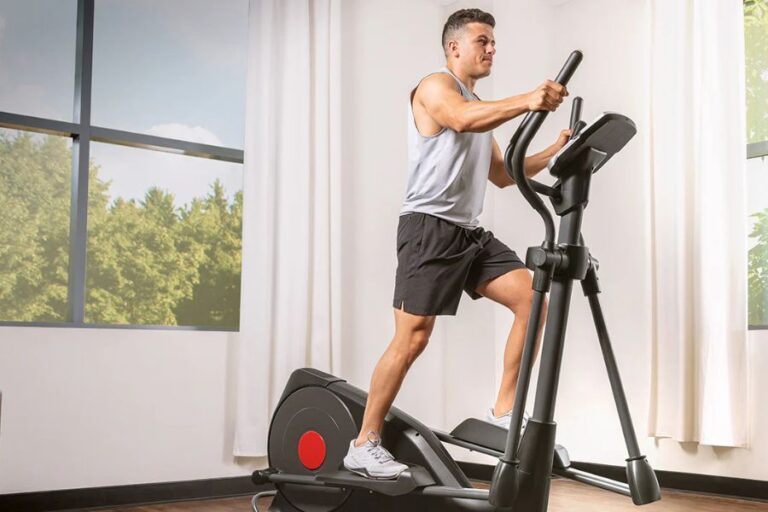
Elliptical machines, for example, may overestimate calorie burn by 20 to 42 percent because momentum helps move the pedals and the machine misreads that as extra effort (PureGym). Exercise bike counters also vary in accuracy depending on the brand, model, and technology, with newer models generally doing better because they factor in more variables (We R Sports).
Reddit users who compared console readings with independent power meters found that stationary bike displays are often highly inaccurate, while power based calculations were much closer to reality (Reddit Fitness).
Why the numbers are off
Bike consoles usually guess calories based on speed and resistance, sometimes with a generic body weight. They rarely account for your specific weight, body composition, age, and gender, yet all of these significantly affect how many calories you burn (We R Sports).
This is why two people can do the exact same workout and get the same on screen number, even though their true calorie burn is different.
What is more accurate
You have a few better options:
- Use power based estimates when your bike provides watts.
- Use a calculator that combines your weight, time, and intensity, such as the stationary bike calorie tools referenced above (runbundle).
- Wear a fitness tracker or heart rate monitor, which normally gives a more personalized estimate than the bike alone (We R Sports).
Power meters are usually the most precise, heart rate based devices are the next best, and the bare bike display is typically the least reliable (Reddit Fitness).
Exercise bikes vs other cardio machines
If you are trying to choose between an exercise bike, treadmill, or elliptical, comparing calorie burn can help you decide what fits your goals and joints.
According to PureGym:
- A 150 pound person burns about 480 calories in 60 minutes of moderate cycling on a stationary bike.
- The same person burns roughly 340 calories in 60 minutes on an elliptical at similar effort, although that can go up with HIIT (PureGym).
Elliptical calorie counters may also overestimate your burn by 20 to 42 percent because they do not correctly account for momentum (PureGym). When you correct for that, a stationary bike often holds its own as a very efficient calorie burning option, especially at higher intensities.
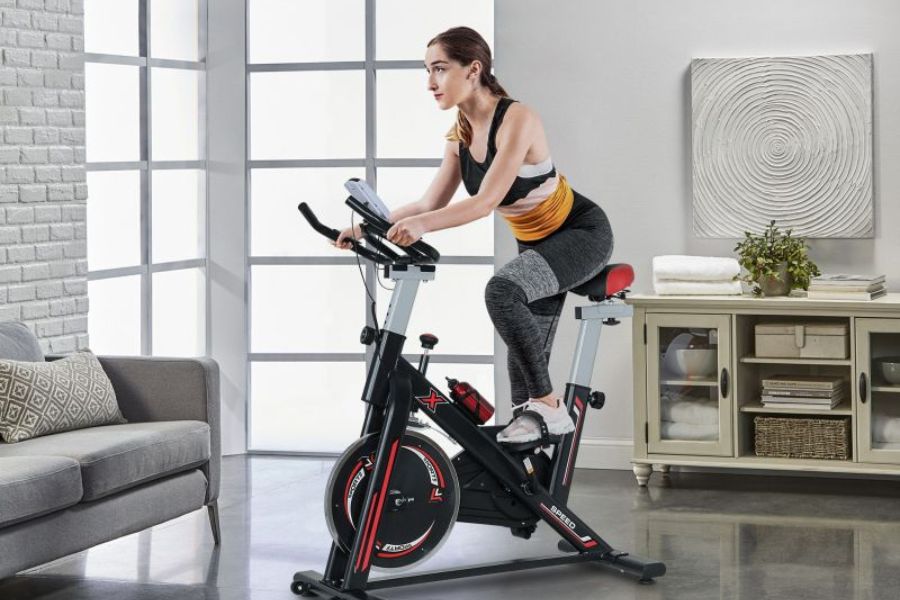
Among different exercise bike types, spin bikes tend to burn the most calories because they support intense efforts and recruit your whole lower body and core. Upright bikes come next, and recumbent bikes usually burn the least due to the more supported, relaxed position (MerachFit).
Ways to increase your calorie burn safely
You do not need extreme workouts to get value from your bike. A few smart adjustments can help you get more from the time you already spend.
Add intervals and short sprints
High intensity interval training can increase calorie burn by up to 30 percent compared to steady state cycling, and it keeps your metabolism elevated after you finish (MerachFit). REHIT style workouts that use just 2 x 20 second all out sprints have been shown to boost calorie burn for up to 48 hours after the workout through the EPOC effect (CarolBike).
Start with gentle intervals, for example 1 minute harder, 2 minutes easy, and build up gradually as your fitness improves.
Increase resistance, not just speed
Turning up resistance recruits more muscle and tends to burn more calories than simply spinning quickly with barely any load (MerachFit). You can structure your ride with hill style segments, where you gradually increase resistance for several minutes, then lower it and recover.
At very high resistance levels, some cyclists can burn close to 1,000 calories per hour, although this kind of effort is not realistic or necessary for most people on a daily basis (CarolBike).
Stand up occasionally
Pedaling out of the saddle uses more upper body and core, which increases metabolic cost and calorie burn compared to staying seated at the same intensity. This is especially true during sprints and hill repeats (CarolBike).
If your balance and joints allow it, try standing for 15 to 30 seconds in the middle of a hill or hard interval, then sit back down and recover.
Focus on consistency over perfection
Real world data from riders shows that people often burn between 90 and 150 calories in 15 minutes of low to moderate effort cycling, and between 150 and 250 calories at moderate to high intensity (Reddit Fitness).
Even if your exact number is a little higher or lower, what matters most is that you ride regularly. Aim for sessions you can repeat several times per week, and treat extra calorie burn from intervals and added resistance as a bonus.
Helpful mindset: use the numbers to guide and motivate you, but do not let slightly imperfect estimates stop you from getting on the bike.
Turning calorie burn into real progress
Understanding exercise bike calorie burn gives you a clearer picture of how your workouts support your weight and health goals. You know that:
- Your weight, intensity, and time on the bike are the biggest drivers of calorie burn.
- Built in counters are only estimates, and power or personalized formulas are more accurate.
- Interval training, higher resistance, and occasional standing efforts can significantly increase your burn.
From here, you can decide what to adjust. You might add one interval session per week, increase resistance slightly on your regular ride, or start tracking watts if your bike provides them.
Choose one small change for your next workout, pay attention to how it feels, and build from there. Over weeks and months, those extra calories burned and that added consistency will do more for your health than any single all out session.
About the Author