A smart calf workout does more than add definition to the back of your legs. When you focus on calf workouts for women, you support your ankles, improve balance, and build the kind of endurance that makes walking up stairs, hiking, and running feel easier.
Below, you will find practical calf exercises that target tone and stamina, plus simple ways to fit them into your weekly routine.
Why strong calves matter for women
Your calves are involved every time you walk, run, jump, or rise onto your toes. They stabilize your ankle joint and help protect you from sprains and other lower leg injuries. Michael Hamlin, CSCS and founder of Everflex Fitness, notes that strong calf muscles are essential for overall athletic performance and endurance because of this stabilizing role, as highlighted in a 2026 feature for Women’s Health magazine.
The main muscles you work in calf workouts for women are:
- Gastrocnemius, the larger, visible muscle that runs from behind your knee to about mid calf
- Soleus, the deeper muscle underneath that runs from the back of your knee down to your heel
Together with a small muscle called the plantaris, these form the triceps surae. This group is crucial for posture, movement, and balance in both women and men.
When these muscles are strong and conditioned, you are less likely to fatigue quickly, and you are better supported during activities like running, dancing, or strength training.
Calf raises for tone and balance
If you only add one move to your routine, start with calf raises. They are simple, do not require equipment, and directly target the gastrocnemius while also working the soleus.
How to do standard standing calf raises
- Stand tall with feet hip width apart, toes pointing forward.
- Shift your weight evenly across the balls of your feet.
- Slowly lift your heels as high as you can, rising onto your tiptoes.
- Pause for one second at the top and squeeze your calves.
- Lower your heels slowly back to the floor.
Aim for 2 to 3 sets of 12 to 20 repetitions. Move slowly so you really feel the muscles working and so your ankles stay steady.
You can hold onto a wall, the back of a chair, or a countertop for balance. As your calves get stronger, you can add light dumbbells or hold a heavy book to increase the challenge.
Double leg vs single leg calf raises
Double leg calf raises use both legs at once. They are great for beginners and for warming up. Single leg calf raises, where you lift and lower on one leg at a time, increase the intensity and help build unilateral strength and stability.
To try the single leg version:
- Stand near a wall or sturdy surface for support.
- Lift one foot off the floor so all of your weight is on the standing leg.
- Rise onto your toes on the standing leg, then lower with control.
Start with 8 to 12 repetitions per side and build up gradually. This variation is especially helpful if you want a strong, balanced lower body for running, sports, or everyday activities.
Seated calf raises to build endurance
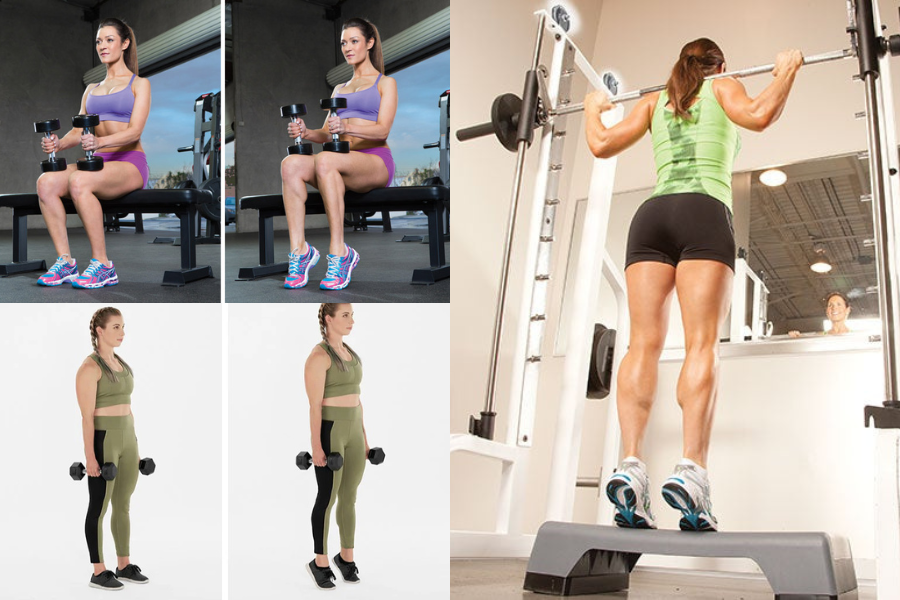
Seated calf raises are ideal if you want to focus more on endurance and the deeper soleus muscle. Because your knees are bent during this move, the soleus does more of the work, which carries over to everyday movements like walking upstairs or running uphill.
How to do seated calf raises at home
You can do this exercise with just a chair:
- Sit tall on a chair with your feet flat on the floor and knees bent at about 90 degrees.
- Keep your core gently engaged and your back neutral.
- Press through the balls of your feet to lift your heels as high as possible.
- Hold for a second, then lower your heels slowly back down.
A starting point is 1 to 2 sets of 16 repetitions, three times per week. With consistency, you can start to notice changes in around 8 weeks.
To increase difficulty, place a heavy backpack, stack of books, or dumbbells across your thighs. This extra weight forces your calves to work harder without needing a gym machine.
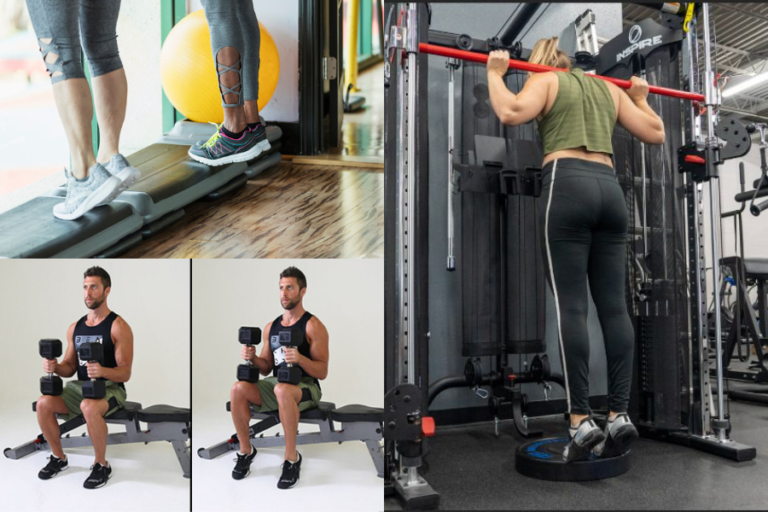
Gym option: Machine or calf press
If you have access to a gym, seated calf raise machines or calf press machines on the leg press are excellent for progressive overload. Focus on:
- A controlled tempo, especially lowering the weight
- Full range of motion, lifting high onto your toes and lowering your heels until you feel a stretch
Use a weight that allows 12 to 20 reps with good form. Your goal here is muscular endurance and tone, not just a maximum lift.
Step based calf work for mobility
Working from an elevated surface like a stair or sturdy step helps lengthen your calves and your Achilles tendon while still building strength.
Standing calf raises on a step
- Stand on the edge of a step with the balls of your feet on the step and your heels hanging off.
- Hold a railing, wall, or the side of the staircase for balance.
- Lift your heels as high as you can.
- At the top, pulse up and down in small movements three times.
- Lower your heels slowly until they drop slightly below the step, feeling a stretch in your calves and Achilles.
This variation tones your calves without putting unnecessary strain on your back or feet, as long as you move slowly and stay aligned.
Start with 1 to 2 sets of 10 to 12 repetitions and increase over time. If your calves are very tight, spend extra time in the stretch at the bottom, but avoid bouncing.
Barre inspired moves for full calf activation
Barre training uses small, precise movements to work the entire lower leg. One classic option is the elevé to relevé sequence, which targets the whole calf area while also training your posture.
Elevé to relevé sequence
- Stand with your feet together or in a small V shape, heels close and toes turned out gently.
- Elevé, lift high onto your tiptoes with your knees straight.
- Relevé, drop your tailbone toward the floor, keeping your heels lifted and your core engaged.
- Straighten your knees again while keeping your heels up.
- Lower your heels back to the floor to finish the sequence.
Move slowly through each phase so you feel the control and engagement through your calves and ankles. You can repeat this sequence for 10 to 15 repetitions and use a counter or chair for light support if needed.
This is a helpful choice if you enjoy low impact, graceful movement but still want serious calf work.
Cardio that naturally tones your calves
You do not have to rely only on strength moves. Many activities that you might already enjoy naturally strengthen and tone your calves by asking them to work repeatedly over time.
Examples include:
- Running or jogging
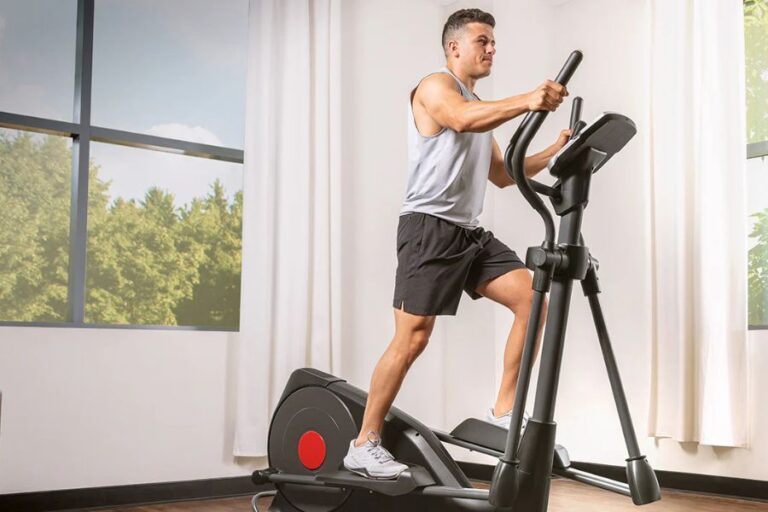
- Brisk walking, especially on inclines
- Hiking, particularly on uphill trails
- Soccer, basketball, or tennis
- Step classes
- Swimming
These dynamic movements challenge your calves with each push off from the ground or from the pool wall. The result is improved endurance and subtle definition, especially when you pair them with targeted calf raises.
Treadmill hills for fat loss and conditioning
If you want to uncover muscle tone while also building cardio fitness, incline walking or running is a good tool. One option is to set a treadmill to about an 8.0 incline and walk at 3.5 to 4.2 miles per hour for a power walk, or 4.3 miles per hour and above for a light jog.
As your conditioning improves, you can add a 10 pound weighted vest to increase intensity. Listen to your body and increase gradually so your joints and calves have time to adapt.
Jump rope for quick calf burn
Jump rope is essentially a series of fast, plyometric standing calf raises. It is very effective for strengthening and toning the lower legs.
For best results:
- Adjust the rope length so the handles reach about your armpits when you stand on the center
- Turn the rope mostly with your wrists, not your arms
- Jump only a small distance off the floor so you land softly on the balls of your feet
Start with 30 second intervals, then rest, and repeat a few times. Over several weeks, you can lengthen the intervals or shorten your rest periods.
Think of every push off the ground, whether in jump rope or hill walking, as another rep for your calves.
How often to train your calves
For most women, working calves two to three times per week is enough to see progress in tone and endurance without overtaxing your lower legs.
You can:
- Add a few sets of calf raises at the end of leg day
- Pair calves with core or upper body work
- Sprinkle shorter mini sessions into your warm ups
General guidelines for safety and progress include:
- Move slowly enough that you can control both the lifting and lowering phases
- Stay hydrated before and after your sessions
- Increase resistance or volume gradually, about 10 to 15 percent every two weeks
- Pay attention to old injuries or new pain and check with a health professional if something does not feel right
Soreness in the muscle belly is normal when you start a new routine. Sharp pain in your Achilles tendon or ankle is a sign to stop and seek guidance.
Sample calf workout for tone and endurance
Here is a simple routine you can try two or three times per week. Adjust the sets or reps to match your current fitness level.
| Exercise | Sets | Reps / Time | Focus |
|---|---|---|---|
| Standing double leg calf raises | 2 | 15 to 20 | Basic strength and tone |
| Single leg calf raises | 2 | 10 to 12 each side | Balance and unilateral strength |
| Seated calf raises | 2 | 16 | Soleus and endurance |
| Step calf raises with stretch | 1 | 10 to 12 | Mobility and control |
| Jump rope or incline walk | 1 | 3 to 5 minutes | Calf endurance and conditioning |
Warm up with a few minutes of light walking or marching in place before you start. Finish with gentle calf stretching, holding each stretch for 20 to 30 seconds.
Bringing it all together
When you commit to consistent calf workouts for women, you support more than just how your lower legs look. Strong calves help stabilize your ankles, improve balance, and boost endurance for everything from daily errands to your favorite workouts.
Choose one or two exercises from this guide to start, such as standing calf raises and seated calf raises, and weave them into your weekly routine. As those become easier, layer in step work, barre inspired moves, or cardio like hills and jump rope. Over time, you will feel the difference every time you take the stairs, push off for a run, or simply stand tall.
About the Author