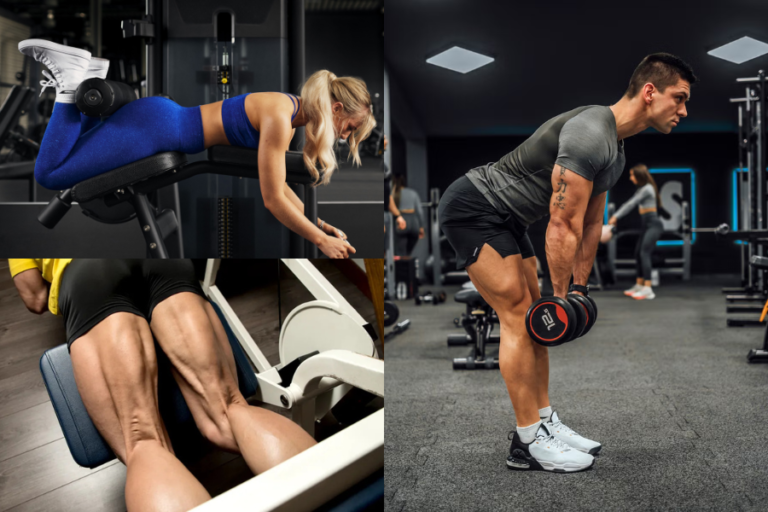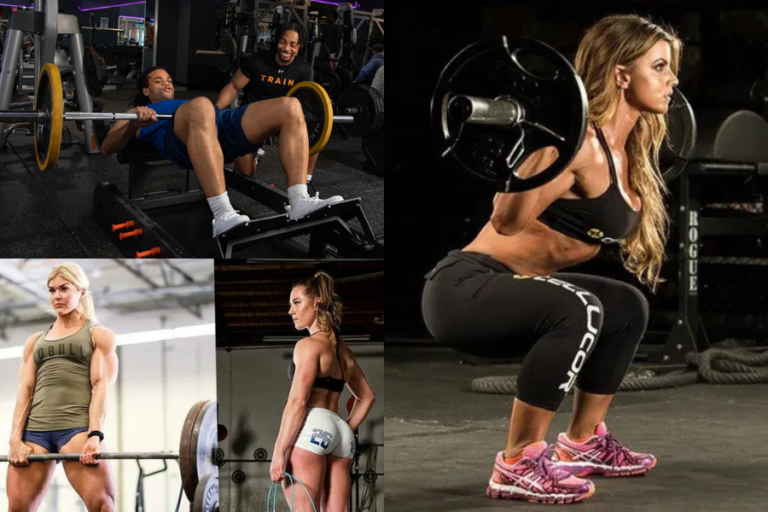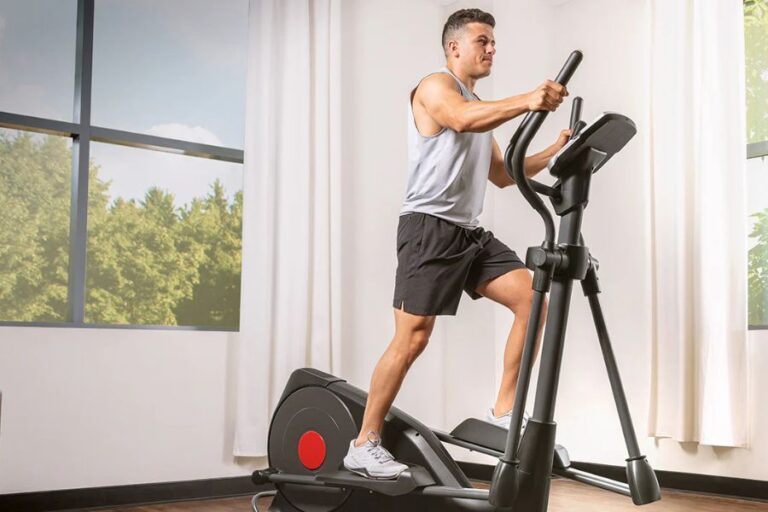
Calves are the classic “stubborn” muscle group. You walk, you climb stairs, you might even run, yet your lower legs barely change. Smart, targeted calf workouts in the gym can finally move the needle by training your calves in ways daily life never does.
Below, you will learn how your calves actually work, what mistakes are holding you back, and how to build a simple, effective calf routine that fits into your existing training.
Understand your calf muscles first
Before you jump into calf workouts at the gym, it helps to know what you are trying to grow.
Your lower leg is not just “calf.” It is a group of muscles that need slightly different training approaches:
- Gastrocnemius: The big, visible “diamond” on the back of your lower leg. It helps you point your toes and is more active with straight legs.
- Soleus: Sits underneath the gastrocnemius and is heavily involved when your knee is bent. You use it a lot when you walk and stand.
- Tibialis anterior: The muscle along your shin that lifts your toes toward your shin. It stabilizes the ankle. If you ignore it, you can end up with imbalances and shin splints.
Research notes that effective calf training should target all of these lower leg muscles instead of only the back of your calves. Neglecting your shin muscles can lead to imbalanced development and a higher risk of injuries such as shin splints.
Genetics also play a role in calf size. The anatomy of your gastrocnemius muscle can make calf muscle growth more challenging compared to other areas, as discussed in a 2004 Simplyshredded.com article. That does not mean you cannot grow your calves. It just means you need a smart plan and patience.
Common mistakes in gym calf workouts
If you have been doing calf raises forever and seeing no change, chances are you are running into one or more of these issues.
Treating calves like walking
Your calves are already adapted to low intensity, short range reps from walking all day. When you go into the gym and do quick, half range, light reps, you are basically repeating what they already handle easily.
To create change, you need:
- A deeper stretch and a higher peak contraction than walking provides
- More tension, either from heavier weight or longer sets
- A tempo that actually challenges the muscle, not just bounces up and down
Training only part of the movement
Sports rehab specialist David Grey points out that the bottom half of the calf raise is key for building pure strength. If you only focus on “going as high as possible” and rush through the stretch at the bottom, you miss the range where your calves can produce a lot of force.
Grey also notes that always chasing a full range of motion can sometimes reduce force output because of active insufficiency. In practice, that means you can benefit from spending deliberate time in the lower half of the rep instead of always trying to reach a dramatic, almost cramping height at the top.
Going too light for too long
Many people choose weights that are far too light so they can move through a big range of motion without discomfort. Grey suggests that good athletes should be able to handle substantial weight on a Smith machine for effective calf growth. If you can talk easily during your set, you are probably not close to your limit.
On the flip side, some research also points out that calves have a lot of slow twitch fibers, which respond well to high volume and relatively lower loads. A 2020 paper by Brad Schoenfeld and colleagues reported that slow twitch dominant muscles can grow well with high rep training and controlled tempo. The key is volume and intensity, not just “heavy weight.”
Doing the exact same thing every time
Your calves adapt quickly to repeated patterns. If you always:
- Use the same machine
- Use the same foot position
- Do the same rep range
your body learns to handle that stress and stops growing. Since calf muscles contain a mix of slow and fast twitch fibers, varying your rep ranges and workloads is important to keep progress going.
How often and how long to train calves
You do not need an hour of calves. You do need consistency.
A focused 10 to 15 minute calf block at the end of your workout, three to five times per week, is enough if you push the intensity. A 2026 Muscle & Fitness article notes that training calves at least three days a week with full range of motion and enough intensity to create a noticeable burning sensation works well for growth.
High volume routines that spread roughly 18 to 24 total sets per week over 3 to 4 sessions, combined with controlled lowering phases, can significantly contribute to calf hypertrophy, even if your genetics are not ideal.
A simple pattern might look like this:
- 3 sessions per week
- 2 exercises per session
- 3 to 4 sets per exercise
You can do a short “calf block” after your leg day, push day, or even after cardio. The key is that you actually do it, week after week, and that you push close to muscular fatigue.
Key gym calf exercises to focus on
You do not need a huge menu of exercises. A handful of well chosen moves, done properly, will cover everything.
Standing calf raises
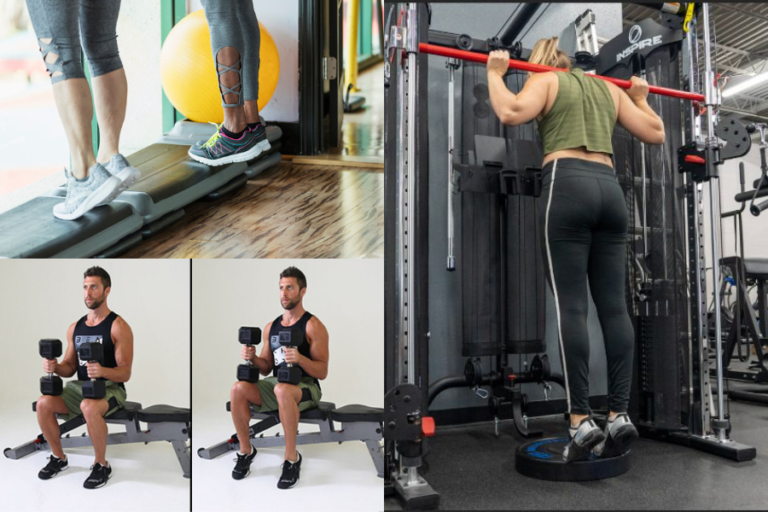
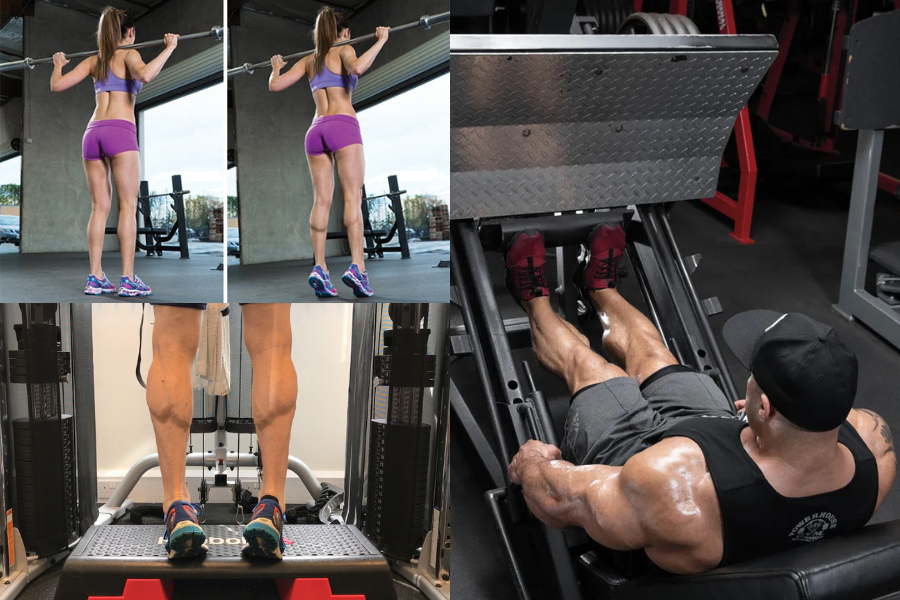
Standing calf raises are a staple for a reason. They target the gastrocnemius and let you load the movement heavily, even without special equipment.
You can use:
- A standing calf raise machine
- A Smith machine with a block or step
- A barbell or dumbbells while standing on a sturdy step
Aim for 3 to 4 sets of about 20 to 25 reps. Many lifters on Reddit in 2023 highlighted that standing calf raises with full range of motion, starting from a deep stretch and then rising powerfully, are among the most effective exercises for calf growth.
Focus on:
- Dropping your heel below the step for a stretch
- Pausing briefly, then driving up as high as you can
- Controlling the way down, instead of bouncing
Seated calf raises
Seated calf raises shift more emphasis to the soleus because your knees are bent. This muscle often gets neglected, even though it is essential for a thick, strong looking lower leg.
A typical approach is 3 sets of 8 to 15 reps on a seated calf raise machine. Hold the bottom and top positions for about two seconds each. That pause keeps constant tension on the muscle and improves growth potential.
Because the soleus is highly endurance based, you can occasionally push beyond 15 reps here, especially in your last set, to really tap into its slow twitch fibers.
Leg press calf raises
If standing calf raises bother your lower back or you want to load heavier without compressing your spine, leg press calf raises are a great option. You get a deep stretch and a stable platform.
Set up by placing the balls of your feet on the lower edge of the platform, then:
- Unlock the sled with legs almost straight, not locked.
- Lower your heels as far as comfortable for a deep stretch.
- Press through the balls of your feet until you are on your tiptoes.
Because the machine supports your body, you can safely load more weight than with free standing raises. This makes leg press calf raises ideal for heavier sets in the 10 to 15 rep range.
Donkey calf raises and squat raises
Donkey calf raises and variations like safety squat bar squat raises let you combine a hip hinge or squat position with a calf raise. This can feel more athletic and can help you maintain good balance.
Using a safety squat bar while holding the rack, you can:
- Squat down slightly
- Let your heels drop for a stretch
- Press up onto your toes while keeping your torso stable
Aim for about 3 sets of 10 to 15 reps. The goal is a heavy but controlled full range, not just piling on plates.
Eccentric and single leg variations
Your calves respond especially well to controlled eccentric work, which is the lowering part of the exercise. Eccentric calf raises can be done like this:
- Use two legs to rise up
- Lift one leg off
- Slowly lower yourself down on the other leg
You can apply this pattern to standing, seated, or leg press calf raises. This is a powerful way to increase tension without needing extreme weights.
Single leg calf raises on the leg press are also useful, especially for athletes such as basketball players. They help you identify strength or mobility differences between sides. A common setup is 3 sets of 12 to 20 reps per leg with lighter loads and full range.
Use rep ranges, volume, and variety wisely
Because your calves contain both slow and fast twitch fibers, they respond well when you rotate your training focus.
You can cycle between:
- High rep, lower load sets, such as 20 to 30 reps, to target slow twitch fibers.
- Moderate rep, heavier sets, such as 8 to 15 reps, to stimulate fast twitch fibers.
Some coaches and lifters note that combining high repetitions with genuinely challenging weights can be very effective. Since your calves are well conditioned from constant daily use, you often need both high rep sets and heavy loading to see changes.
Foot position also matters. A 2020 study by Nunes and colleagues found that:
- Toes pointed outward emphasize the medial head of the gastrocnemius
- Toes pointed inward emphasize the lateral head
- Toes pointed straight ahead hit both heads more evenly
Rotating these positions across your sets or sessions can help you develop more balanced calves.
Quick guide: think of high volume and intensity as your main levers. Whether you use heavier weights or more reps, your calves should feel a strong burn by the end of each set.
Sample 15 minute gym calf workout
Here is a simple routine you can add to your leg or push days. Finish your main workout first, then spend 10 to 15 minutes on this:
- Standing calf raises
- 3 sets of 15 to 20 reps
- Use a full stretch at the bottom and reach high at the top
- Change foot angle each set, one straight, one out, one in
- Seated calf raises
- 3 sets of 12 to 20 reps
- Pause for two seconds at the bottom and top
- Slowly lower for three seconds on each rep
If you have extra time, you can add:
- Leg press calf raises
- 3 sets of 10 to 15 reps heavy
- Focus on a deep controlled stretch
Train this routine three times per week. As it becomes easier, adjust by:
- Adding weight in small jumps
- Adding a set to one of the exercises
- Pushing your final set to near failure
Do not forget tibialis and plyometrics
To round out your lower legs, include movements for the front of your shin and some explosive work.
Simple tibialis raises, where you lean back against a wall and lift your toes repeatedly, help strengthen the tibialis anterior and can reduce shin discomfort. This muscle often gets ignored, but research suggests that making all the lower leg muscles stronger together improves balance and reduces injury risk.
You can also add jump rope intervals as a gym friendly plyometric option. Try 30 seconds on and 30 seconds off for 3 to 4 rounds. This setup gives your calves a reactive, spring like stimulus while also building cardiovascular fitness and explosive power.
Putting it all together
Calf genetics are real, but so is the impact of consistent, targeted training. When you treat your calf workouts in the gym with the same seriousness you give to squats or bench press, you finally give these stubborn muscles a reason to grow.
Start with a short, structured routine, train your calves at least three days a week, vary your rep ranges and foot angles, and focus on controlled, challenging sets. Over the next few months, you will notice not just bigger calves, but stronger, more resilient lower legs that support everything else you do in the gym.
About the Author