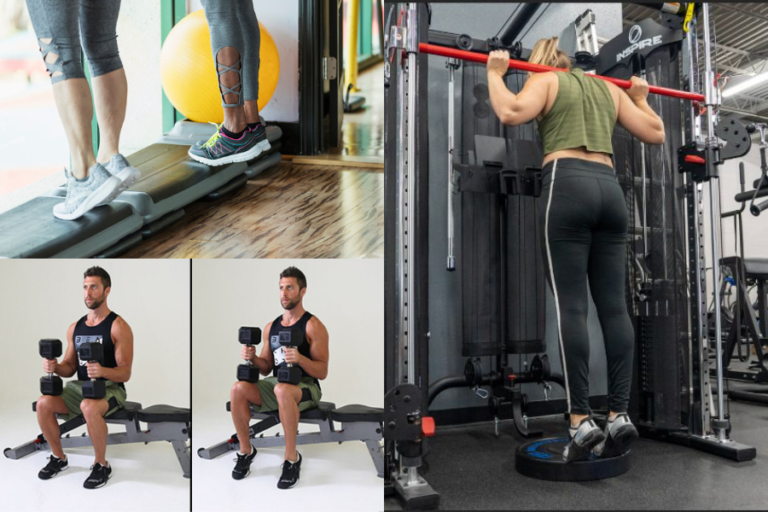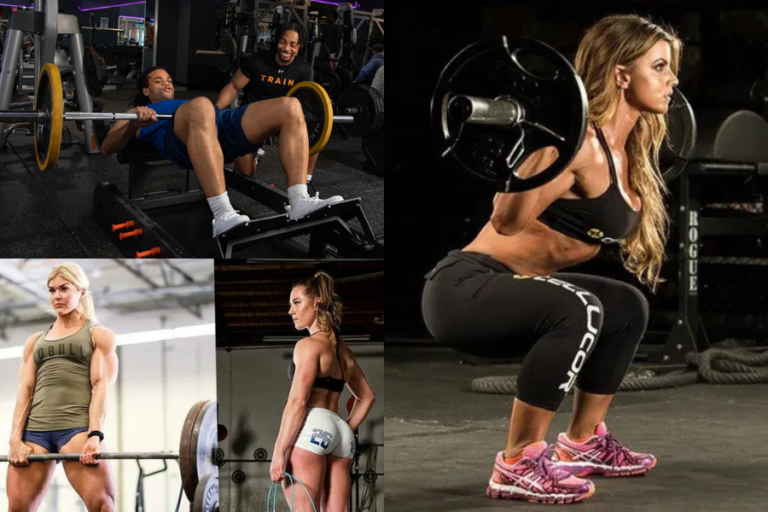
A focused hamstring hypertrophy workout can change the way your entire lower body looks and performs. Strong, well developed hamstrings add thickness to the back of your legs, help balance dominant quads, and support your knees and hips when you run, jump, or lift.
Below, you will learn how to train your hamstrings for size using smart exercise choices, effective volume, and technique details that many lifters overlook.
Understand what your hamstrings actually do
If you want better hamstring hypertrophy, it helps to know what you are trying to grow.
Your hamstrings are not one muscle. They are a group of three muscles, the biceps femoris, semitendinosus, and semimembranosus. Together, they primarily flex your knee and extend your hip, which means they bend your leg and help you drive your hips forward during movements like deadlifts and sprints, as explained by Cara Hartman in 2019.
Because the hamstrings cross both the hip and the knee, you need to train them in two main ways for complete development:
- Hip hinge movements, like Romanian deadlifts or good mornings
- Knee flexion movements, like leg curls or Nordic curls
The RP Strength Complete Hamstring Training Guide in 2024 emphasizes that both patterns are essential for full hypertrophy and to avoid leaving parts of the muscle group undertrained.
Choose the right hamstring hypertrophy exercises
You do not need a long list of exercises to build your hamstrings. You need a few effective ones that you perform consistently and with good form.
Heavy hip hinge movements
Hip hinges load your hamstrings hardest when they are stretched, which is ideal for hypertrophy.
Conventional deadlifts are a solid hamstring hypertrophy workout choice because they place a heavy load on your posterior chain by emphasizing hip extension while also engaging your core, hips, and back, according to a 2024 TrainHeroic guide on hamstring exercises. However, their overall fatigue cost is high, so you may not want to rely on them as your only hamstring builder.
Romanian deadlifts (RDLs) are often considered the centerpiece of hamstring hypertrophy. You keep a soft bend in your knees, push your hips back, and maintain tension through a deep stretch. This puts more continuous stress on your hamstrings than a conventional deadlift and targets the posterior chain very effectively.
Other hinge options include:
- Stiff leg deadlifts
- Good mornings
- Single leg RDLs
These all train hip extension with the hamstrings loaded at longer muscle lengths, which research suggests is particularly powerful for growth.
Direct knee flexion work
To fully develop your hamstrings, you also need exercises that bend the knee under load.
Nordic hamstring curls are a standout option. They isolate knee flexion, one of the hamstrings’ main roles, and they are especially challenging on the eccentric, or lowering, phase. A 2024 article on hamstring training notes that Nordic curls can significantly increase hamstring hypertrophy and can be done with a partner or with your feet anchored under a stable object.
Leg curls should almost always be part of your hamstring hypertrophy workout. Lying or seated machine curls let you take your hamstrings through a full range of motion and control tempo. In fact, a 12 week study with 20 healthy adults found that seated leg curls at 70 percent of one rep max, 10 reps, 5 sets, twice a week led to greater overall hamstring muscle volume gains than prone leg curls, with about 14.1 percent versus 9.3 percent growth. Training at a longer muscle length in the seated position produced better hypertrophy than the shorter length in the prone position.
Unilateral variations like standing or kneeling single leg curls can help you balance left and right side development and make it easier to focus on long, controlled reps.
Supportive compound lifts
Some big compound exercises will not be your primary hypertrophy drivers, but they still support hamstring growth and overall leg development.
Hip thrusts, usually thought of as a glute exercise, also recruit your hamstrings for hip extension. Positioning your feet a bit farther forward or wider than 90 degrees can increase hamstring involvement as you drive your hips up.
Glute ham raises and hip extensions on a Glute Ham Developer (GHD) are advanced options that blend hip extension and knee flexion. When you focus on squeezing your hamstrings and glutes as you rise and lower, you create very high posterior chain tension and strong hypertrophy stimulus.
Get your training volume and frequency right
You can have perfect exercise selection and still see slow progress if your training volume is too low or too high.
The 2024 RP Strength hamstring guide frames training volume with three landmarks:
- Minimum Effective Volume (MEV), the least work you need to start gaining
- Maximum Adaptive Volume (MAV), the range where you gain the fastest
- Maximum Recoverable Volume (MRV), the most you can handle and still recover
A practical way to apply this is to start at the lower end, closer to MEV, and gradually increase sets over a mesocycle that lasts up to 12 weeks. This lets you find your own MAV without constantly flirting with burnout.
A typical weekly hamstring hypertrophy setup from RP Strength includes 2 to 3 different exercises, usually a mix of hip hinges and curls, with only one hamstring focused movement per session. This approach limits session fatigue, keeps technique sharp, and lowers injury risk.
For many lifters, 8 to 12 challenging sets per week for hamstrings is a solid starting point. You can split that across 2 or 3 lower body days and adjust based on how well you recover and progress.
Use effective rep ranges and intensity
The weight you choose and how many reps you perform play a big role in how your hamstrings respond.
The RP Strength protocol for hamstring hypertrophy suggests two main rep zones:
- Heavy sets of 5 to 10 reps for hip hinge exercises
- Moderate to light sets of 10 to 30 reps for leg curls
Heavy hip hinges in the 5 to 10 rep range let you load the hamstrings hard without turning the movement into a long, posture fatiguing grind. Since your spinal erectors and grip can limit you, keeping reps a bit lower helps you maintain a strong position and safe technique while still providing a strong growth stimulus.
Leg curls respond well to higher reps. Sets of 10 to 30 allow you to drive a ton of local fatigue into the hamstrings without your lower back or hips giving out first. You can push close to failure, especially on the last set or two, to maximize fiber recruitment.
Insufficient intensity is a common weak point in hamstring hypertrophy workouts. If every set feels comfortable, you are probably leaving a lot of growth on the table. When you are more experienced and have solid form, you can occasionally use techniques like:
- Rest pause sets
- Drop sets
- Partner assisted forced reps
These are best used sparingly on leg curls or machine based work rather than on heavy hip hinges.
Focus on technique and range of motion
Quality reps matter more than adding more exercises. For hamstring hypertrophy, the way you move will decide which muscles grow and how much.
For hip hinges like RDLs and stiff leg deadlifts, pay attention to:
- Bending at the hips, not rounding your back
- Keeping a slight, consistent bend in your knees
- Lowering the weight until you feel a strong but controlled stretch in your hamstrings
- Maintaining tension in your hamstrings and glutes throughout the set
The RP Strength guide highlights that a deep stretch under control is key. If you cut the range short, you reduce the mechanical tension that drives growth.
For leg curls, aim for full knee extension at the bottom and bring the pad all the way toward your butt on every rep. Many lifters rush these and only move through the middle of the range, which significantly limits hypertrophy. Slowing down your tempo and controlling both the lifting and lowering phases can make a big difference.
A 12 week study on seated versus prone leg curls also reinforces the benefit of full range of motion. Both positions, when done through a full ROM, reduced susceptibility to muscle damage and improved strength, but the seated position, which keeps the hip more flexed, led to superior muscle growth because it trains the hamstrings at longer lengths.
Use eccentric training to boost growth and resilience
Your hamstrings respond especially well to eccentric, or lowering, focused training. That is when the muscle is producing force while it lengthens.
A 12 week study comparing Nordic Hamstring Training (NHT) to Lengthened State Eccentric Training (LSET) found that LSET produced greater overall hamstring muscle volume increases, about 18 percent compared to 11 percent for NHT, and led to a 19 percent increase in the biceps femoris long head muscle volume versus 5 percent for NHT. LSET also increased maximum eccentric knee flexion torque by 17 percent, which was higher than both the control group at 4 percent and the NHT group at 11 percent. This suggests that eccentrics at long muscle lengths may be especially powerful for size and strength that carry over to sprinting and injury prevention.
Another 6 week study in 2024 with young female dance students at Hebei Normal University used a combination of Nordic hamstring exercises and single leg deadlifts. The eccentric training group significantly improved both concentric and eccentric hamstring strength compared to traditional stretching or no intervention, and also saw greater gains in flexibility measured by the active straight leg raise test. The researchers concluded that eccentric protocols, specifically the mix of Nordic curls and single leg deadlifts, were more effective for building hamstring strength and flexibility than standard stretching.
You can apply this to your own hamstring hypertrophy workout by:
- Slowing down the lowering phase of RDLs and curls
- Adding occasional eccentric focused sets, for example, 3 to 5 second negatives
- Including Nordic curls or partner assisted eccentrics once or twice per week
Just remember that eccentric work is demanding, so start with lower volumes and build up gradually.
Personalize your hamstring training over time
Not every hamstring muscle head grows at the same rate or from the same exercises. A 2024 study titled “Individual distribution of muscle hypertrophy among hamstring muscle heads: Adding muscle volume where you need is not so simple” found significant differences in how various hamstring heads responded to training. Some muscles grew more than others, even under the same program.
The research suggested that a one size fits all hamstring program can lead to uneven development and that trainers should regularly assess and adjust hamstring workouts to target lagging regions. Advanced imaging in the study showed that growth patterns varied along the length of the muscles, which means that angle, hip position, and exercise type all play a role.
In practice, this means you will want to:
- Track how your hamstrings look and feel over a few months
- Adjust exercise selection if one part of your hamstrings lags behind
- Keep some movements constant long enough to judge progress before switching
For example, if you notice the upper hamstring near your glutes is underdeveloped, you might emphasize hip hinge work at longer ranges. If the lower hamstrings near the knee seem behind, you might increase your volume of seated leg curls or Nordic curls, which stress those regions more.
Put it all together with a sample hamstring hypertrophy plan
Here is how you might structure a simple but effective hamstring hypertrophy week using the principles above. This respects the idea of one main hamstring exercise per session and enough total volume for growth.
Always warm up with 5 to 10 minutes of light cardio and dynamic leg movements before your first working set.
Day 1: Hinge focused
- Romanian deadlift, 3 to 4 sets of 6 to 8 reps, moderate to heavy, control the eccentric
- Seated leg curl, 3 sets of 12 to 15 reps, full stretch and squeeze
Day 2: Curl and eccentric focus
- Nordic hamstring curls, 3 sets of as many controlled reps as you can, focus on slow lowering
- Single leg RDL, 3 sets of 8 to 10 reps per leg, lighter weight and deep stretch
Day 3: Mixed posterior chain
- Hip thrust, 3 sets of 8 to 12 reps, feet slightly forward to increase hamstring involvement
- Seated or lying leg curl, 3 sets of 15 to 20 reps, especially slow on the way down
Across these three sessions, you end up around 12 total challenging sets for hamstrings, which matches the sort of volume that many hypertrophy focused guides recommend, while still allowing enough recovery.
From week to week, your main goals are to:
- Add small amounts of weight when your rep target feels easier
- Add a rep or two per set within the suggested range
- Improve your technique and range of motion
If you keep those priorities in place, your hamstring hypertrophy workout will steadily transform your leg training and the way your legs look and perform.
About the Author