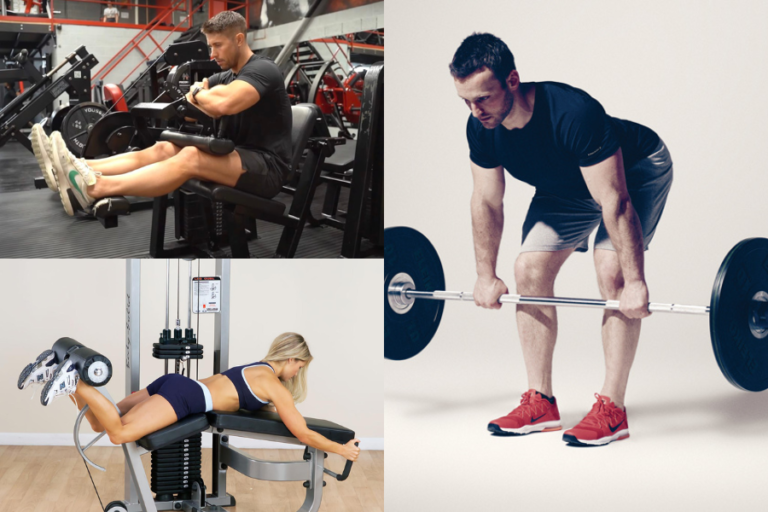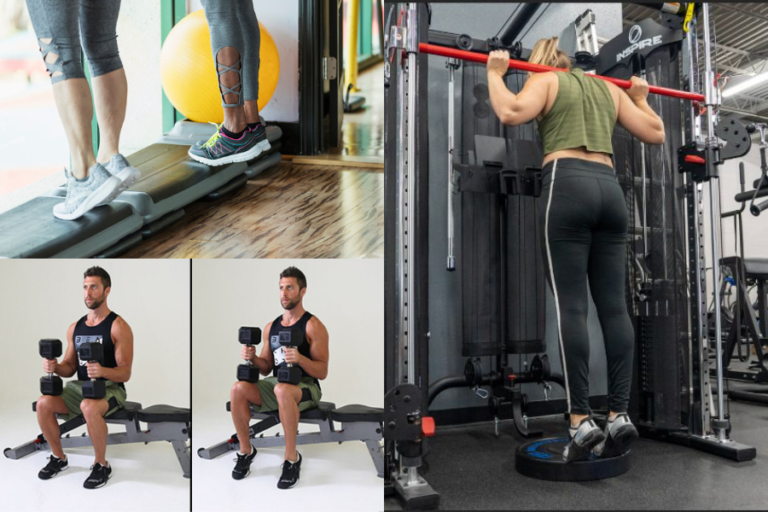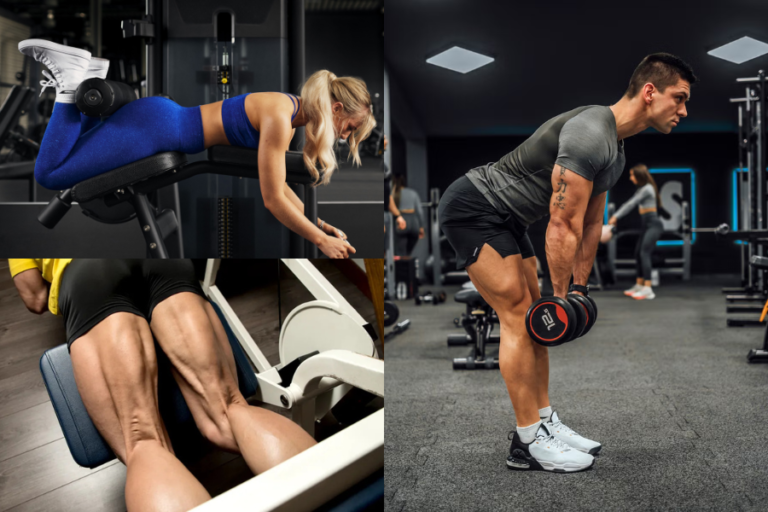
A hamstring workout at home is one of the simplest ways to build strength, protect your knees, and move more comfortably day to day. You do not need a gym membership or heavy equipment, just a bit of floor space and your body weight.
Below, you will find simple exercises, how to put them into a routine, and tips to stay consistent so your hamstrings get stronger and more flexible over time.
Understand your hamstrings
Your hamstrings are the group of three muscles on the back of your thigh. They help you bend your knees and extend your hips when you walk, climb stairs, or stand up from a chair. When these muscles are weak or tight, you are more likely to feel knee, hip, or lower back discomfort.
Strengthening your hamstrings with a regular hamstring workout at home does more than add muscle tone. Research shows that targeted bodyweight hamstring exercises can cut hamstring injury risk by about 49 percent, which is a major benefit if you are active in sports or simply want to avoid strains and pulls.
How often to work your hamstrings
To see real results from your hamstring workout at home, you need enough weekly volume without overdoing it. A practical guideline is:
- Aim for 10 to 16 total sets of hamstring work per week
- Spread those sets over 1 to 3 sessions
For example, you might do 4 to 5 hamstring-focused exercises, 2 to 3 sets each, twice per week. Consistency is more important than intensity at first, so start with what feels manageable and build gradually.
Warm up before you start
Good preparation makes your workout feel smoother and helps protect your muscles from strain. Spend 5 to 8 minutes on a simple warmup before any hamstring workout at home.
You can try:
- Marching in place or light jogging in place
- Leg swings front to back while holding a wall or chair
- Gentle bodyweight squats
- Hip circles to loosen your hips and lower back
Finish with a couple of easy practice reps of your first hamstring exercise so your body learns the movement pattern before you add more effort.
If any movement causes sharp pain, stop, adjust your range of motion, or choose an easier variation. Slight muscle effort or mild stretching is normal, but pain is not.
Beginner hamstring exercises at home
If you are new to strength training or coming back from time off, start with these beginner-friendly moves. Focus on slow, controlled reps and smooth breathing.
Glute bridge
The glute bridge is a gentle way to wake up your hamstrings and glutes without stressing your joints.
- Lie on your back with knees bent and feet flat on the floor, hip width apart.
- Keep your arms by your sides, palms down.
- Press through your heels and lift your hips until your body forms a straight line from shoulders to knees.
- Pause for a second, then lower slowly.
Work up to 3 sets of 15 to 20 reps. To make it a bit harder, pause for 2 to 3 seconds at the top of each rep or lightly squeeze a pillow between your knees.
Single leg glute bridge
Once the basic bridge feels easy, you can progress to a single leg version to challenge each side individually and improve balance.
- Set up as for the regular glute bridge.
- Lift one leg so your thigh is in line with the other, knee straight.
- Drive through the heel of the foot that stays on the floor and raise your hips.
- Keep your hips level, pause, then lower in control.
Aim for 3 sets of 10 to 12 reps per side. Move slowly so your hips do not tip or twist.
Bodyweight good morning
Good mornings are a simple standing exercise that teaches the hip hinge and lightly loads your hamstrings and lower back.
- Stand with feet shoulder width apart and hands resting lightly behind your head or crossed over your chest.
- Keep a soft bend in your knees.
- Push your hips back as if you are closing a car door with your backside.
- Keep your back flat and chest lifted as you lean forward until you feel a stretch along the back of your legs.
- Drive your hips forward to return to standing.
Start with 3 sets of about 15 controlled reps. Focus on the movement coming from your hips, not your lower back.
Intermediate hamstring exercises at home
When the beginner moves feel comfortable, you can increase the challenge with slightly more demanding exercises. You still do not need weights to get a strong hamstring workout at home.
Bodyweight Romanian deadlift
The bodyweight Romanian deadlift (RDL) emphasizes the eccentric, or lowering, portion of the movement, which is especially effective for building hamstring strength.
- Stand with feet hip width apart, knees slightly bent, arms hanging in front of you.
- Hinge at your hips, sliding your hands down the front of your thighs as your hips move back.
- Keep your spine neutral, with your chest open and shoulders pulled back, until you feel a firm stretch in your hamstrings.
- Press your feet into the floor and push your hips forward to return to standing.
Complete 3 sets of 10 to 12 slow reps. Count 3 seconds on the way down to highlight the eccentric portion of the movement.
Single leg Romanian deadlift
The single leg RDL brings balance and stability into the picture and is excellent for finding and fixing side to side differences.
- Stand tall on one leg, with a slight bend in the knee.
- Hinge at your hip, reaching the opposite leg straight back behind you as your chest lowers toward the floor.
- Keep your hips square to the ground and your back flat.
- When you feel a deep but comfortable stretch in the back of the standing leg, drive through that heel to come back up.
Try 2 sets of 8 to 10 reps per leg. In the beginning, you can touch a wall, chair, or countertop lightly with one hand for balance.
Sliding leg curl
Sliding leg curls mimic the motion of a machine hamstring curl but are easy to set up with basic household items.
You will need a smooth floor and something that slides, such as small towels, paper plates, or furniture sliders.
- Lie on your back with your heels on the sliders and knees bent.
- Lift your hips into a bridge position.
- Slowly slide your heels away from your body, straightening your knees while keeping your hips off the floor.
- Pull your heels back toward your glutes to return to the start.
Aim for 2 to 3 sets of 10 to 12 repetitions. If this feels too difficult, start by sliding out and then dropping your hips to the floor before resetting.
Advanced hamstring exercises at home
If you already have a solid base of strength and want a bigger challenge, these advanced bodyweight moves will demand more control and power.
Nordic hamstring curl
The Nordic curl is one of the most effective bodyweight exercises for building hamstrings and reducing injury risk. Because it is challenging, start with assisted versions.
- Kneel on a padded surface with your feet anchored under sturdy furniture or ask a partner to hold your ankles.
- Keep your body in a straight line from knees to head and cross your arms over your chest.
- Slowly lower your torso toward the floor, using your hamstrings to resist the fall.
- When you can no longer control the descent, catch yourself with your hands, then push lightly off the floor as you use your hamstrings to return to the starting position.
Begin with 2 to 3 sets of 4 to 5 reps. Focus on the slow lowering part, which is what trains the hamstrings eccentrically.
Stability ball hamstring curl
If you have a stability ball (also called a Swiss ball) at home, you can add a dynamic curl that trains both stability and strength.
- Lie on your back and place your heels on top of the ball.
- Lift your hips so your body forms a straight line from shoulders to heels.
- Bend your knees and roll the ball toward your glutes while keeping your hips lifted.
- Slowly extend your legs to roll the ball away again.
Try 2 sets of about 10 reps. If the ball wobbles a lot, move slowly and reduce your range of motion until you feel more stable.
Sample hamstring workout at home
Here is a simple routine you can follow two or three times per week. Rest 30 to 60 seconds between sets, and adjust the difficulty as needed.
| Exercise | Sets | Reps | Level |
|---|---|---|---|
| Glute bridge | 3 | 15 to 20 | Beginner |
| Bodyweight Romanian deadlift | 3 | 10 to 12 | Beginner |
| Sliding leg curl | 2 | 10 to 12 | Intermediate |
| Single leg Romanian deadlift | 2 | 8 to 10 / leg | Intermediate |
| Nordic hamstring curl | 2 | 4 to 5 | Advanced |
You do not have to include every exercise in every workout. If you are just starting, you might use only the first two moves. Over time, you can add more as your strength improves.
Add movement and stretching for healthy hamstrings
Strength work is only part of a complete hamstring routine. Adding a few other elements will help you feel looser and more resilient.
Short sprints, when done safely, strongly engage your hamstrings and can complement your home strength sessions. Be sure to warm up thoroughly and start with very short distances.
For flexibility and nerve mobility, gentle stretches such as the figure four stretch or piriformis stretch can help ease persistent tightness. Foam rolling along the back of your thighs can also mimic a light massage and help you recover between workouts.
If you have a history of hamstring injury or ongoing pain, a physical therapist or sports medicine specialist can give you personalized guidance on which movements to prioritize and which to avoid while you are healing. Many orthopedic and sports medicine experts share targeted protocols and advice online, for example through hospital systems such as Baptist Health, which can be a useful resource when you want to understand injury prevention and treatment options more deeply.
Safety tips and when to pull back
As you build your hamstring workout at home, keep these simple rules in mind:
- Increase volume gradually. Add a few reps or one extra set per week instead of making big jumps.
- Prioritize form over depth. A smaller, controlled range of motion is safer than forcing a deep hinge or curl.
- Watch for muscle imbalances. If one leg feels much weaker, spend a bit more time on single leg exercises.
- Take at least one full rest day between intense hamstring sessions so the muscles can recover and grow.
Stop and consult a professional if you notice sharp pain, swelling, bruising, or a sudden “pop” sensation in the back of your thigh. Those can be signs of a strain that needs medical attention.
Putting it all together
A good hamstring workout at home does not need to be complicated. With basic exercises like glute bridges, good mornings, Romanian deadlifts, sliding leg curls, and Nordic curls, you can improve strength, balance, and flexibility using only your body weight.
Choose two or three exercises that match your current level, practice them a couple of times per week, and move with control. Over the next few weeks, you will likely notice everyday tasks feeling easier, your legs feeling more stable, and your muscles looking more defined.
About the Author