A quad workout for beginners does not need to be complicated or intimidating. With a few simple movements, you can build strength in your thighs, support your knees, and make everyday activities like climbing stairs or standing up feel easier.
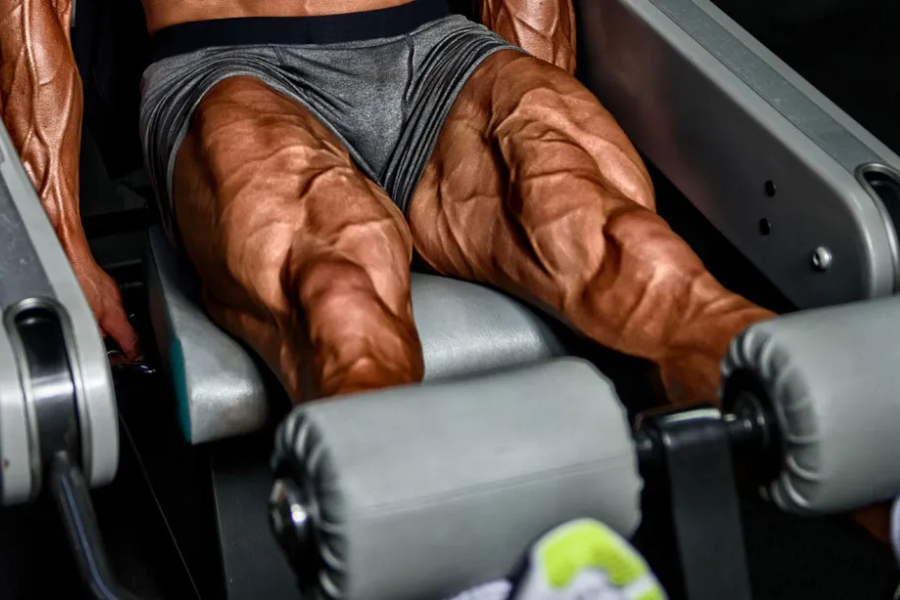
The quadriceps are the four muscles at the front of your thighs. They straighten your knees, help stabilize your hips, and play a big role in squats, lunges, and walking. When you follow a beginner-friendly plan and focus on form, you can safely grow strength and confidence over time.
Understand your quads and why they matter
Your quadriceps sit at the front of your thigh and are made up of four muscles that work together to extend your knee and help you stand, walk, run, and jump. Strong quads support your knees, improve balance, and contribute to better performance in big lifts like squats and deadlifts, as a 2026 overview from Muscle & Fitness explains.
For beginners, that means training your quads is not just about shaping your legs. It also helps you move more comfortably throughout the day, especially if you spend a lot of time sitting.
A well-rounded quad workout for beginners should include exercises that work your quads in different positions. Some moves target the muscle when it is fully stretched, others in a neutral position, and some when it is more shortened. This variety supports balanced strength and reduces your risk of overloading a single area.
How often to train your quads as a beginner
You do not need to hit your legs every day to see progress. In fact, recovery is a big part of getting stronger.
For most beginners, a good starting point is:
- Train quads 2 times per week
- Choose at least 2 quad-focused exercises per session
- Perform 3 to 4 sets of 8 to 12 repetitions per exercise
- Leave at least 48 hours between quad workouts so your muscles can recover and grow
If you are brand new to exercise, you can start even lighter. Try 2 sets of 10 to 12 repetitions for each movement, then add a set or a few more reps as you feel comfortable.
Key guidelines for safe beginner quad training
Before you jump into the exercises, a few simple principles will help you get more out of each workout and avoid problems later.
Focus on full, controlled range of motion
When you squat or lunge, try to move through as much comfortable range as your body allows. For most people, that means bending the knees until the thighs are at least parallel to the floor. Research on common training mistakes notes that partial reps can limit muscle growth and make your workouts less effective, especially in movements like squats and leg presses.
If you cannot reach that depth with good form, reduce the range slightly, then gradually work deeper over time as your strength and mobility improve.
Do not go too heavy too soon
It is tempting to load up weight quickly, but with a quad workout for beginners, your main goal is to learn solid technique. Using a moderate weight that lets you perform 8 to 12 controlled reps works better for building muscle than struggling through a few short, rushed reps.
Avoid cutting your range of motion just to lift more. Instead, choose a weight that allows you to:
- Move smoothly
- Maintain your posture
- Hit your target rep range without losing form
Pay attention to squat and lunge form
Proper form helps your quads do their job without overloading your back or hips. When you squat, focus on these checkpoints:
- Keep your chest lifted rather than folding forward
- Sit your hips down between your heels instead of pushing them far back
- Let your knees track roughly over your toes, not collapsing inward
Similar ideas apply to lunges and split squats. A more upright torso will usually increase quad involvement, while a heavy forward lean shifts more work into your hips.
Beginner quad warm up and mobility
A short warm up makes your muscles and joints more prepared to handle loading. You do not need a long routine, just a few minutes of gentle movement.
Quadruped rocking
Quadruped rocking combines pieces of yoga’s cow and child’s poses. It lightly opens your hips and gently stretches your quads.
- Start on hands and knees with your wrists under your shoulders and knees under your hips.
- Gently arch your back while lifting your chest slightly.
- Slowly sit your hips back toward your heels while keeping your hands planted.
- Rock forward again to the start position.
Begin with 2 sets of 10 rocks, resting about 30 seconds between sets. This is often enough to wake up your hips and thighs before you move into strength work.
Bodyweight quad exercises you can do at home
Most beginner-friendly quad exercises require little or no equipment. You can do them in your living room, bedroom, or any open space.
Bodyweight squat
The bodyweight squat is one of the best all-around movements for your quads, hamstrings, glutes, core, and even the muscles that support your spine.
- Stand with your feet about hip to shoulder width apart.
- Keep your chest lifted and your arms in front of you for balance.
- Bend your knees and hips to lower down as if sitting into a chair.
- Go as low as you can while keeping your heels on the floor and your chest up.
- Push through your whole foot to stand back up.
If a full squat is too challenging at first, reduce your depth. You might lower only halfway until your strength and confidence increase. Start with 2 sets of 10 to 12 reps and rest 30 to 60 seconds between sets.
Split squat
Split squats work each leg individually, which helps improve balance and address strength differences between sides.
- Stand tall and step one foot forward into a lunge stance.
- Keep your torso mostly upright and your feet about hip width apart to stay balanced.
- Bend both knees to lower straight down, stopping before your back knee touches the floor.
- Press through the front foot to return to standing.
Aim for 2 sets of 10 reps per leg with about 30 seconds of rest. If you feel wobbly, hold on to a chair or wall while you learn the motion.
Wall sit
Wall sits are simple but surprisingly challenging. They build endurance in your quads without any equipment other than a wall.
- Stand with your back against a wall and your feet about a foot or two in front of you.
- Slide down the wall until your knees are roughly bent to 90 degrees, like sitting on an invisible chair.
- Keep your back flat to the wall and your knees over, not far past, your toes.
- Hold this position as long as you can.
For a beginner quad workout, try 2 sets of 30 seconds, or simply hold until you feel a strong but manageable burn. Rest for about 30 seconds between holds.
Beginner-friendly weighted quad exercises
Once you feel comfortable with bodyweight movements, you can add light weights to challenge your quads more. You do not need a full gym. A single dumbbell, kettlebell, or even a heavy household object can work.
Goblet squat and heel-elevated variation
The goblet squat is a beginner-friendly variation that encourages good posture and often feels easier on the back.
- Hold a kettlebell or dumbbell close to your chest with both hands.
- Stand with your feet about shoulder width apart.
- Keep your elbows pointed slightly down and your chest lifted.
- Squat down as if sitting into a chair, then stand back up.
Because the weight is in front, your torso tends to stay more upright, which increases quad involvement and reduces strain on the lower back. A common starting point is 2 sets of 10 reps with about 60 seconds of rest.
If your ankles feel tight or you struggle to keep your balance, try a heel-elevated goblet squat. Place a small plate or sturdy object under your heels. Raising your heels reduces the ankle bend required and pushes more of the work into your quads. This variation is especially helpful if you have limited ankle mobility.
Front squat basics for beginners
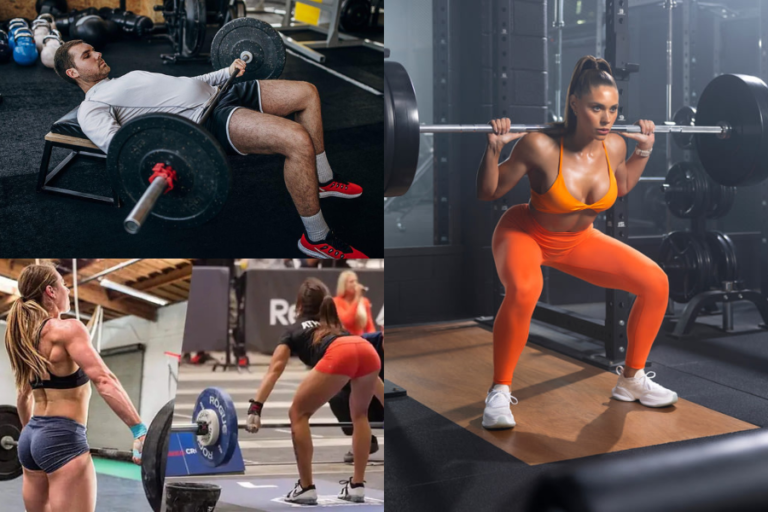
If you work out where a barbell is available, front squats can be an excellent quad builder. The bar rests in front of your shoulders, which naturally forces you into a more upright position and increases quad activation.
- Place the barbell across the front of your shoulders, resting on your collarbones and the front of your deltoids.
- Lift your elbows so your upper arms are roughly parallel to the floor.
- Stand with your feet about shoulder width apart.
- Squat down, keeping your chest lifted and elbows up.
- Stand back up while driving through your midfoot.
Front squats typically feel harder than back squats at the same weight, so start lighter and focus on controlling the full range of motion.
Machines and isolation work
If you prefer a gym environment, a few common machines can help you focus on your quads without worrying as much about balance.
- Hack squat machine: Supports your upper body and forces a more upright posture so you can push your quads hard with less need for core stability.
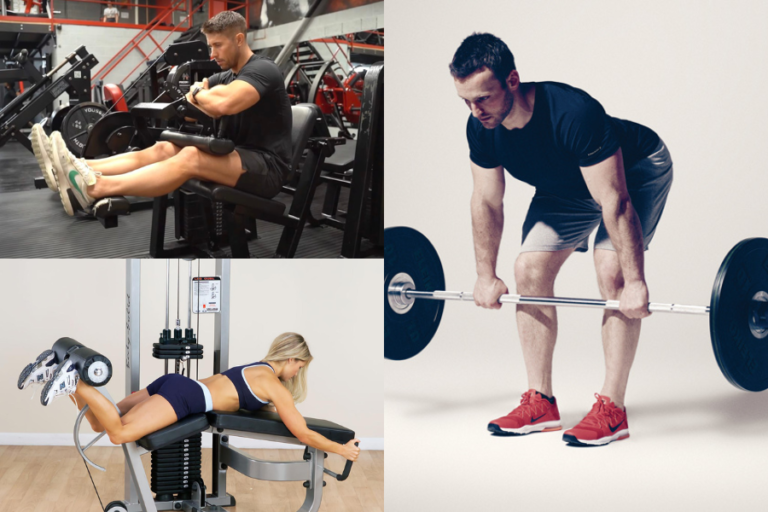
- Leg extension machine: Works your quads when they are more shortened, which helps isolate them compared with compound movements.
Some lifters like to adjust foot placement on machines like the hack squat or Smith machine to try to target different parts of the quads. However, research on training mistakes suggests that changing foot stance does not truly separate your quads from your glutes as much as many people think. The basics still matter most: full range of motion, controlled form, and appropriate weight.
Unilateral and advanced quad movements to aim for later
As you become stronger, you might want to challenge your balance and coordination. Unilateral exercises work one leg at a time and help even out strength differences.
Bulgarian split squat
The Bulgarian split squat is a more advanced form of the split squat. It increases the load on the front leg and stretches the back leg.
- Stand a couple of feet in front of a bench or sturdy platform.
- Place the top of one foot on the bench behind you.
- Keep your chest tall and your weight centered over the front foot.
- Lower your hips straight down, bending your front knee.
- Press through your front heel to stand back up.
A common prescription is 2 sets of 10 reps per side with about 30 seconds rest. If you need to, start by holding onto a support until you feel more stable.
Sissy squat and pistol squat
The sissy squat and pistol squat are advanced moves and are not necessary when you are just starting.
- The sissy squat pushes your knees far over your toes while you rise up on your tiptoes. This reduces hip involvement so your quads do more of the work. Beginners can loop a resistance band around a squat rack for assistance and extra balance.
- The pistol squat is a full single-leg squat to the floor with the other leg extended in front. It requires significant strength, mobility, and control, so it is best to avoid this exercise until you are very comfortable with the other movements in your routine.
These can be long-term goals to work toward once you have built a solid foundation.
Common quad training mistakes to avoid
You will make better progress and feel more comfortable in your workouts if you steer clear of a few frequent pitfalls. Several of these are discussed in detail in the Living Lean podcast episode “Training Mistakes Pt. 5: QUADS,” which breaks down anatomy, exercise selection, and setup tips.
Here are some key points to keep in mind:
- Rushing your reps. Move in a controlled way, especially on the lowering portion, so your muscles, not momentum, do the work.
- Letting knees collapse inward. Focus on pushing your knees gently out in line with your toes, particularly in squats and lunges.
- Ignoring discomfort signals. Quads should feel a deep, working burn, but sharp pain around the knee joint is a sign to adjust your form or scale back.
- Skipping variety. Relying only on one exercise limits progress. Mix squats, split squats, machines, and isolation work so you train your quads at different lengths and angles.
The podcast also highlights the value of tailoring your setup to your body, choosing rep ranges that suit your goals, and managing discomfort so you can train consistently rather than stopping every time your legs feel challenged.
Putting it all together: Sample beginner quad workout
You can build an effective quad workout for beginners using just a handful of the exercises above. Here is a simple template you can follow twice per week:
- Quadruped rocking
- 2 sets of 10 reps, 30 seconds rest
- Goblet squat (or bodyweight squat)
- 3 sets of 8 to 12 reps, 60 seconds rest
- Split squat
- 3 sets of 8 to 10 reps per leg, 30 to 60 seconds rest
- Wall sit
- 2 sets of 30 seconds (or as long as you can manage), 30 seconds rest
As you get stronger, you can add a heel-elevated goblet squat variation, introduce leg extensions or hack squats if you have access to a gym, or progress to Bulgarian split squats for more of a challenge.
Start small, aim for consistent practice, and pay attention to how your legs feel from one session to the next. With a steady approach, your quads will grow stronger, your knees will feel more supported, and everyday movement will start to feel easier and more confident.
About the Author