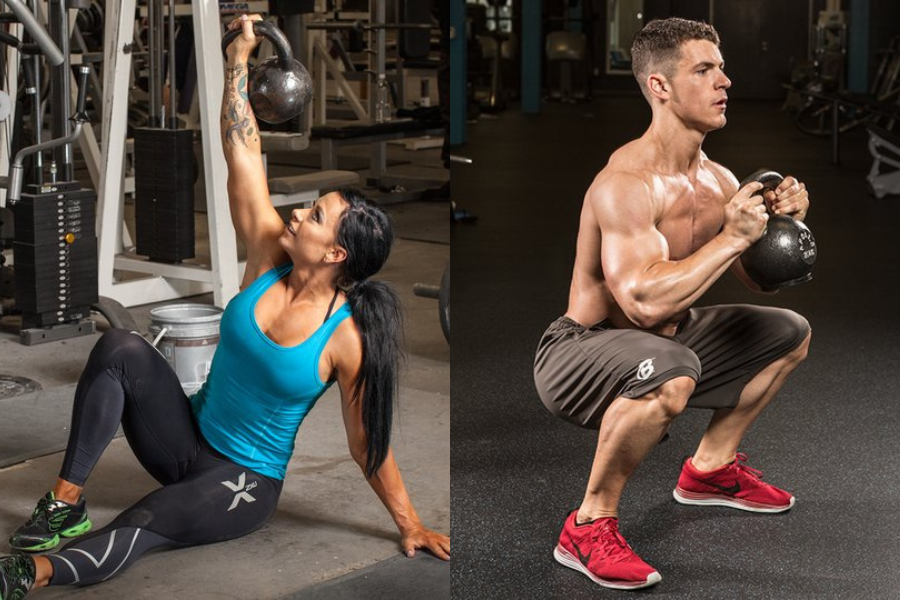
A single kettlebell can deliver a complete strength and conditioning session when you use it with intention. This 45-minute full body workout focuses on smooth, controlled movements that follow natural human motion patterns. The structure alternates between power, strength, and conditioning so you challenge your muscles, joints, and cardiovascular system without needing a full gym.
This workout works well at home, while traveling, or anytime you want an efficient session with minimal equipment. By adjusting reps, rest periods, and load, you can scale every movement to match your experience level.
Choosing the Right Kettlebell
Before starting, select a kettlebell that allows both control and challenge. A good rule is to use a bell that equals roughly 20–30 percent of your body weight. That range supports swings, presses, squats, and carries without forcing sloppy form.
Lighter bells allow higher reps and longer sets. Heavier bells increase strength demands and reduce total reps. Choose a load that lets you move with confidence through every exercise.
Warm-Up and Prep Movements
The workout begins with movements that raise your heart rate, activate your hips, and prepare your core and shoulders. These exercises also build strength on their own, so they count as productive training rather than filler.
Kettlebell Front Swings
Start with the kettlebell slightly in front of you. Pull it back between your legs, hinge at the hips, and snap your hips forward to drive the bell upward. Keep the movement powerful but controlled.
Focus on hip extension rather than lifting with your arms. Your glutes and hamstrings should do most of the work. Use moderate reps to build rhythm and power.
Single-Arm Front Swings
Switch to one hand and repeat the swing pattern. Rotate the bell slightly so it tracks comfortably between your legs. Let your hips guide the motion while your core stabilizes your torso.
Alternate sides for even loading. This variation challenges grip strength and forces your core to resist rotation.
Figure Eight Passes
Drop into a partial squat and pass the kettlebell between your legs in a smooth figure-eight pattern. Keep your chest tall and your spine neutral.
This movement warms your hips, knees, shoulders, and core while improving coordination. Use steady, controlled passes rather than speed.
Upper Body Strength Focus
Once your body feels warm and mobile, move into upper body strength work. These exercises still involve your legs and core, but they emphasize pressing and pulling strength.
Kettlebell Overhead Press
Hold the kettlebell in the rack position with your forearm angled and the bell resting comfortably against your arm. Press the kettlebell upward in a curved path rather than straight out to the side.
Lower it back under control to the rack position. If the weight feels heavy, use a slight knee bend to assist the press while keeping control.
Clean and Press Variation
Add complexity by cleaning the kettlebell from the swing into the rack position before pressing overhead. Guide the bell smoothly into place rather than letting it slam against your arm.
This movement builds coordination, shoulder stability, and full-body strength. Keep your core tight and your motion efficient.
Squat to Row Combination
Take a wide stance and lower into a squat. Row the kettlebell toward your hip while staying balanced. Shift sides smoothly, alternating the row with each squat.
This exercise targets your legs, upper back, and core at the same time. Move slowly to maintain control and balance.
Lower Body Power and Strength
After upper body work, shift focus back to the lower body. These movements emphasize single-leg strength, balance, and explosive power.
Kettlebell Pass-Through Lunges
Hold the kettlebell in one hand and step into a lunge with the opposite leg. At the bottom, pass the kettlebell under your leg and switch hands as you transition to the other side.
Keep your stance slightly wider for balance. Move with control and avoid resting the bell or your knee on the ground.
Weighted Split Jumps
For a higher challenge, hold the kettlebell by the handle and perform split jumps. Lower into a split stance, jump upward, and switch legs in midair.
Land softly and maintain alignment through your hips and knees. This movement builds power and pushes conditioning levels higher.
Total Body Power Finishers
As fatigue builds, finish with explosive movements that engage the entire body. These exercises demand coordination and focus, so prioritize form over speed.
Single-Arm Kettlebell Snatch
Begin with a swing, then drive the kettlebell upward and punch your hand toward the ceiling. Guide the bell so it rolls smoothly onto your forearm.
Lower it under control and repeat. This movement challenges your hips, shoulders, grip, and cardiovascular system all at once.
High Pull Alternative
If the snatch feels uncomfortable, use a kettlebell high pull. Swing the bell upward, pull your elbow high, then guide the kettlebell forward and down.
This option still works your hips, upper back, and shoulders while allowing more control.
Upper Body Finisher Movements
End the workout with pushing exercises that challenge your chest, shoulders, and arms without requiring additional equipment.
Over-and-Back Push-Ups
Place one hand on the kettlebell and perform a push-up. Explode upward and move your hand to the opposite side of the bell before lowering again.
Keep your core tight and your movement smooth. Shift most of your weight onto the working arm.
Close-Grip Kettlebell Push-Ups
Grip the kettlebell handle with both hands and perform push-ups while squeezing the handle. Lower your chest slightly forward and press back up with control.
Adjust your body angle to place more emphasis on your shoulders or chest.
Structuring the Workout
You can perform this workout using straight sets or by pairing movements into supersets. Alternate upper and lower body exercises to manage fatigue while keeping intensity high.
Rest as needed between sets, especially during explosive movements. The goal is consistent effort with strong form from start to finish.
Final Notes on Training with One Kettlebell
This workout shows how one kettlebell can deliver strength, power, and conditioning in a single session. You do not need endless equipment to train effectively. How you use the tool matters more than the tool itself.
Feel free to swap movements, adjust reps, or repeat favorite exercises as needed. Focus on control, breathing, and quality movement to get the most from every session.
About the Author