A strong pair of hamstrings does much more than power you through sprints. Your hamstring muscles help you walk, climb stairs, protect your knees, and support your lower back every time you bend over or stand up. Simple hamstring exercises that you can do at home or in the gym make a big difference in how strong and comfortable your body feels day to day.
Below, you will learn what your hamstrings actually do, why they tend to get tight and weak, and a set of easy hamstring exercises you can plug into your week for faster muscle gains and fewer injuries.
Understand what your hamstrings do
Your hamstrings are a group of three muscles that run along the back of your thigh from your hip to just below your knee. These muscles control two big movements: hip extension and knee flexion. That means they help you straighten your hip when you stand up and bend your knee when you walk, run, squat, or kick. They also assist with pelvic tilt, which affects your posture and how your lower back feels, according to Peloton instructor Matty Maggiacomo in 2024.
When your hamstrings are strong and working in balance with your quadriceps on the front of your thighs, your knees and hips move smoothly. When they are weak or constantly tight, you are more likely to feel knee discomfort, cranky hips, or stiffness in your lower back.
Recognize why hamstrings get tight or weak
You might assume tight hamstrings are always strong, but the opposite is often true. Many people have hamstrings that are both tight and weak.
A few common reasons this happens:
- Long periods of sitting, which keep your hips flexed and your hamstrings held in a shortened or awkward position
- Tight hip flexors that prevent your glutes from working well, so the hamstrings have to pick up extra effort
- Overuse from running, soccer, or other sports without enough strength training or recovery
- Muscle imbalances, where the quadriceps are much stronger than the hamstrings, a pattern that is especially common in women and can affect running and exercise form, as Matty Maggiacomo notes
These issues can lead to pulled hamstrings, which are both painful and notorious for coming back if you rush your return to sport. Sport & Spinal Physiotherapy in Australia reports that about half of hamstring re-injuries happen in the first 25 days after returning to play, which shows how important consistent strengthening really is.
Start with beginner-friendly hamstring moves
If you are new to hamstring exercises, coming back from a strain, or dealing with knee sensitivity, start with low-load, controlled movements. Focus on feeling your hamstrings switch on without pushing into pain.
Seated hamstring squeeze
This is a gentle way to wake up your hamstrings without much motion at the knee.
- Sit tall on a chair with your feet flat on the floor and knees bent about 90 degrees.
- Press your heels firmly into the floor as if you were trying to pull them backward, but do not actually move your feet.
- You should feel the backs of your thighs tighten.
- Hold for 5 to 10 seconds, then relax.
Aim for 8 to 10 squeezes per leg or both legs together. This static contraction is especially useful early in rehab or when your knee does not tolerate full curls yet.
Basic hamstring curl (no machine)
You can do this lying on your stomach with minimal equipment.
- Lie face down with legs straight and your forehead resting on your hands.
- Slowly bend one knee and bring your heel toward your glutes.
- Stop before any cramping or pain and slowly lower back down.
- Keep your hips pressed into the floor and avoid arching your back.
Work up to 2 sets of 10 to 15 reps per leg. Over time, you can add a light ankle weight or a resistance band around your ankles.
Build strength with simple bodyweight exercises
Once basic curls feel comfortable, you can progress to bodyweight hamstring exercises that also challenge your hips and core. Hinge Health physical therapists recommend including both open-chain moves, where your foot is off the ground, and closed-chain moves, where your foot stays planted, to improve overall strength and mobility.
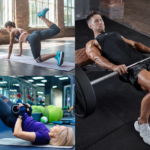
Glute bridge and hamstring bridge variations
Glute bridges target your glutes and hamstrings and help you learn how to extend through your hips instead of your lower back.
- Lie on your back with knees bent and feet flat, hip-width apart.
- Gently brace your core, press through your heels, and lift your hips until your body forms a straight line from shoulders to knees.
- Pause for 1 to 2 seconds, then lower with control.
Start with 2 sets of 10 to 12 reps. To make this more hamstring-focused, you can:
- Walk your feet a bit farther away from your body so there is a longer lever
- Elevate your feet on a step or bench for a double leg bridge, as suggested by Sports Injury Physio
- Progress to a single leg bridge with one foot on the floor or bench and the other leg extended
These progressions increase hamstring demand while also challenging your core and pelvic control.
Standing good morning (no barbell needed)
Good mornings are a classic hip hinge exercise that strengthen your hamstrings and lower back.
- Stand tall with feet hip-width apart, hands lightly behind your head or crossed over your chest.
- Soften your knees and hinge at your hips, sending them back while keeping your back flat.
- Stop when you feel a stretch along the back of your thighs but can still maintain a neutral spine.
- Drive your hips forward to stand up again.
Perform 2 sets of 10 to 12 reps. Use slow, controlled movement to keep the work in your hamstrings instead of your lower back.
Add dumbbells for faster muscle gains
To build muscle more quickly, you eventually need to add resistance. Simple tools like dumbbells, kettlebells, or a stability ball can turn basic hamstring exercises into serious strength builders.
Romanian deadlift (RDL)
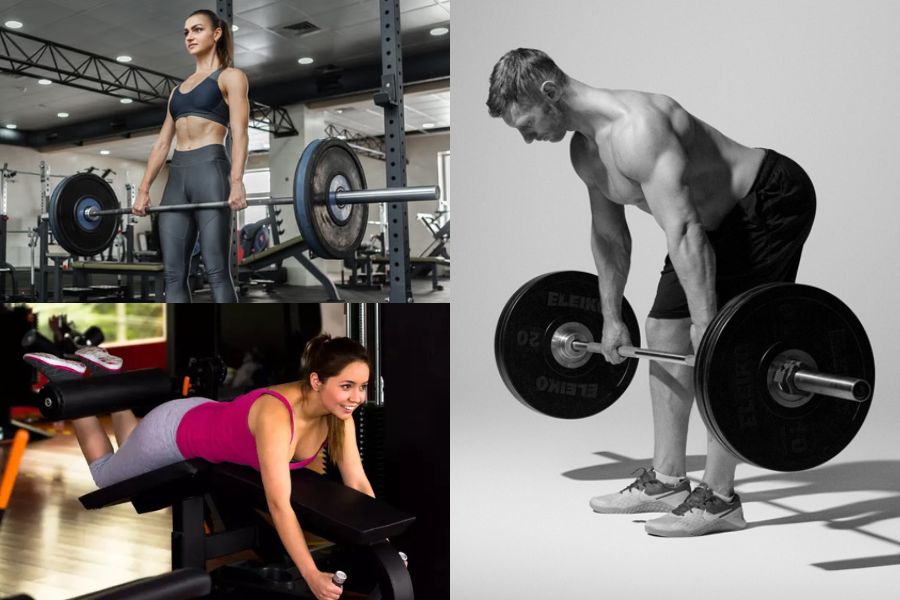
The Romanian Deadlift is one of the most popular hamstring exercises because it trains your hamstrings, glutes, and back in a single hip hinge pattern. Research from the American Council on Exercise in 2018 found that Romanian deadlifts, along with kettlebell swings and hamstring curls, were among the top movements for activating the hamstrings in young adults aged 20 to 25.
- Stand with feet hip-width apart, holding a pair of light dumbbells in front of your thighs.
- Keep a soft bend in your knees and brace your core.
- Hinge at your hips, sliding the dumbbells down your thighs while keeping them close to your body.
- Stop when your torso is roughly parallel to the floor, or when you feel a strong but comfortable stretch in your hamstrings.
- Press your feet into the ground and squeeze your glutes to return to standing.
Start with 2 sets of 10 reps using a weight that feels light to moderate while you learn form. As you get more confident, you can experiment with eccentric isometric Romanian deadlifts, where you lower the weight slowly over 3 to 7 seconds, pause at the bottom for 2 to 5 seconds, then stand up. This slower tempo is very effective for improving mobility, control, strength, and muscle growth.
Single leg Romanian deadlift
Single leg RDLs take the same hinge pattern and challenge each side separately. They improve hamstring strength, hip stability, and balance, which matters a lot for runners and field athletes. The 2018 ACE study also highlighted single leg and single arm Romanian deadlifts as highly effective hamstring activators.
- Stand tall with feet hip-width apart, holding a light dumbbell in the hand opposite the working leg, or no weight at first.
- Shift your weight onto your right foot and slightly bend your right knee.
- Hinge at your hips, letting your left leg extend straight behind you as your torso moves forward.
- Keep your hips level and your back neutral.
- When your torso is about parallel to the floor, pause, then drive through your right heel to return to standing.
Try 2 sets of 8 to 10 reps per leg. Sports Injury Physio notes that single leg deadlifts and Romanian deadlifts are especially helpful for preventing hamstring injuries because they address side-to-side strength differences and improve lumbo-pelvic control.
Physio ball leg curl
The Physio Ball Leg Curl adds a rolling element that lights up your hamstrings, glutes, and lower back.
- Lie on your back with your heels on a stability ball and legs straight.
- Lift your hips so your body forms a straight line from shoulders to heels.
- Bend your knees and curl the ball toward your glutes while keeping your hips lifted.
- Slowly straighten your legs to roll the ball back out.
Aim for 2 sets of 10 reps. This move teaches your hamstrings to work while your core stabilizes, which is similar to what they do when you run or change direction quickly.
Use hamstring exercises to protect your knees and back
Strong hamstrings do more than make your legs look toned. They help protect vulnerable joints and tissues.
Hinge Health physical therapists explain that hamstring strengthening improves muscle balance between the front and back of your thighs, which reduces strain on your knees and makes daily tasks like bending, gardening, or playing with kids easier. Weak hamstrings, especially when your quadriceps dominate, can increase knee pain and strain risk, and this imbalance is commonly seen in women.
For runners, the hamstring muscles play a dual role. They help pull you forward when your foot hits the ground and they slow your knee at the end of the swing phase, which keeps your stride efficient and your knees safer. Athletes with stronger hamstrings tend to get injured less and tolerate running better overall, even if hamstring strength is not the main driver of raw speed.
Eccentric exercises, which strengthen your muscles as they lengthen, are especially effective for injury prevention. Nordic Hamstring Curls are a prime example. They involve kneeling with your feet anchored, lowering your body forward over about five seconds while keeping your hips straight, and then returning to upright. Sport & Spinal Physiotherapy recommends aiming for 3 sets of 5 to 6 reps. Although they are challenging and can cause initial soreness, consistent use of Nordic Curls has been shown to dramatically cut hamstring injury rates in runners and field athletes.
Many sports medicine professionals now consider eccentric strength training the most effective method for hamstring injury prevention in athletes.
If full Nordics feel too intense right now, eccentric bridges and single leg RDLs are smart stepping stones that train the same lengthening strength in a more accessible way.
Improve flexibility and recovery without overdoing it
To get faster muscle gains from your hamstring exercises, you also need to help the muscles recover and move well.
Daily stretching helps maintain hamstring flexibility, especially if you sit a lot. Static stretches, where you hold a position, are useful after workouts. Dynamic stretches, where you move in and out of a stretch for 60 to 90 seconds, are better as part of a warmup.
You can try options like:
- A simple hamstring stretch, sitting or lying with one leg extended and gently leaning forward
- A standing hamstring stretch with one heel resting on a low step
- A towel hamstring stretch while lying on your back, using a strap or towel to gently pull your leg toward you
If you have low back pain or sciatica, approach certain stretches, such as deep forward bends, with caution so you do not aggravate your symptoms. If tightness or pain sticks around even with stretching and strengthening, it is smart to check in with a healthcare provider or physical therapist.
Foam rolling is another simple tool. Rolling the back of your thigh for 2 sets of about 20 seconds can help relieve muscle spasms and provide benefits similar to a light massage. This promotes blood flow, eases soreness, and can help you feel ready for your next training session.
Put everything together in a simple weekly plan
You do not need a complicated routine to see results from hamstring exercises. Two or three focused sessions per week are enough for most people.
Here is a sample structure you can adapt:
- Warm up with 5 to 10 minutes of easy movement like walking and some dynamic leg swings
- Choose 1 to 2 beginner moves (such as Seated Hamstring Squeeze or basic Hamstring Curl) if you are easing in
- Add 2 main strength moves (for example, Romanian Deadlift plus Physio Ball Leg Curl, or Single Leg RDL plus bridges)
- Finish with 5 minutes of light stretching and, if you like, a short foam rolling session
Progress gradually: add a little weight or an extra set when your current load feels comfortable, not by jumping straight to advanced drills. Over a few consistent weeks, you should feel more powerful in your legs, more stable in your knees and hips, and less stiff through your back.
With a handful of simple hamstring exercises and a bit of consistency, you give your entire lower body a stronger, more reliable foundation.
About the Author