Building stronger hamstrings and glutes does more than change how your lower body looks. A smart hamstring and glute workout helps you move better, protects your knees and lower back, and boosts your overall strength.
This simple guide walks you through why these muscles matter, how to warm up safely, and exactly which exercises to do, whether you are new to strength training or coming back after a break.
Why your hamstrings and glutes matter
Your hamstrings sit along the back of your thigh and work closely with your glutes to help you walk, run, jump, and stand tall. Together, they control hip extension and knee flexion, which are the foundation of almost every lower body movement.
Sports injury specialists note that your hamstrings coordinate with the glutes and quadriceps, so strengthening them with exercises like glute bridges and hip thrusts helps balance your dominant quads and reduces injury risk. When these muscles are strong and flexible, you are less likely to strain something during a sprint, a pickup game, or even an awkward step off a curb.
Your glutes also play a big role in posture and spinal support. The gluteus maximus, the largest muscle in your body, is crucial for hip extension, lower back support, and movements like standing up from a chair, climbing stairs, and staying upright. Training your glutes and hamstrings regularly gives you a strong base for daily life and athletic performance.
Warm up before your workout
Before you start any hamstring and glute workout, you want to get your muscles warm and responsive. A good warm up improves blood flow, prepares your joints, and lowers your risk of pulling a tight muscle.
A structured lower body warm up can look like this:
-
10 minutes of light cardio
Walk, cycle, or use an elliptical at an easy pace. The goal is to feel warm, not exhausted. -
Dynamic activation moves
You can cycle through three rounds of 10 repetitions of each:
- Knee hugs to gently open your hips
- Glute bridges to wake up your glutes
- Lunges with elbow to instep to mobilize your hips and stretch your hip flexors
- Standing hip flexions to get your hip muscles firing
This kind of sequence is recommended in modern lower body programs to prepare muscles and reduce injury risk before you start heavier work.
Tight hamstrings are a major cause of injury, so adding gentle hamstring stretches at the end of your workout is helpful. Reaching for your toes while sitting or standing, without bouncing, can maintain flexibility and help prevent strains.
Know your key muscle groups
Understanding what you are training helps you feel the right muscles working and adjust your form when something feels off.
-
Glutes
Your glute muscles include the gluteus maximus, gluteus medius, and gluteus minimus. They originate from the pelvis and sacrum and attach to the femur. They handle hip extension, abduction, and rotation, and they help control knee alignment and hip stability. -
Hamstrings
Your hamstring group includes the biceps femoris, semitendinosus, and semimembranosus. These muscles start at the ischium, your sit bone, and attach to the tibia and fibula. They extend the hip and flex the knee and they play an important role in decelerating your leg when you run or jump.
Because hamstrings act on both your hip and knee, they are involved in many daily and athletic moves, from lunges and squats to sprinting and jumping. Keeping them strong and flexible directly improves how you move and how secure your joints feel.
Simple beginner-friendly workout plan
To keep things approachable, you can follow this basic hamstring and glute workout two or three times per week, with at least one rest day between sessions.
Aim for:
- 3 sets of 8 to 12 repetitions for each strength exercise
- 60 to 90 seconds of rest between sets
- Light to moderate weight where the last few reps feel challenging but your form stays solid
Here is a sample structure:
- Single leg Romanian deadlifts
- Dumbbell or bodyweight squats
- Hip thrusts or glute bridges
- Step ups or split squats
- Hamstring curls
If you are completely new to training, start with bodyweight only. Once the moves feel smooth and controlled, you can add dumbbells, kettlebells, or resistance bands.
Key exercises for hamstrings and glutes
Single leg Romanian deadlift
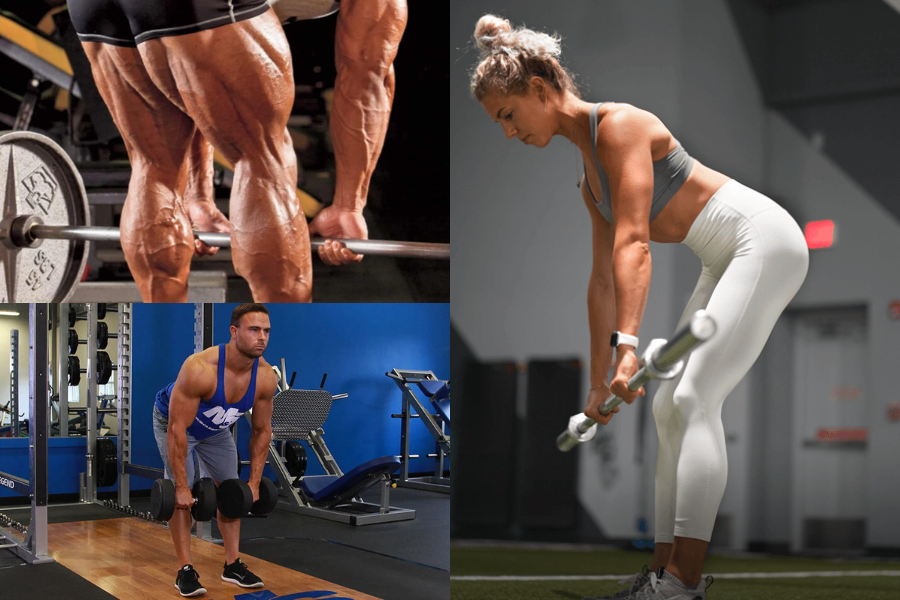
The single leg Romanian deadlift is a standout hamstring and glute exercise. It strengthens your posterior chain and also improves balance and body awareness, which is important for injury prevention. Sports Injury Physio highlights this exercise for its ability to build both strength and position sense.
How to do it:
- Stand tall on one leg with a slight bend in the knee
- Hinge forward from your hips while you extend the other leg back
- Keep your back flat and your hips level
- Lower until you feel a deep stretch in the standing leg hamstring
- Return to standing by driving your hips forward and squeezing your glutes
Start with bodyweight, then add a dumbbell or kettlebell in the hand opposite your working leg when you feel stable.
Squats
Squats are a classic lower body strength exercise that train several muscle groups at once and are strongly linked to better overall performance. They challenge your glutes and quads and lightly involve your hamstrings. Research notes that squats are more quad dominant, so they are not your main hamstring builder, but they are still valuable in a balanced routine.
To focus on control:
- Stand with your feet about shoulder width apart
- Sit your hips back and bend your knees, keeping your chest up
- Lower until your thighs are at least parallel with the floor if your mobility allows
- Push through your heels to stand again, squeezing your glutes at the top
You can begin with bodyweight squats, then move to goblet squats with a single dumbbell, and eventually to barbell squats if you have access to a rack.
Hip thrusts and glute bridges
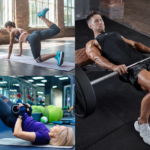
Hip thrusts and glute bridges directly target your gluteus maximus while also engaging your hamstrings and adductors. These moves are especially helpful if your lower back is sensitive because they put less stress on the spine than some other lifts.
Basic glute bridge:
- Lie on your back with knees bent and feet flat on the floor
- Brace your core and press your lower back lightly into the ground
- Drive through your heels to lift your hips until your body forms a straight line from shoulders to knees
- Squeeze your glutes at the top, pause briefly, then lower under control
You can progress to:
- Feet elevated bridges with heels on a chair to shift more work to your hamstrings, a method highlighted by Sports Injury Physio
- Single leg bridges for more unilateral strength
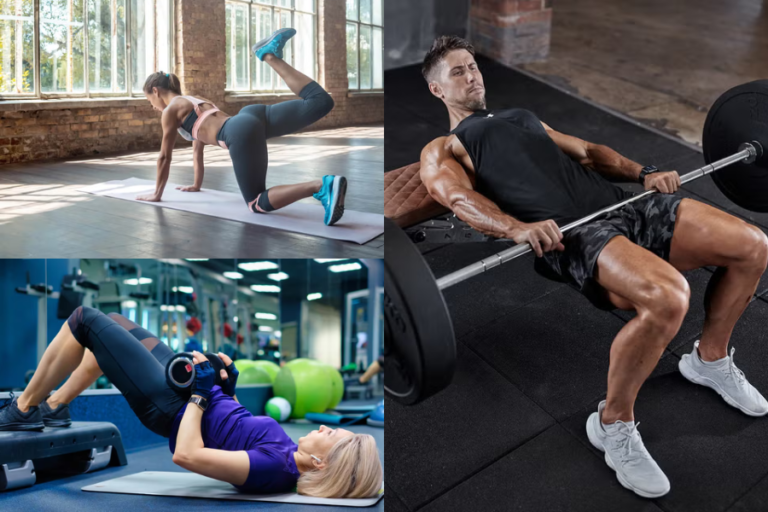
- Barbell hip thrusts, where you rest your upper back on a bench, place a barbell across your hips, and perform the same hip lifting motion for greater resistance
Step ups and split squats
Step ups and split squats are powerful unilateral, or single side, exercises for your glutes and hamstrings. They demand more from your stabilizing muscles and help fix strength imbalances between legs.
To perform step ups:
- Stand facing a stable box or step
- Place one foot entirely on the surface
- Drive through your front heel to stand up on the box
- Control your descent as you step back down
For split squats:
- Stand in a staggered stance, one foot forward and one back
- Drop your back knee toward the floor while bending your front knee
- Keep a slight forward lean to place more emphasis on your glutes and hamstrings
- Push through the front heel to stand back up
As you gain confidence, you can increase the surface height for step ups or hold dumbbells at your sides for both moves.
Hamstring curls
Hamstring curls isolate the hamstrings and give them focused work. Seated machine curls in particular can deliver excellent muscle growth when you perform them with control and avoid using momentum.
You can:
- Use a seated or lying leg curl machine at the gym
- Use a resistance band anchored to a sturdy point for home workouts
- Try stability ball leg curls, where you lie on your back with your heels on a ball and curl it toward you while keeping your hips lifted
Training both hip hinge movements like Romanian deadlifts and knee flexion movements like leg curls gives you complete hamstring development, as highlighted by modern strength training guides.
How often to train and how much to do
Most people do well with 2 or 3 dedicated hamstring and glute workouts per week. This frequency allows enough stimulus to build strength and muscle while leaving room for recovery.
Experts note that hamstrings typically tolerate modest weekly volume and often respond best when you perform only one hamstring exercise per session, with 2 or 3 different exercises spread across the week. This helps you avoid excessive soreness and lower your risk of strain.
You can structure your week like this:
- Day 1: Single leg Romanian deadlift, squats, glute bridges
- Day 2: Rest or upper body
- Day 3: Step ups, hip thrusts, banded hamstring curls
- Day 4: Rest or light cardio
- Day 5: Optional third day with a mix of your favorite 3 movements
Listen to your body. If your hamstrings still feel very sore or tight, take an extra rest day or reduce your sets slightly.
Tips to avoid injury and stay consistent
A good hamstring and glute workout should challenge you, not sideline you. A few habits can help you stay on track:
-
Prioritize form over load
Using too much weight too soon often shifts tension into your lower back instead of your hamstrings and glutes. Keep your core braced, hinge from your hips, and move through a full but comfortable range of motion. -
Stretch tight hip flexors
Tight hip flexors can limit how well your glutes activate, which forces your hamstrings to take on extra work and increases your strain risk. Including hip flexor stretches in your warm up and cool down can help your glutes fire properly and keep your hamstrings happier. -
Respect fatigue
Muscle fatigue is a key factor in many hamstring injuries. If soccer practice or a long run already taxed your legs, it is smart to schedule your heaviest hamstring work on a different day, or reduce your workload slightly. -
Finish with a short cool down
After lifting, 5 minutes of light walking plus a few static stretches for your hamstrings, glutes, and hip flexors can promote blood flow and support recovery.
Putting it all together
A thoughtful hamstring and glute workout does not need to be complicated. When you consistently:
- Warm up with light cardio and activation
- Train a mix of hip hinge, squat, bridge, and curl movements
- Use weights you can control with good form
- Allow time for rest and stretching
you steadily build a stronger, more resilient lower body.
You can start today with just two or three exercises, such as glute bridges, bodyweight squats, and single leg Romanian deadlifts. As those begin to feel easier, you can layer in step ups, hip thrusts, and curls. Over time, you will notice not just stronger legs, but smoother movement and more confidence in everything you do on your feet.
About the Author