Understand what a “full” chest workout really means
If your current chest day is just a few sets of bench press until your arms give out, your full chest workout routine is probably not as “full” as you think. To truly train your chest, you need to hit all regions of the pectoralis major and support those muscles through their full range of motion.
Your pecs are not one flat slab of muscle. The pectoralis major has three main regions with fibers that run in different directions:
- Upper chest (clavicular head)
- Mid chest (sternal head)
- Lower chest (abdominal head)
A complete routine selects exercises that follow those fiber directions and take your shoulders through different angles of pressing and arm movement across your body. That means including both heavy presses for overload and movements like cable crossovers or pushup variations that let your arms travel across the midline of your chest.
When you choose exercises this way, you get:
- Better overall growth and shape
- More balanced strength
- Less chance of overuse aches in your shoulders and elbows
The moves below are essential pieces that help your full chest workout routine actually live up to its name.
Target every region of your chest
Press from more than one angle
Flat bench alone tends to favor your mid and lower chest. Over time, that can leave your upper chest underdeveloped and give your torso a droopy look. To build a fuller, more three dimensional chest, include presses at different angles.
Key presses for a balanced routine:
-
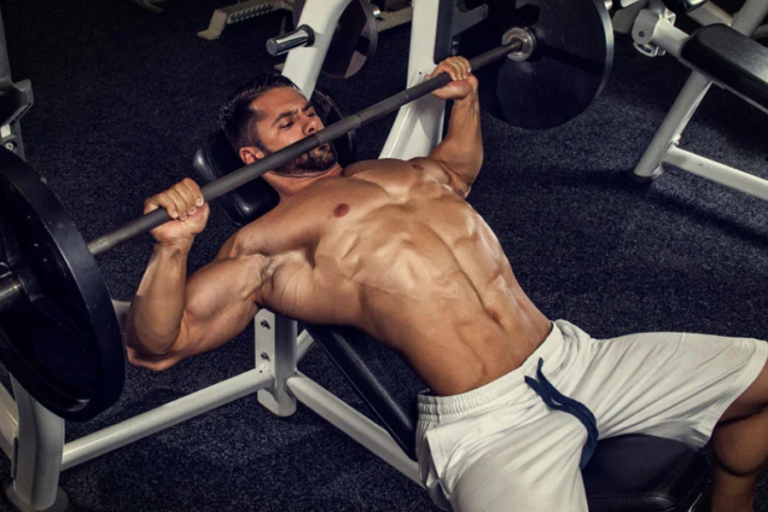
Flat barbell bench press
-
Focus: Mid chest, heavy loading, overall strength
-
Why it matters: Lets you use the most weight, which is ideal for progressive overload and size.
-
Incline dumbbell bench press
-
Focus: Upper chest fibers near the clavicles
-
Why it matters: Corrects the common mistake of under training the upper chest, which is crucial for that “shelf” look and better connection between pecs, delts, and traps.
-
Weighted dips (slight forward lean)
-
Focus: Lower chest
-
Why it matters: Emphasizes the lower fibers when you lean forward a bit and allows you to overload with added weight.
Rotating between barbells and dumbbells also changes stabilization demands and engages the chest in slightly different ways, which helps prevent plateaus.
Use cables to move across the midline
Presses are great for loading the chest, but they have one limitation. At the top of a press, your triceps take over and resistance on the chest often decreases. To fully shorten and contract your pecs, you need movements that bring your arms across the center of your body.
That is where cable crossovers shine:
-
Horizontal cable crossovers
-
Arms move straight across at chest height
-
Strong emphasis on the mid chest
-
Constant tension that presses cannot provide at the top range
-
Low to high cable crossovers
-
Cables start low and travel upward and inward
-
Targets upper chest and creates that lifted look
-
High to low cable crossovers
-
Cables start high and pull down and across
-
Emphasizes lower chest fibers
Cables allow you to actually follow the fiber direction of the chest while keeping tension throughout the movement. That is why pairing them with heavy presses is such an effective combination.
Build a science-backed “complete” chest session
Gym based full chest workout example
Here is a structured full chest workout routine that combines heavy compound moves with crossovers to reach all chest fibers. This approach is based on overload presses followed by higher rep sets focused on moving the arms across your chest.
- Flat barbell bench press + horizontal cable crossover
- Bench press: 4 sets using 6, 8, 10, then 12 rep max
- Superset or alternate each set with: 15 reps horizontal cable crossovers
- Focus: Heavy mid chest loading followed by full range contraction across the midline
- Incline dumbbell bench press + low to high cable crossover
- Incline press: 4 sets
- Pair with: 15 reps of low to high cable crossovers
- Focus: Upper chest growth from multiple angles
- Weighted dips + high to low cable crossover
- Weighted dips: 4 sets
- Pair with: 15 reps of high to low cable crossovers
- Focus: Lower chest overload with complete contraction
- Weighted pushups + banded pushups
- Weighted pushups: 3 sets
- Immediately follow each with: banded pushups where the hand moves slightly across midline
- Focus: Finisher to thoroughly fatigue all chest fibers
This kind of layout checks every box:
- Heavy compound lifts for strength and mass
- Angled work for upper and lower chest
- Crossovers for full range contractions across midline
- High volume finisher to recruit remaining motor units
Apply progressive overload, not random volume
What makes this or any full chest workout routine actually work is progression. Just piling on more sets of redundant exercises is one of the worst ways to train chest. Instead, aim to:
- Add a small amount of weight while keeping form solid
- Or add 1 to 2 reps at the same weight
- Or reduce rest times slightly while maintaining quality
Research and practical programs point to steady progression and consistent training (often twice per week in well structured splits) as key for growth, not simply chasing a big pump.
Train your chest effectively at home
You can still build a fuller chest if you are training without machines or even without weights. Studies have found that pushups can produce comparable muscle activation and strength gains to the bench press, with similar hypertrophy outcomes over time when volume and effort are matched. In other words, bodyweight can be enough if you use it intelligently.
No equipment: Pushup based full chest routine
Pushups hit your pectoralis major and minor along with your triceps, front delts, and core, so they are efficient and functional. Different variations emphasize different parts of the chest:
- Regular pushups, wider hand position for the mid chest
- Incline pushups, hands on a bench or step, more focus on lower chest
- Decline pushups, feet elevated, more upper chest
- Diamond pushups, closer grip, more inner chest and triceps
- Plyometric pushups, for power and extra recruitment
- Deficit pushups, hands on blocks to increase range of motion
Deficit pushups in particular increase range of motion and challenge multiple joints and muscles, which can boost hypertrophy by recruiting more motor units and increasing effective training volume.
A simple at home chest workout using only bodyweight might look like this:
Perform 3 rounds of:
- 10 regular pushups
- 60 seconds of star jumps
- 10 incline pushups
- 60 seconds of star jumps
- 10 decline pushups
- 60 seconds of star jumps
- 5 slow, time under tension pushups (3 seconds down, 3 seconds up)
- 30 mountain climbers
You can progress this by:
- Increasing reps
- Elevating your feet higher for declines
- Adding deficit pushups using stable books or blocks
- Shortening rest between moves
Add dumbbells for extra growth
If you have a pair of dumbbells, you can mimic many of the key gym moves and create a surprisingly complete routine at home. Include:
- Flat, incline, and decline dumbbell presses
- Flat or incline dumbbell flyes
- Bench or chair dips for added chest and triceps work
One effective at home chest workout with weights uses a combination of timed sets and counted reps over three rounds:
Per round:
- 10 regular pushups
- 30 seconds of chest dips
- 10 dumbbell chest presses
- 30 seconds of dumbbell chest flyes
- 10 incline chest presses
- 30 seconds of chest dips
- 10 slow, time under tension pushups
Rest briefly between exercises, then a bit longer between rounds. Start with light weights to nail your form before increasing load.
Avoid common chest day mistakes
A few widespread habits can quietly hold your full chest workout routine back. Adjusting them now can protect your shoulders and improve results.
Flaring your elbows too wide
Pressing with your elbows flared out at a 90 degree angle to your torso is a common beginner mistake. This position puts unnecessary stress on your shoulders and does not maximize chest involvement.
Instead, aim for roughly a 45 degree angle between your upper arms and torso. This helps:
- Engage your lats for stability
- Maintain healthier shoulder alignment
- Allow more comfortable and productive pressing
Ignoring your back muscles
If you only ever push and never pull, your shoulders are pulled forward and your posture suffers. To keep your chest training safe and balanced, pair it with back work such as rows.
Including barbell or dumbbell rows in your weekly plan helps:
- Counteract the forward pull of chest exercises
- Improve posture and shoulder health
- Prevent muscular imbalances that can lead to injury
Overusing machines and underusing free weights
Press and fly machines can have their place, but relying on them exclusively is not ideal. Historically, the best pec development tends to come from routines that:
- Emphasize free weights like barbells and dumbbells
- Use bodyweight moves such as pushups and dips
- Treat machines as accessories, not the main event
Free weights demand more stabilization and allow more natural movement paths, which often translates into better muscle recruitment and growth.
Rushing the weight instead of working the muscle
If you focus on moving the bar as fast as possible with momentum, your chest does less of the work. Instead, control each rep:
- Lower with control rather than dropping the weight
- Pause briefly at the bottom on presses and dips to remove bounce
- Squeeze your chest hard at the top of each rep, especially on cables and flyes
This slow and controlled style aligns with the idea of “work the muscles, not the weight.” Your joints and your long term progress both benefit.
Adjust for pain and personal needs
Not every chest exercise will feel good for every lifter. Some people experience shoulder discomfort with flat or incline presses or certain machine angles. The solution is not to push through pain but to find pain free variations.
You can:
- Try different grip widths on barbell presses
- Switch from barbell to dumbbell or machine if one feels better
- Use slight decline presses only if flat is painful
- Emphasize pushups or dips if those feel most natural
If decline movements are the only ones that feel good on your shoulders, they are a valid option, but most people do not need them as a primary chest builder.
Put it all together for your next workout
To make your full chest workout routine truly “full,” you want a mix of:
- A heavy press for mid chest overload
- An incline movement for upper chest
- A lower chest emphasis such as dips or decline work if it feels good
- A cable or crossover style move that lets your arms travel across the midline
- Optional bodyweight finishers like weighted or deficit pushups
From there, focus on:
- Good form and joint friendly angles
- Steady progression in weight or reps
- Enough weekly frequency, often twice per week in a structured plan
- Balanced pulling work for your back
Try upgrading your next chest session by adding just one missing piece, for example low to high cable crossovers after your incline presses or deficit pushups at the end of your home workout. You will feel the difference in how thoroughly your chest is working, and over time you will see it too.
About the Author