Understand your chest muscles
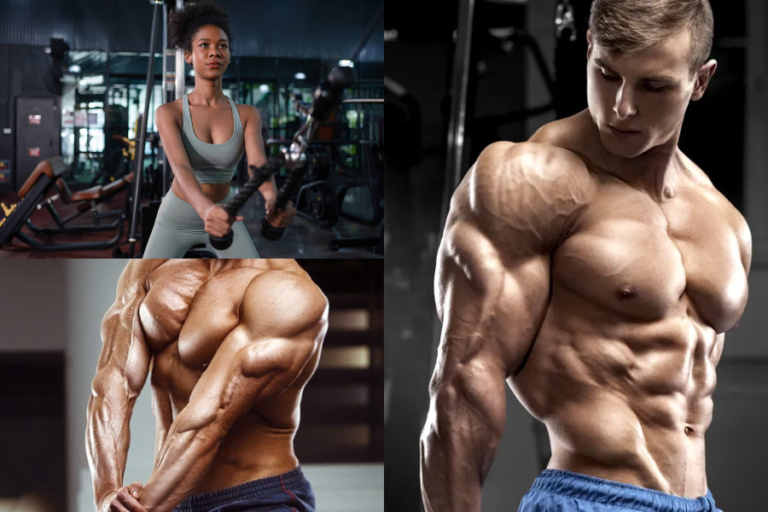
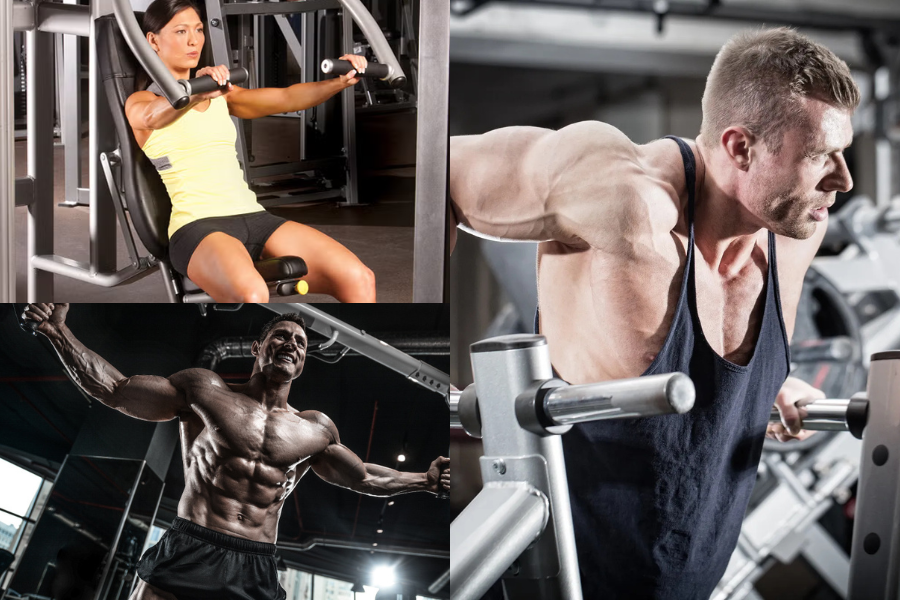
If you are looking for a chest workout at home for beginners, it helps to know which muscles you are targeting. Your main chest muscles are:
- Pectoralis major
The large, fan-shaped muscle that covers most of your upper chest. It helps pull your arm across your body, lift it, and rotate it. - Pectoralis minor
A smaller muscle that sits underneath the pec major. It helps stabilize your shoulder blade.
You use these muscles any time you push or lift something in front of you, like:
- Pushing a heavy door
- Lifting a child
- Moving furniture or boxes
When you train your chest, you are not only building muscle definition. You are also making everyday pushing and lifting tasks easier and safer.
Push-ups and similar movements also work your triceps, front shoulders, and core, so a smart home chest routine can double as an upper body and core workout.
Follow a simple weekly plan
You do not need a complex gym split to get results. As a beginner, you can build strength with a straightforward plan at home.
A good starting point is:
- 1 to 2 chest-focused sessions per week
- At least 48 to 72 hours of rest between sessions
- A focus on good form and gradual progression, not rushing into hard variations
Your goal is to challenge your muscles just enough so that the last few reps of each set feel tough, but not sloppy.
Warm up before you start
Before any chest workout at home for beginners, spend 5 to 10 minutes waking up your joints and muscles. This reduces your risk of injury and helps you get more from each set.
Try this gentle warm up:
- Deep breathing and posture reset
- Stand tall, feet hip-width apart.
- Take 5 slow, deep breaths, expanding your ribcage.
- Roll your shoulders back and down.
- Shoulder circles
- 10 small circles forward, 10 backward.
- Keep your chest open and neck relaxed.
- Arm swings
- Swing both arms forward and back for 20 to 30 seconds.
- Then swing them across your chest like you are giving yourself a hug.
- Wall push-up prep
- Stand an arm’s length from a wall.
- Place your palms on the wall at chest height.
- Do 10 slow wall push-ups to practice your push-up form with very low resistance.
Once your shoulders and chest feel warm, move into the main workout.
Start with beginner bodyweight exercises
Bodyweight exercises are ideal for a chest workout at home for beginners because you do not need equipment and you can adjust the difficulty by changing angles or leverage.
1. Regular push-up
The classic push-up is one of the most effective chest exercises you can do at home. Research has found that push-ups can build chest size and strength just as well as the bench press for beginners, with no significant difference in muscle growth between the two in one small study of 18 men from Japan.
Muscles worked: Chest, triceps, front shoulders, core
How to do it:
- Start in a high plank on your hands, wrists under shoulders, body in a straight line from head to heels.
- Brace your core and squeeze your glutes slightly.
- Bend your elbows to lower your chest toward the floor, keeping your elbows at about a 45 degree angle to your body.
- Lower until your chest is a few inches from the floor or as low as your shoulders allow without pain.
- Press through your palms to return to the starting position.
Beginner tips:
- If a full push-up is too hard, start with incline push-ups (hands elevated) or knee push-ups.
- A regular push-up typically loads about 64 percent of your body weight, while a knee push-up is about 49 percent, so you still challenge your muscles effectively.
2. Incline push-up
Incline push-ups are one of the best entry points into a chest workout at home for beginners, because they reduce the amount of your body weight you have to lift.
Muscles worked: Chest, triceps, front shoulders, core
How to do it:
- Place your hands on a sturdy elevated surface like a bench, countertop, or low table.
- Walk your feet back until your body forms a straight line.
- Bend your elbows to lower your chest toward the edge, keeping your body tight.
- Push back up to the start.
Make it easier or harder:
- Easier: Use a higher surface like a wall or tall counter.
- Harder: Gradually move to a lower surface over time.
3. Decline push-up
Once you are comfortable with incline and regular push-ups, you can start adding decline push-ups to target your upper chest more.
Muscles worked: Upper chest, shoulders, triceps, core
How to do it:
- Place your feet on a step, low chair, or bench behind you.
- Put your hands on the floor, just wider than shoulder width.
- Keep your body in a straight line from heels to head.
- Lower your chest toward the floor, then press back up.
Decline push-ups shift more load to the upper chest, similar to an incline bench press.
4. Time under tension push-up
This variation slows down the movement so your muscles work harder without adding extra weight.
How to do it:
- Start in a regular push-up position.
- Take 3 to 5 seconds to lower yourself.
- Pause for 1 second at the bottom.
- Push up in 1 to 2 seconds.
You can do fewer reps of this variation but still get a strong training effect.
Sample beginner bodyweight circuit
You can combine these movements into a simple chest workout at home for beginners that also raises your heart rate.
Complete 3 rounds of:
- 10 regular push-ups
- 10 incline push-ups
- 10 decline push-ups
- 5 time under tension push-ups
- 60 seconds of star jumps
- 30 seconds of mountain climbers
Rest 60 to 90 seconds between rounds. Adjust rep counts as needed to match your current level.
Progress your training in phases
To keep building strength and muscle, you need progressive overload, which means increasing the challenge over time. One eight week plan from a chest training program uses three simple phases: endurance, strength, and explosiveness.
You can adapt that idea for your own chest workout at home for beginners.
Phase 1: Build endurance (weeks 1 to 2)
Focus on easier variations and slightly higher reps to teach your body the movement patterns.
Plan:
- Work out 3 days per week
- Perform 3 sets of 10 to 15 reps for each exercise
- Rest 1 to 2 minutes between sets
Suggested exercises:
- Wide grip push-up
- Alternating shuffle push-up (small side step with each rep)
- Diamond push-up (hands close together under your chest)
Choose versions that match your level. For example, you can do these as incline push-ups if a floor push-up is too challenging.
Phase 2: Build strength (weeks 3 to 6)
As your endurance improves, reduce training days slightly and focus on harder variations.
Plan:
- Work out 2 days per week
- Perform 4 sets of 10 to 15 reps
- Rest 1 to 2 minutes between sets
Sample exercise options:
- One arm push-up progression, such as staggered hand push-ups
- Cross-over elevated push-up (hands alternating on and off a low platform)
- Decline push-ups
- Time under tension push-ups
You can also introduce optional advanced variations for more challenge and variety, such as:
- Incline push-up from a lower surface
- Dynamic push-up (small explosive push so your hands leave the floor)
- Spiderman push-up (bring one knee toward your elbow as you lower)
Only move to these options when you can perform regular push-ups with solid form.
Phase 3: Build speed and power (weeks 7 to 8)
In this phase, you turn your strength into power by using circuits and reducing rest.
Plan:
- Work out 2 days per week
- Complete 4 rounds of your chosen exercises
- Do 10 reps per exercise
- Move through exercises as a circuit with no rest between them
- Rest about 3 days between sessions for recovery
Use the same exercises from phase 2, but focus on controlled, slightly faster movements. For explosive push-ups, stay in a pain free range and keep your shoulders and wrists comfortable.
Add beginner-friendly equipment if you want
You can make your chest workout at home for beginners more varied by adding simple tools like dumbbells, parallel bars, or a medicine ball. Only do this when you feel confident with bodyweight basics.
Dumbbell floor press
The dumbbell floor press is excellent if you have shoulder or lower back concerns, because the floor limits how far your elbows can drop and provides feedback on your position.
Muscles worked: Chest, triceps, shoulders, core
How to do it:
- Lie on your back on the floor with your knees bent.
- Hold a dumbbell in each hand, elbows on the floor bent at about 90 degrees.
- Press the weights straight up over your chest until your arms are almost straight.
- Lower slowly until your upper arms gently touch the floor again.
Start with 3 sets of 8 to 12 reps and very light dumbbells while you practice technique. Increase weight gradually as your strength improves.
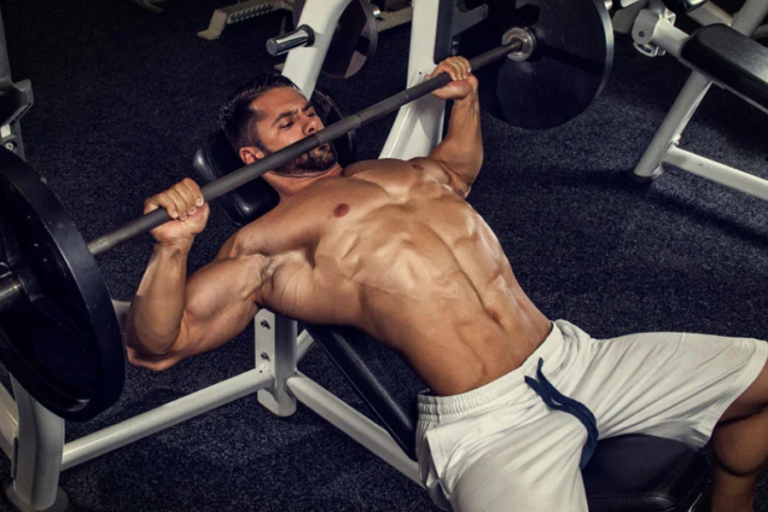
Dumbbell bench or incline press
If you have a stable bench or adjustable surface:
- Flat dumbbell press targets the mid chest.
- Incline dumbbell press shifts emphasis toward the upper chest.
- Decline dumbbell press focuses more on the lower chest.
Dumbbells allow each arm to work independently, which can help correct strength imbalances and let you adjust your grip to a comfortable position.
Chest flies with dumbbells
Flies are a good accessory exercise to stretch and squeeze the chest through a wide range of motion.
- Lie on a bench or on the floor.
- Start with arms extended above your chest, slight bend in the elbows.
- Slowly open your arms out to the sides in a wide arc.
- Stop when your upper arms are roughly in line with your body.
- Squeeze your chest to bring the weights back together.
Use light weights and controlled movement, especially at the bottom of the motion.
Chest dips
If you have access to parallel bars or sturdy surfaces of similar height, chest dips are one of the most effective chest builders for many levels.
Muscles worked: Chest, triceps, shoulders, core
How to do it:
- Support yourself on the bars with straight arms.
- Lean your torso slightly forward to place more load on the chest.
- Bend your elbows to lower your body until you feel a strong but safe stretch in your chest.
- Press back up to the start.
Dips challenge your stabilizer muscles because your body is unsupported. Start with a small range of motion and use assistance, like lightly resting your feet on a box, if needed.
Medicine ball chest throw
The medicine ball chest throw is a simple way to build explosive pushing power at home if you have a ball and safe space.
Basic version:
- Stand facing a wall or partner.
- Hold the ball at your chest with both hands.
- Quickly push it away from your body, extending your arms.
- Catch the ball and repeat.
More advanced version:
- Lie on your back, hold the ball to your chest, and explosively throw it upward.
- Catch it with slightly bent arms and go straight into the next rep.
This exercise also engages your abdominals and teaches you to generate power from your chest and core together.
Combine chest and triceps for better results
Many pushing exercises hit both your chest and triceps. A smart chest workout at home for beginners can take advantage of this overlap.
You can build a simple chest and triceps session around:
-
Plank to push-up
Start in a forearm plank, move up to a high plank one arm at a time, do a push-up, then return to the forearm plank. -
Tricep dips
Sit on the edge of a chair, place your hands next to your hips, slide your hips forward, and bend your elbows to lower your body. Push back up. -
Inner and outer push-ups
Alternate between narrow grip push-ups (hands close together for more tricep focus) and wide grip push-ups (hands wider than shoulders for more outer chest).
Rotate these into your weekly routine when you are comfortable with standard push-ups and incline variations.
Track your progress and stay consistent
Strength changes do not happen overnight. For your chest workout at home for beginners to pay off, consistency matters more than perfection.
You can keep it simple by tracking:
- How many reps you complete with good form
- Which variations you are using
- How many sets you do
- How your body feels during and after workouts
Aim to slowly:
- Increase total reps, or
- Move to a slightly harder variation, or
- Shorten your rest times
Most beginners see noticeable improvements in strength and muscle definition by training chest once or twice per week with good intensity and gradual progression.
If a movement causes sharp pain, especially in your shoulders or wrists, stop and adjust. You can:
- Change to a higher incline
- Reduce your range of motion
- Check your hand position and elbow angle
With a bit of patience and a clear plan, your chest workout at home for beginners can build strength, stability, and confidence with nothing more than your body weight and a few simple tools.
About the Author