Understand intermittent fasting for men
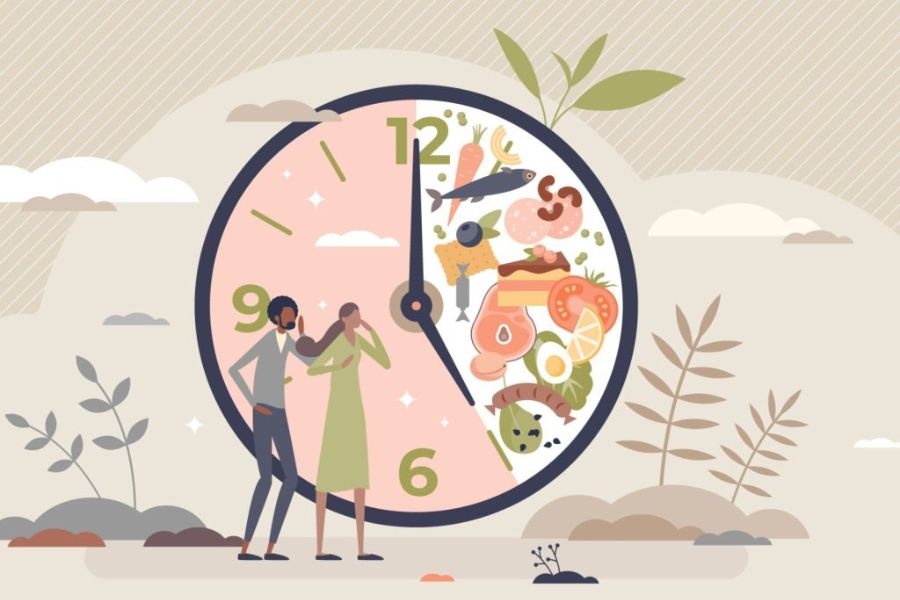
Intermittent fasting for men focuses on when you eat instead of strictly what you eat. You alternate between periods of eating and periods of fasting, which triggers a metabolic switch where your body moves from burning sugar to burning fat after several hours without food (Johns Hopkins Medicine).
For many men, this approach is appealing because:
- It can simplify food decisions.
- It may support weight loss and fat burning.
- It may improve blood sugar, blood pressure, and other health markers.
At the same time, intermittent fasting can affect your hormones, muscle mass, and long‑term health in ways that are not always straightforward. Understanding these tradeoffs will help you decide if this way of eating fits your goals.
Common intermittent fasting patterns
You will see a few main styles:
-
Time‑restricted eating (TRE)
You eat within a daily window, such as: -
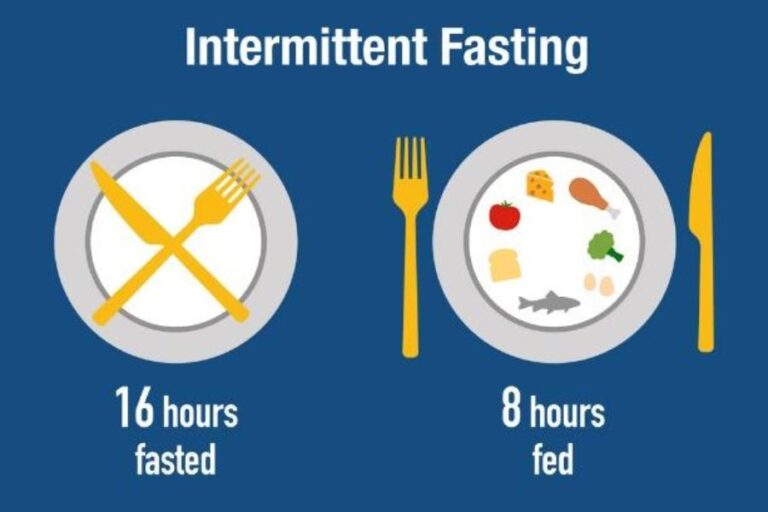
16/8: 16 hours fasting, 8 hours eating
-
14/10: 14 hours fasting, 10 hours eating
TRE is one of the most popular starting points (Cleveland Clinic). -
Alternate‑day fasting
You alternate between days of very low calories and days of normal eating. -
Whole‑day fasting
You sharply restrict calories 1 or 2 days per week and eat normally on the others.
Most of the research on hormones and muscle in men focuses on time‑restricted eating and daily fasting schedules.
How intermittent fasting affects your hormones
Your hormones respond quickly to changes in energy intake, especially when you go many hours without food. With intermittent fasting, several hormones that matter for men, especially testosterone and insulin, can shift.
Insulin, blood sugar, and metabolic health
When you eat frequently throughout the day, your insulin levels tend to stay higher. With intermittent fasting, insulin has more time to drop between meals. This can:
- Improve insulin sensitivity.
- Encourage your body to tap into stored fat.
- Help stabilize blood sugar.
Research shows that intermittent fasting can trigger this metabolic switch from sugar burning to fat burning after several hours without food (Johns Hopkins Medicine). In a 2018 study of pre‑diabetic men, an early time‑restricted eating schedule led to major improvements in blood sugar control without extreme dieting (Harvard Chan School).
Over time, improved insulin sensitivity may:
- Make it easier to lose fat.
- Reduce your risk of type 2 diabetes and heart disease.
- Support overall hormone balance.
Testosterone and other androgens
Because you are likely interested in intermittent fasting for men in the context of hormones, testosterone is a key concern. The research here is still limited, but there are some early findings.
A 2022 review of human trials found that intermittent fasting reduced testosterone levels in lean, physically active young men, although sex hormone‑binding globulin (SHBG) did not change (PubMed). Importantly:
- Muscle mass and strength were not clearly reduced in these short‑term studies.
- Long‑term effects on male reproductive hormones are not well understood.
The same review notes that lower androgen markers in men might negatively affect metabolic health and libido, but this remains speculative because so few high‑quality studies exist (PubMed).
Potential indirect effects on testosterone
Intermittent fasting may also influence testosterone indirectly through body fat and metabolism:
-
Less visceral fat
Excess abdominal fat contains aromatase, an enzyme that converts testosterone into estrogen. Reducing visceral fat by eating fewer calories and losing weight may help support healthier testosterone levels over time (Gameday Men’s Health). -
Better insulin sensitivity
Poor blood sugar control and obesity are often linked with lower testosterone. By improving insulin sensitivity, intermittent fasting might help avoid some of these hormone dips (Gameday Men’s Health).
On the flip side, chronic under‑eating, very long fasts, or nutrient‑poor diets can push your body into a stress state and encourage it to produce less testosterone. Prolonged fasts can also raise cortisol, a stress hormone that opposes testosterone (Gameday Men’s Health).
In short, intermittent fasting is not a magic testosterone booster. It is a tool that can support or hurt hormone health depending on how you use it.
What intermittent fasting means for your muscles
If you care about strength, performance, or simply looking lean rather than “skinny,” you need to think about how intermittent fasting affects muscle protein balance.
Muscle protein synthesis vs breakdown
Your muscles are in a constant cycle:
- Muscle protein synthesis (MPS) builds new muscle.
- Muscle protein breakdown (MPB) breaks muscle down.
Eating protein stimulates MPS, especially when you get about 0.25 to 0.3 grams of protein per kilogram of body weight in a meal. Once a meal triggers MPS, there is a “muscle full” period of about 3 to 5 hours where additional protein does not increase synthesis any further (Frontiers in Nutrition).
Intermittent fasting, especially when you go 16 hours or more without food, lowers insulin for long stretches. That low insulin environment tends to increase MPB, which can lead to a more negative muscle protein balance over 24 hours compared to eating 3 to 5 times per day (Frontiers in Nutrition).
What the research says about muscle on IF
A 2021 review in Frontiers in Nutrition summarized the evidence on intermittent fasting and muscle:
- Randomized trials often show similar changes in fat‑free mass compared with normal diets over short periods.
- One 12‑week time‑restricted eating study in adults found reduced appendicular fat‑free mass, which likely reflects some skeletal muscle loss.
- Results are mixed and many studies are short, with limited control over diet and activity (Frontiers in Nutrition).
Resistance training can offset some of the negative effects. Studies of intermittent fasting combined with resistance exercise, over 4 to 8 weeks, show no clear differences in fat‑free mass gains compared with regular eating patterns. However, these are still short‑term trials and longer studies are needed (Frontiers in Nutrition).
Overall, the review concludes that intermittent fasting likely represents a suboptimal strategy if your primary goal is to maximize muscle mass and muscle quality, especially if you are also restricting calories (Frontiers in Nutrition).
Practical muscle‑friendly guidelines
If you decide to use intermittent fasting and you want to protect your muscles:
- Aim for at least 1.6 grams of protein per kilogram of body weight per day, divided into several meals (Frontiers in Nutrition).
- Space protein‑rich meals roughly 3 to 5 hours apart within your eating window.
- Include resistance training several times a week to stimulate muscle protein synthesis.
- Do not let your total calories fall so low that your body has to break down muscle for energy.
If you notice steady strength loss, slower recovery, or shrinking muscle size, your current fasting approach may be too aggressive.
Potential health benefits for men
Despite the tradeoffs, intermittent fasting can offer meaningful health benefits for many men, particularly for weight management and metabolic health.
Weight loss and appetite control
A daily fasting schedule, such as an 8‑hour eating window, often leads to slightly lower calorie intake. Harvard Chan School notes that intermittent fasting can reduce intake by roughly 250 calories per day, which is about half a pound of weight loss per week, largely by reducing hunger hormones such as ghrelin (Harvard Chan School).
Research also suggests that:
- Hunger is often lower in the early evening with fasting.
- Overall hunger may feel more stable throughout the day.
- Early time‑restricted eating can improve blood sugar without loss of muscle mass in daily fasting regimens, as long as fasts do not stretch out for multiple days (Harvard Chan School).
Not every study finds dramatic weight loss. Johns Hopkins notes that simply shortening your eating window might not always prevent weight gain or create major weight loss on its own (Johns Hopkins Medicine). What you eat still matters.
Heart, blood pressure, and inflammation
Intermittent fasting has been linked with:
- Lower blood pressure.
- Improved cholesterol and blood sugar.
- Reduced oxidative stress, which is related to cell damage and diseases such as cancer and heart disease (Harvard Chan School).
Work led by Mark Mattson also suggests intermittent fasting may:
- Extend lifespan in animal models.
- Promote a leaner body.
- Protect the brain.
- Lower the risk of chronic diseases like type 2 diabetes, heart disease, neurodegenerative disorders, inflammatory bowel disease, and some cancers (Johns Hopkins Medicine).
Many of these findings are still being tested in humans, especially long term.
Early vs late eating windows
For metabolic health, especially if you are male, research favors earlier eating windows:
- Eating your meals earlier in the day.
- Finishing your last meal by around 6 p.m. when possible.
This pattern seems to improve blood sugar and blood pressure more than late‑night eating. If an early window is not realistic, you can still benefit from avoiding large late‑night meals and constant snacking (Harvard Chan School, Cleveland Clinic).
Risks, side effects, and what to watch
Intermittent fasting for men is not risk‑free. Before you change your eating pattern, it helps to understand potential downsides and who should be especially careful.
Short‑term side effects
Men often report:
- Headaches.
- Low energy or lethargy.
- Irritability or feeling “cranky.”
- Constipation.
These can be worse with longer fasts or very aggressive schedules. Harvard Health notes that switching to a more moderate time‑restricted plan can reduce some of these issues (Harvard Health Publishing).
You might also experience increased appetite and overeating during your eating window. Intermittent fasting can trigger appetite hormones and brain hunger centers, which sometimes pushes men to compensate with very large meals that cancel out any calorie deficit (Harvard Health Publishing).
Concerns for older men
If you are an older man, aggressive fasting can cause excessive weight loss, which may:
- Weaken bones.
- Impair immune function.
- Decrease overall strength and energy.
Most intermittent fasting studies are short and focus on younger or middle‑aged adults. That means long‑term safety in older men is not well known (Harvard Health Publishing).
Medications and medical conditions
You should speak with your doctor before starting intermittent fasting if you:
- Take medication for diabetes, blood pressure, or heart disease.
- Have a history of heart problems or cancer.
- Have had an eating disorder.
Harvard Health warns that fasting can create mineral imbalances and interact with medications, sometimes leading to dangerous side effects (Harvard Health Publishing). The American Heart Association also highlights that dietary changes should be personalized, especially for patients with existing heart conditions (American Heart Association Newsroom).
Long‑term cardiovascular concerns
A large analysis of over 20,000 U.S. adults looked at time‑restricted eating and heart‑related deaths. People who ate in less than an 8‑hour window, similar to a 16/8 intermittent fasting pattern, had a 91 percent higher risk of cardiovascular death compared with those who spread their eating over 12 to 16 hours per day (American Heart Association Newsroom).
It is important to understand:
- This study does not prove that an 8‑hour eating window causes heart‑related death.
- The data were self‑reported, and the study did not fully account for diet quality and baseline health.
- The authors emphasize that more research is needed and that findings may not apply to every population (American Heart Association Newsroom).
Still, this is a reminder to be cautious and not assume that shorter is always better when it comes to your eating window.
How to choose an intermittent fasting style
If you decide to test intermittent fasting for men with hormones and muscle in mind, the way you set up your plan matters.
Step 1: Clarify your main goal
Start by asking what you want most right now:
- Fat loss and better blood sugar.
- Muscle gain and strength.
- Long‑term health and simplicity.
If muscle growth is your top priority, a very short eating window or frequent long fasts might not be ideal. A moderate time‑restricted schedule with enough protein and calories is likely a better fit.
Step 2: Select a realistic schedule
Consider starting with one of these:
-
14/10 schedule
Fast for 14 hours, eat for 10. For example, eat from 9 a.m. to 7 p.m.
This is often easier socially and gives you more room to spread out protein and calories. -
16/8 schedule, early window
Fast for 16 hours, eat for 8. For example, eat from 9 a.m. to 5 p.m. or 10 a.m. to 6 p.m.
This aligns better with your circadian rhythm and may support blood sugar and blood pressure (Harvard Chan School).
Longer fasts of 24 to 72 hours are not necessarily more beneficial and can trigger a starvation response that encourages your body to store fat, not lose it. Johns Hopkins recommends doing longer fasts only with medical supervision (Johns Hopkins Medicine).
Step 3: Protect your hormones and muscle
Within whatever schedule you choose, try to:
- Eat most of your calories before nightfall and avoid late‑night snacking (Cleveland Clinic).
- Get enough total calories so your body does not sense chronic starvation.
- Spread protein across at least 2 to 3 meals, ideally 3 or more if your window allows.
- Include strength training and maintain some form of regular physical activity.
Remember that intermittent fasting is not a replacement for medical treatment if you have clinically low testosterone. Comprehensive hormone care should involve testing, nutrition, resistance training, sleep, and stress management, not fasting alone (Gameday Men’s Health).
Signs your intermittent fasting plan is working
As you experiment, pay attention to how your body responds over several weeks, not just a few days.
Positive signs may include:
- More stable energy during the day.
- Gradual, sustainable fat loss.
- No significant drops in strength or performance.
- Improved lab values such as fasting glucose, A1C, or blood pressure, as checked by your doctor.
Warning signs that your approach might be too aggressive include:
- Constant fatigue or brain fog.
- Persistent irritability or trouble concentrating.
- Noticeable loss of strength or muscle.
- Lower sex drive or other changes in sexual function.
- Frequent binge eating or feeling out of control around food.
If you see the second group of signs, you can widen your eating window, increase calories, adjust protein and training, or talk with a healthcare professional about other options.
Key takeaways
- Intermittent fasting for men focuses on when you eat, not just what you eat, and can improve insulin sensitivity, support fat loss, and influence hormones.
- Research suggests potential benefits for blood sugar, blood pressure, oxidative stress, and long‑term disease risk, but much of the data is short term and still evolving (Harvard Chan School, Johns Hopkins Medicine).
- Intermittent fasting may lower testosterone markers in some men without clearly harming muscle mass in the short term, although long‑term effects on hormones and libido are not well known (PubMed).
- From a muscle standpoint, intermittent fasting is likely not ideal if you want maximum muscle growth, especially under calorie restriction, so you need adequate protein, calories, and resistance training (Frontiers in Nutrition).
- Intermittent fasting carries risks, including side effects like headaches and overeating, potential issues for older men and those on medications, and possible long‑term cardiovascular concerns with very short eating windows (Harvard Health Publishing, American Heart Association Newsroom).
If you want to lose weight and improve your health, intermittent fasting can be a useful tool, but it is not the only one. Start with a schedule that fits your life, protect your muscles and hormones with smart nutrition and training, and work with your healthcare provider to make sure your plan supports both your short‑term goals and your long‑term health.
About the Author