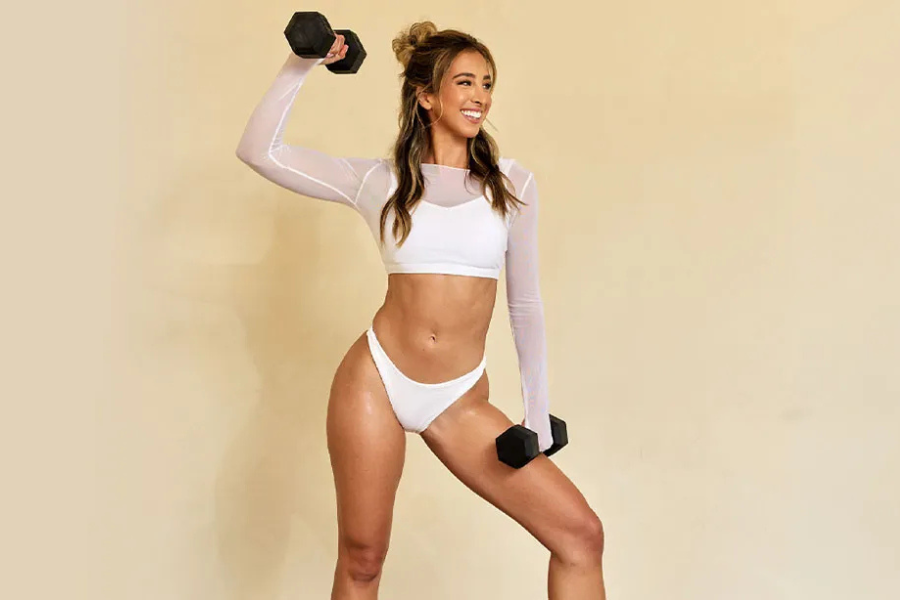
A 30-minute full-body strength workout gives you an efficient way to build muscle, improve endurance, and elevate your heart rate in a single session. This routine blends dumbbell exercises with bodyweight movements, making it accessible whether you train at home with minimal equipment or prefer weight-free options. Timed intervals keep the pace steady, while built-in modifications allow you to adjust intensity based on your experience level.
This workout follows a simple structure: a dynamic warm-up, focused strength circuits, core engagement, and a full-body cool-down. Each exercise runs for 45 seconds, followed by 15 seconds of rest, keeping you moving while still allowing brief recovery.
Warm-Up: Prepare the Body for Strength Work
A proper warm-up primes your muscles and joints for the workload ahead. It also helps reduce stiffness and improves movement quality during strength exercises.
Shoulder and Upper-Body Mobility
Begin by imagining a resistance band stretched between your hands. Pull your arms apart as you lift them overhead and back behind you, then return to the starting position. This movement activates the shoulders, upper back, and chest while encouraging good posture.
Dynamic Lower-Body Activation
Next, move into a squat with a forward kick. As you squat, sit back into your hips. When you rise, kick one leg forward while reaching the opposite arm toward the foot. This pattern warms up the hips, hamstrings, and core while improving coordination.
Side Bends and Rows
Step your feet wide. Reach one arm overhead into a side bend, then pull the elbow down into a row motion. Switch sides and repeat. This sequence loosens the sides of the torso and activates the upper back.
Squat and Reach
With feet turned slightly out, squat down while reaching toward the floor, then extend upward and reach overhead. This movement prepares the legs and spine for deeper squats later in the workout.
Knee Pulls
Finish the warm-up with controlled knee pulls, drawing each knee toward your chest. This activates the hip flexors and core while increasing circulation.
Lower-Body Strength and Power
The first strength segment emphasizes the legs and glutes, using wide stances and controlled pulses to build strength and stability.
Side Lunges With Overhead Press
Hold a single dumbbell in one hand and step your feet wide. Bend into a side lunge while lowering the dumbbell, then press it overhead as you return to center. This exercise challenges the legs, shoulders, and core simultaneously. Switch sides to maintain balance.
Sumo Squat Pulses
Hold two dumbbells and take a wide stance with toes slightly turned out. Lower into a sumo squat, pulse twice at the bottom, then stand tall. Keep your chest lifted and hips low during the pulses to maintain tension in the glutes and inner thighs.
Goblet Squats With Partial Extension
Hold one dumbbell at chest height in a goblet position. Squat down, then extend only halfway up before lowering again. This keeps constant tension on the legs and increases muscular endurance.
Staggered Deadlifts
With one foot slightly forward and the other back, hinge at the hips while holding dumbbells close to your legs. Keep your back flat and core engaged. For an added challenge, lift the back leg into a single-leg deadlift variation. Switch sides to train both legs evenly.
Upper-Body Strength and Control
Upper-body movements in this workout target the shoulders, arms, chest, and back, often combining strength with postural control.
Shoulder Press and Row Combination
Stand tall with dumbbells in hand. Press the weights overhead, then pull your elbows back into a row. This pairing strengthens the shoulders while reinforcing upper-back engagement.
Lateral Raises With Rotation
Lift the dumbbells out to the sides with bent arms, then rotate the forearms outward while keeping the elbows lifted. This movement targets the shoulders and upper back while encouraging controlled motion.
Triceps Extensions
Hold both dumbbells together overhead. Bend the elbows to lower the weights behind your head, then extend the arms fully. Keep your core engaged and ribs drawn in to protect the lower back.
Lunge and Triceps Sequence
Step one leg back into a lunge for two repetitions. Then straighten the back leg, hinge forward, and perform two triceps extensions. This sequence combines lower-body strength with focused arm work. Switch legs after completing one side.
Biceps Curls
Finish the upper-body section with wide-stance biceps curls. Keep your palms facing up and elbows steady as you lift and lower the weights. You can also perform alternating curls while leaning back slightly to engage the core.
Core and Stability Work
Core exercises appear throughout the workout, often integrated into full-body movements that challenge balance and coordination.
Plank Knee Drives
From a low plank position, draw one knee toward your chest while rounding slightly through the core, then return to a neutral plank. Alternate legs and focus on controlled breathing with each drive.
Kick-Throughs
From a kneeling hover position, rotate your hips and kick one leg through while reaching the opposite arm overhead. Return to center and switch sides. This movement strengthens the core while improving rotational mobility.
Glute-Focused Donkey Kicks
Place a dumbbell behind one knee and pulse the leg upward twice before drawing it back in. Keep your core tight and avoid arching the lower back. Switch sides to complete the set.
Prone Leg Pulses
Lie on your stomach with hands supporting your forehead. Lift your legs slightly off the floor and pulse them in and out while staying lifted. This targets the glutes and lower back without requiring equipment.
Side Crunches and Sit-Ups
On your side, lift your legs and torso together in a controlled side crunch. Switch sides, then move onto your back for slow sit-ups. You can lift one knee or both knees to adjust difficulty.
Bicycle Variations
Extend one leg at a time while twisting through the torso. Keep your lower back pressed into the floor and elbows wide for proper alignment.
Chest and Finishing Moves
The final segment pushes through remaining upper-body muscles and finishes with a full-body challenge.
Chest Flyes
Lie on your back with dumbbells in hand. Lower your arms out to the sides with a soft bend in the elbows, then bring them back together over your chest. For added intensity, combine the movement with alternating leg extensions.
Push-Up Finisher
End the workout in a plank position. Perform two push-ups, then walk your hands in and out while maintaining stable hips. This final push challenges the chest, shoulders, arms, and core.
Cool-Down and Stretching
Cooling down helps your body recover and reduces post-workout tension.
Child’s Pose and Side Stretch
Sink back into child’s pose, reaching your arms forward. Walk your hands to each side to stretch the upper body and lats.
Low Lunge Stretch
Step one foot forward into a low lunge. Stay upright or add a gentle twist by reaching one arm forward and the other back. Straighten the front leg and hinge forward to stretch the hamstrings.
Seated Side Bends
Finish in a seated position. Reach one arm overhead and bend gently to the side, then switch. Take a few deep breaths to relax the body.
This 30-minute full-body strength workout balances intensity and accessibility, making it suitable for a wide range of fitness levels. By combining dumbbells with bodyweight exercises, it builds strength, improves stability, and keeps the session engaging from start to finish.
About the Author