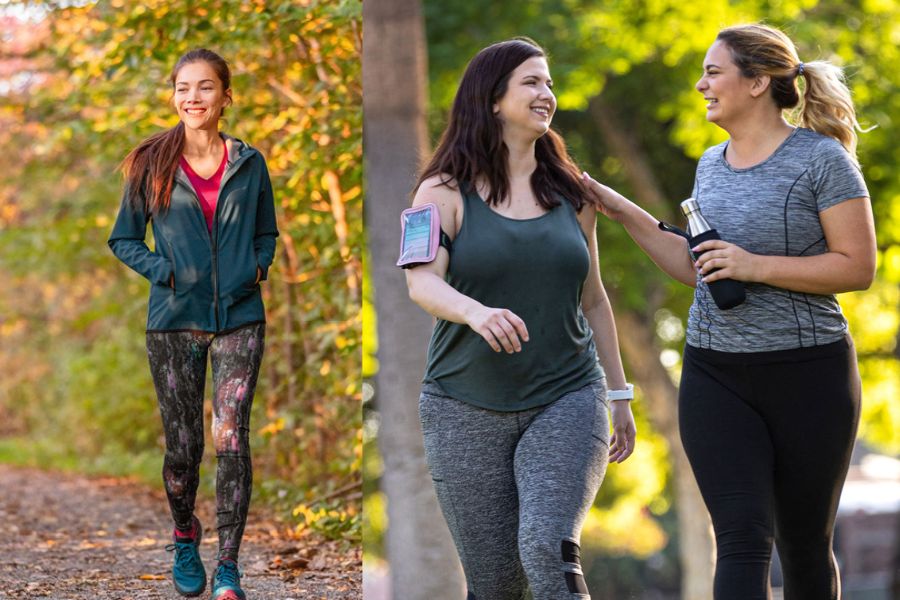
A daily walking workout is one of the simplest ways to improve your health, support weight loss, and boost your mood, even when your schedule is packed. You do not need a gym membership or fancy gear. With a few smart tweaks, you can turn the walking you already do into an effective cardio routine.
Below, you will find flexible daily walking workout options you can fit into mornings, lunch breaks, or evenings, plus tips to make every step count.
Understand why daily walking works
Walking is more than just getting from point A to point B. When you treat it as a daily walking workout, it becomes a powerful cardio tool that strengthens your heart, supports healthy weight, and sharpens your mind.
According to the American Heart Association, most adults should aim for at least 150 minutes per week of moderate activity such as brisk walking to maintain good health (American Heart Association). You can meet that goal with 30 minutes of walking, five days a week, or shorter sessions that add up to the same total.
Regular walking can:
- Improve cardiovascular fitness and increase endurance (Mayo Clinic)
- Strengthen bones and muscles and reduce excess body fat (Better Health Victoria)
- Lower your risk of chronic conditions such as heart disease and diabetes (Better Health Victoria)
- Boost mood and metabolism and reduce the risk of premature death (AARP)
Walking is low impact, free, and suitable for most people, including older adults and anyone returning to exercise after a long break (Better Health Victoria).
Turn an ordinary walk into a workout
To get full benefits from a daily walking workout, you need more than a leisurely stroll. Proper technique and intensity help transform your steps into real cardio.
Use good walking form
When you walk with intention, every stride works more muscles and protects your joints. The Mayo Clinic recommends paying attention to posture and movement to turn a normal walk into a fitness stride (Mayo Clinic).
Try this simple checklist:
- Stand tall, with your head up and eyes looking forward
- Relax your shoulders and let your arms swing naturally at your sides
- Engage your core gently, as if zipping up snug pants
- Roll your foot from heel to toe, instead of slapping it flat on the ground
- Keep your stride comfortable, not exaggerated
Small posture adjustments can make your walking workout feel smoother and more powerful without extra effort.
Find your brisk walking pace
For health and weight loss benefits, you want a moderate intensity pace. A practical way to gauge this is the “talk test.”
You are walking briskly if you can talk but not sing and you may feel slightly out of breath (Better Health Victoria). Verywell Fit describes a moderate pace as roughly a 20 minute mile or faster for beginners, as long as your heart rate is in a moderate target zone (Verywell Fit).
If you are just starting:
- Begin at an easy pace for a few minutes
- Gradually speed up until conversation feels a bit harder but still possible
- Stay at that pace during your workout
As your fitness improves, you can walk faster or add intervals to increase challenge.
Choose the best time of day for you
You can schedule your daily walking workout morning, noon, or night. The best time is the one you can stick with consistently.
Research highlights useful benefits at different times of day:
Morning walks
A brisk morning walk can set a positive tone for the day. A 2012 study found that a 45 minute morning walk reduced attraction to photos of food and boosted physical activity throughout the day (Verywell Fit).
Pros:
- Helps control appetite
- Clears your head before the day’s demands
- Can become a solid habit that anchors your routine
Because your body temperature and muscle flexibility are lowest before you are fully awake, you will want a thorough warm up to prevent injury (Verywell Fit).
Midday or lunch break walks
If mornings are hectic, try turning part of your lunch break into a daily walking workout.
Taking a brisk walk in the middle of the day can:
- Improve blood flow to your brain
- Cut through mid afternoon slumps
- Reduce stress and refresh your focus (Verywell Fit)
Since lunch is an existing anchor in your day, it can be easier to attach a 10 to 20 minute walk to this time.
Late afternoon and evening walks
Afternoon and early evening can be ideal for performance. Research suggests you may be able to work out harder with lower perceived effort during this window (Verywell Fit).
Evening walks also:
- Help unwind after work
- Reduce nighttime snacking by blunting appetite
- May support better sleep quality for some people (Verywell Fit)
If you walk after dark, stay visible with light clothing and reflective gear and choose well lit routes.
Match a walking plan to your schedule
You do not need large time blocks to get results. Your daily walking workout can be 10 minutes at a time, as long as your total adds up.
Health authorities suggest at least 30 minutes of brisk walking on most days for broad health benefits (Better Health Victoria). The American Heart Association confirms that you can break this into mini sessions and still meet the 150 minutes per week goal (American Heart Association).
Here are sample structures you can adapt.
If you have 10 minutes at a time
Busy day with short pockets of time? Use a “10–10–10” approach:
- 10 minutes in the morning
- 10 minutes at lunch
- 10 minutes in the evening
Each mini session:
- Walk slowly for 2 minutes to warm up
- Walk briskly for 6 minutes
- Cool down for 2 minutes at an easy pace
This still gives you 30 minutes of walking per day, and the short bursts can feel very manageable.
If you can spare 20 minutes
A 20 minute daily walking workout is a strong starting point, especially for mental health and stress relief. A 31 day plan featured by TODAY recommends 20 minute daily walks at first, focusing on consistency and simple mindset shifts to ease stress and support emotional health (TODAY).
Try this 20 minute structure:
- 3 minutes gentle warm up
- 12 minutes brisk walking at a pace where talking is possible but not effortless
- 5 minutes cool down and relaxed breathing
You can do this once per day, or twice if you are working toward weight loss and your schedule allows.
If you want a full 30 minute session
Once you are comfortable walking most days, build to a 30 minute block. Verywell Fit suggests beginners start with 15 minutes and increase weekly until they reach 30 minutes a day, five days a week (Verywell Fit).
A basic 30 minute walk might look like:
- 5 minutes easy pace
- 20 minutes brisk pace
- 5 minutes cool down
This simple structure fits the commonly recommended 30 minutes of daily activity (Mayo Clinic).
Use intervals to get more results in less time
If your schedule is tight or you want to burn more calories without walking longer, interval training is your friend.
Interval walking alternates faster walking with easier recovery periods. The Mayo Clinic notes that interval walking improves cardiovascular fitness and burns more calories than steady pace walking, and it can be completed in less time (Mayo Clinic).
Simple 20 minute interval walking workout
Use this a few days per week when you feel energetic:
- 5 minutes easy warm up
- 1 minute very brisk walking
- 2 minutes moderate pace
- Repeat steps 2 and 3 five times
- 5 minutes easy cool down
Adjust the speed to your fitness level. During the “very brisk” minutes, you should be breathing harder and prefer not to talk.
Interval tips for busy days
- Keep intervals short. Even 30 seconds fast and 90 seconds easy can be effective.
- Use landmarks if you do not want to watch a timer. For example, walk fast between two streetlights, then walk easy to the next one.
- Limit interval days to two to three per week at first to avoid overdoing it.
As your stamina grows, you can add more fast intervals or slightly lengthen them.
Support weight loss with walking
If one of your goals is losing weight, a daily walking workout can play a central role. Walking burns calories, especially when you walk longer or at a brisk pace, and it is easy to repeat day after day.
How much walking helps with weight loss
The American College of Sports Medicine recommends at least 150 minutes per week of moderate intensity walking for general health, and at least 250 minutes per week for clinically significant weight loss (AARP).
That might look like:
- 35 to 40 minutes per day, most days of the week, or
- Two daily sessions that add up to 40 to 50 minutes
A study mentioned by AARP found that two shorter walks per day may be more effective for overweight individuals than one longer walk for weight loss (AARP). If long workouts feel daunting, divide them into morning and evening sessions.
To burn more calories while walking, you can:
- Walk longer
- Walk at a brisker pace where talking becomes more challenging
- Add hills or small intervals to raise your heart rate (AARP)
Remember the bigger picture
Walking supports weight loss, but it works best as part of an overall lifestyle:
- Pay attention to your nutrition. There is no way to target only belly fat with exercise, so overall changes in eating and activity will lead to gradual, full body results (AARP).
- Protect your sleep. Evening walks can help some people wind down and snack less before bed (Verywell Fit).
- Monitor stress. Daily walking itself is a powerful stress reliever and mental health tool when you walk intentionally and stay aware of your surroundings (TODAY).
Over time, even modest increases in steps add up. One study reported by AARP found that every additional 2,000 steps per day can lower the risk of premature death by 6 to 11 percent (AARP).
Boost mental health with a walking habit
A daily walking workout is not only about your heart and waistline. It can be a simple mental health practice.
TODAY highlights walking as an accessible tool that can help relieve stress, increase mindfulness, and ease symptoms of depression and anxiety when you walk with intention and notice your environment (TODAY).
You can turn your daily walk into a mental reset by:
- Leaving headphones off sometimes and paying attention to sounds, scents, and sights
- Using a few minutes at the start or end of your walk to check in with how you feel
- Trying a short gratitude practice, such as listing three things you appreciate as you walk
In the TODAY 31 day plan, the first two weeks focus only on making 20 minute daily walks a habit and pairing them with weekly mental health challenges, such as breathing exercises or new routes, to shift mindset and reduce stress (TODAY).
After two weeks, the plan adds a brief strength circuit several days per week to support your walking, prevent injury, and increase calorie burn. Exercises include squats, marching bridges, plank to downward dog, seated oblique twists, knee raises to backward leg lifts, and calf raises, all using just your body weight (TODAY).
You can borrow this idea by adding a 10 minute body weight routine after your walk two or three times per week.
Start safely and build up gradually
If you are new to a daily walking workout, or if it has been a while, it is smart to ease in and give your body time to adapt.
A beginner friendly progression
Verywell Fit suggests the following simple pattern for your first weeks (Verywell Fit):
- Week 1: Walk 15 minutes per day at an easy pace, 5 days
- Week 2: Increase to 20 minutes per day
- Week 3: Increase to 25 minutes per day
- Week 4: Reach 30 minutes per day, 5 days a week
Once 30 minutes feels comfortable, you can:
- Add an extra walking day
- Include one interval session per week
- Occasionally extend one walk by 10 to 15 minutes
Check in with your body
Walking is generally very safe, especially because it is low impact and does not require special equipment or training (Better Health Victoria). Still, listen to your body.
Pay attention to:
- Joint pain that does not improve with rest
- Unusual shortness of breath or chest discomfort
- Dizziness or extreme fatigue
If you have existing health conditions or concerns, talk with a healthcare professional before significantly increasing your activity.
Use simple tools to stay motivated
You do not need high tech devices to benefit from a daily walking workout, but a few tools can help you stay consistent.
Track your steps or time
Tracking your progress makes improvements visible and keeps motivation high. The Mayo Clinic suggests using an activity tracker, pedometer, or even a walking journal to record steps, distance, and time (Mayo Clinic).
Better Health Victoria notes that a pedometer can encourage you to work toward 10,000 steps per day or more, a target many people find motivating for general health (Better Health Victoria).
Choose a method that fits your personality:
- Step count on a smartwatch or phone
- A simple notepad where you jot “20 min after dinner” each day
- A calendar where you mark off walking days to build a streak
Plan your routes
Decide in advance where you will walk most days. This removes a decision and makes it easier to start.
You might:
- Map out a 10 minute loop from your front door
- Identify a safe route near your workplace for lunch walks
- Use a local park or track for interval days, since it is easier to measure sections
Having a couple of go to routes lets you start walking almost on autopilot.
Put it all together
A daily walking workout does not have to be complicated to be effective. With a busy schedule, your best plan is the one you can repeat most days of the week.
You might start with:
- One 10 minute walk after dinner every day this week
- Then, add a second 10 minute walk after lunch next week
- After that, try one interval walk or a 20 minute continuous brisk walk
Over time, those small, consistent steps add up to better endurance, a healthier heart, support for weight loss, and a calmer mind.
Choose one change you can start today, lace up your shoes, and head out the door. Your daily walking workout can be as simple as that.
About the Author