Why dumbbell chest training builds serious mass
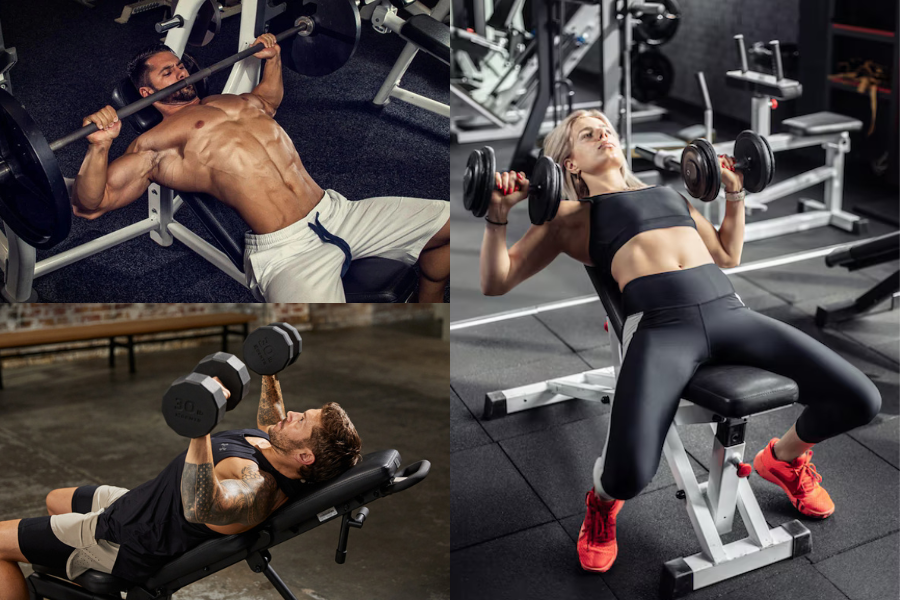
If your goal is a dumbbell chest workout for mass, you are on the right track. Dumbbells let you move each arm independently, increase your range of motion, and fine tune wrist and elbow position. That combination can help you build a bigger, stronger chest while being kinder to your joints than a barbell.
According to guidance from Mayo Clinic, the dumbbell chest press strengthens the muscles on the front of your chest, which can improve overall performance in sports and daily activities. Gymreapers also notes that dumbbell chest workouts are excellent for hypertrophy because they allow a deeper stretch at the bottom of presses and help correct strength imbalances between sides.
In this guide, you will learn how to structure a chest workout with dumbbells for maximum mass, exactly how to perform key exercises, and how to progress week by week.
Understand chest muscles and movement
Before you load up the dumbbells, it helps to know what you are trying to train.
Main chest muscles you target
Your dumbbell chest workout for mass should focus on these muscles:
-
Pectoralis major
The big, fan shaped muscle that covers most of your chest. It has: -
Upper portion (clavicular head) that you hit more with incline presses
-
Middle and lower portion (sternal head) that you hit more with flat and decline presses
-
Pectoralis minor
A smaller muscle that sits under the pec major. It supports shoulder movement and stability. -
Supporting muscles
-
Anterior deltoids at the front of your shoulders
-
Triceps on the back of your upper arms
-
Core muscles that stabilize your torso, especially in single arm presses
When you press or fly dumbbells, you are mostly training horizontal pressing and adduction, which are the main movement patterns for chest hypertrophy.
Key benefits of dumbbell chest workouts
You can build chest mass with many tools, but dumbbells have several advantages.
Greater range of motion
Dumbbells can travel slightly below chest level, which creates a deeper stretch than most barbell setups allow. Gymreapers highlights this extended range of motion as a major reason dumbbells are so effective for muscle growth, since more stretch usually means more tension on the muscle fibers throughout the movement.
Better balance and symmetry
Because each arm works independently, you cannot hide your weaker side behind your stronger side. Unilateral options, like a single arm dumbbell press, are especially good at correcting muscle imbalances and engaging your core for stability.
Friendlier on shoulders, elbows, and wrists
Dumbbells let you slightly turn your wrists and adjust your elbow path so you can find a pain free angle. This can reduce joint stress, especially compared to a fixed bar path. Variations like the reverse grip press and hex press are specifically recommended for people who are prone to shoulder discomfort.
How to structure a dumbbell chest workout for mass
You do not need dozens of exercises to grow your chest. You need the right ones, done consistently in the right rep ranges.
General workout structure
Most effective dumbbell chest workouts for mass follow this pattern:
-
Start with compound presses
These heavy, multi joint exercises let you lift the most weight and stimulate the bulk of your chest. -
Finish with isolation work
Fly movements and pullovers add extra tension and detail once your chest is already warm and somewhat fatigued. -
Use 2 to 4 exercises per workout
That is enough volume for growth without wasting energy.
According to the 2024 Gymreapers guide, a typical mass focused session should include 2 to 4 exercises, 2 to 5 sets per exercise, and rep ranges from 5 to 30 depending on whether you are focusing on strength or hypertrophy.
Sets, reps, and frequency
From the research:
- Strength focus
- About 5 to 10 reps per set
- Heavier weights
- Hypertrophy focus
- About 10 to 30 reps per set
- Moderate to heavy weights
- Suggested set range
- 2 to 5 sets per exercise
Training your chest twice per week with dumbbells is recommended for mass. You can expect performance improvements in roughly 3 to 4 weeks, with visible changes more likely over 8 to 12 weeks if your nutrition and effort are consistent, as outlined by Gymreapers in July 2024.
Core dumbbell chest exercises to know
These are the main movements that should make up most of your dumbbell chest training.
Dumbbell bench press
The dumbbell bench press is one of the best chest exercises for building muscle and strength. It works your entire pec area, plus shoulders and triceps.
How to do it
- Lie on a flat bench with a dumbbell in each hand, held just outside your chest.
- Keep feet flat on the floor, shoulder blades pulled slightly together, and wrists straight.
- Press the dumbbells up until your elbows are almost straight. Do not lock out completely so you keep tension in the chest.
- Lower slowly until your elbows are about level with your torso or slightly below, depending on shoulder comfort.
- Repeat for 6 to 12 reps.
For mass, guidelines suggest 3 to 4 sets of 6 to 8 reps with challenging loads.
Incline dumbbell press
The incline dumbbell press targets your upper chest by changing the angle of tension. It also brings your front delts into play.
How to do it
- Set your bench to a low incline, around 15 to 30 degrees.
- Start with dumbbells just above the top of your chest, elbows slightly below shoulder height.
- Press up and in slightly, keeping your wrists above your elbows.
- Lower under control until you feel a strong stretch across the upper chest.
- Repeat for 8 to 12 reps.
The research recommends about 3 to 4 sets of 8 to 10 reps for building mass in the upper chest.
Decline and neutral grip presses
You do not need every variation in every workout, but these are good options to rotate:
-
Decline dumbbell press
Shifts more load to the lower chest. -
Neutral grip dumbbell press
Palms facing each other. Can feel easier on shoulders and wrists while still driving chest growth.
Both are listed among the top compound dumbbell exercises for chest hypertrophy in the 2024 Gymreapers guide.
Dumbbell floor press
If you do not have a bench, or if your shoulders feel irritated on full range presses, the dumbbell floor press is a strong alternative. Factory Weights notes that it builds the chest, triceps, and shoulders while also being a good option for people with wrist or elbow issues when bench pressing.
How to do it
- Lie on your back on the floor with a dumbbell in each hand.
- Bend your knees and keep your feet flat.
- Start with your upper arms resting on the floor, elbows bent at 90 degrees.
- Press the dumbbells up until your elbows are nearly straight.
- Lower until your triceps gently touch the floor, pause briefly, then press again.
The floor shortens the range of motion a bit, which takes some stress off the shoulders while still loading your chest and triceps heavily.
Single arm dumbbell press
Unilateral pressing forces each side of your body to carry its own weight. It also makes your core work hard so you do not twist or tip.
A single arm dumbbell press, especially on a half bench, is highlighted in the research as a way to correct imbalances and improve stabilization strength. It trains the chest, triceps, shoulder stabilizers, and core at the same time, usually for 3 sets of 10 to 12 reps per side.
Reverse grip and crush grip presses
Two more joint friendly variations:
-
Reverse grip dumbbell press
Uses an underhand grip. This tends to activate more upper chest and reduces shoulder pressure, so it can suit you if you are prone to shoulder irritation. -
Crush grip or hex press
You press a pair of dumbbells together as you move them. This constant inward squeezing increases inner chest and triceps activation and keeps tension high with less stress on the shoulder joint. Hexagonal dumbbells work best because they sit flat together.
You can plug either of these into your routine when you want a change from standard pressing.
Isolation movements to finish your workout
Once your heavy presses are done, isolation work lets you push your chest a bit further without overloading supporting joints.
Dumbbell chest fly
The dumbbell chest fly targets chest adduction in a way presses do not, which makes it an important exercise for hypertrophy. Research suggests 3 sets of 10 to 12 reps.
How to do it safely
- Lie on a flat or incline bench with a dumbbell in each hand, palms facing each other.
- Start with arms extended above your chest, elbows soft, not locked.
- Lower the dumbbells out to your sides in a wide arc, keeping a gentle bend in your elbows.
- Stop when you feel a deep but comfortable stretch across the chest. Do not force your arms too low.
- Squeeze your chest to bring the dumbbells back together over your torso.
Keep the movement controlled and avoid turning it into a press. The stretch and squeeze are what matter most.
Incline fly and dumbbell pullover
The 2024 Gymreapers guide lists these as top isolation exercises:
-
Incline dumbbell fly
Similar to the flat fly, but on a low incline to emphasize upper chest fibers. -
Dumbbell pullover
Often felt in the chest and lats, depending on form. Used after presses and flies to add more stretch based tension.
Use one isolation exercise at the end of a chest workout instead of doing all of them in a single session.
Sample dumbbell chest workouts for mass
Below are simple templates you can adapt to your current level. Rest about 60 to 90 seconds between sets for most hypertrophy work. If you are going heavier in the lower rep ranges, rest 2 to 3 minutes.
Beginner chest workout
If you are newer to lifting or to dumbbells, keep things straightforward and focus on form.
- Dumbbell bench press
- 3 sets of 8 to 10 reps
- Incline dumbbell press
- 3 sets of 8 to 10 reps
- Dumbbell chest fly
- 2 to 3 sets of 10 to 12 reps
Use lighter weights that let you maintain smooth, controlled movement. For beginners, research suggests you do two to three exercises per workout, lighter loads, and varied repetition schemes to build a base of strength, power, and endurance before you specialize.
Intermediate chest workout
Once you move past the beginner stage, you can slightly increase volume and add one more variation.
- Dumbbell bench press
- 4 sets of 6 to 8 reps
- Incline dumbbell press or reverse grip press
- 3 to 4 sets of 8 to 10 reps
- Single arm dumbbell press (on flat or half bench)
- 3 sets of 10 to 12 reps per side
- Incline fly or dumbbell pullover
- 2 to 3 sets of 10 to 15 reps
Train your chest twice per week with at least one rest day between sessions. For example, you could use the beginner workout on Monday and the intermediate workout on Thursday, or alternate between them week to week.
Weekly progression to keep growing
To turn a dumbbell chest workout for mass into real gains, you need consistent progression. Gymreapers emphasizes increasing weekly training stress through small, sustainable changes.
Here are three simple ways to progress:
-
Add reps
If you did 3 sets of 8 last week with a certain weight, aim for 3 sets of 9 this week before you increase the load. -
Increase weight
Once you hit the top of your target rep range with good form, move up to the next dumbbell pair and drop the reps slightly. -
Add sets carefully
When you stop making progress with the same sets and reps, you can add an extra set to one or two exercises, but do this sparingly.
You can also cycle your training focus:
- Spend 4 to 8 weeks with slightly heavier weights and lower reps in the 5 to 10 range to build strength.
- Then switch to 4 to 8 weeks of moderate weights and 10 to 15 reps to emphasize hypertrophy.
Both phases help you build a larger, stronger chest over time.
Technique and safety guidelines
Good technique keeps your chest, shoulders, and elbows healthy so you can train consistently.
Form tips for presses
- Keep your head neutral and relaxed against the bench or floor.
- Do not arch your lower back excessively, but a small natural arch is fine.
- Press the weight by driving through your chest and triceps, not by pushing with your feet.
- Avoid locking your elbows hard at the top so you do not dump tension onto the joints.
- Control the lowering phase for 2 to 3 seconds, then press up with intent.
Dr Edward R. Laskowski of Mayo Clinic notes that when you perform a dumbbell chest press, you should keep your form tight and avoid letting the elbows drop far below the level of your body to help protect your shoulders.
Shoulder friendly range of motion
You often hear that more range of motion is better, and it usually is, but only within your personal limits.
- Lower until your elbows are level with your torso or slightly below, as long as your shoulders feel stable.
- Avoid bouncing or letting the dumbbells crash at the bottom of a rep.
- In flyes, be even more conservative. A small change in arm angle can create a very large stretch, so increase depth gradually over time.
If you notice sharp pain, reduce the range of motion, adjust your grip angle, or switch to a variation like the floor press, reverse grip press, or hex press that the research identifies as more shoulder friendly.
Putting it all together
To build massive chest strength and size with dumbbells, you need a clear structure, consistent effort, and small weekly improvements.
If you want a simple plan to follow:
- Pick 2 to 4 dumbbell chest exercises per workout.
- Start with a heavy press, add another press, finish with an isolation movement.
- Train your chest twice per week.
- Stay mostly in the 6 to 15 rep range, using heavier loads for lower reps and moderate loads for higher reps.
- Progress by adding reps, weight, or a set over time.
Choose one adjustment to make in your next workout, such as adding a set of incline presses or tightening up your form on flat dumbbell bench. Then build from there. Your chest will respond if you keep showing up and giving it a reason to grow.
About the Author