Understand what a HIIT cardio workout is
If you want a time‑efficient way to build fitness and burn fat, a HIIT cardio workout is one of your best options. High intensity interval training, or HIIT, alternates short bursts of hard effort with brief recovery periods so you can do more work in less time than steady state cardio.
In a typical HIIT cardio workout, you push close to your limit for 20 to 90 seconds, then slow down or rest for about the same amount of time. You repeat this pattern for 10 to 30 minutes. Compared to longer, moderate sessions, HIIT can:
- Improve your VO₂ max, your body’s ability to use oxygen efficiently, in as little as 8 weeks according to research in the Journal of Sports Science and Medicine
- Increase your post exercise calorie burn (often called EPOC or afterburn), so you continue to use more energy for an hour or more after you finish
- Reduce abdominal and visceral fat while improving insulin sensitivity and heart health in many adults, based on multiple studies summarized by Healthline
You can apply HIIT to almost any cardio activity, for example running, cycling, rowing, jumping rope, or using an elliptical. The structure stays the same, but the moves change.
Weigh HIIT vs steady state cardio
You might wonder whether a HIIT cardio workout is really more effective than traditional steady state training. Research suggests both have strong benefits, but they work a little differently.
How HIIT and steady state compare
Several studies have compared HIIT to moderate intensity continuous training:
- An 8 week trial found HIIT and steady state cardio produced similar improvements in power and VO₂ max
- A review of 13 studies with 424 adults with overweight or obesity found both HIIT and moderate exercise reduced body fat and waist circumference effectively
- In people with lifestyle related cardiovascular or metabolic issues, HIIT increased cardiorespiratory fitness by about 19.4 percent compared with about 10.3 percent for moderate intensity continuous training as summarized on Wikipedia’s HIIT entry
For you, that means:
- HIIT is efficient if your schedule is tight
- Moderate cardio is a solid alternative if you prefer a steady pace
- Mixing both across your week often provides the best balance of results and enjoyment
Why enjoyment and adherence matter
Ultra intense protocols like the Tabata method, 20 seconds all out with 10 seconds rest for 4 minutes, can look attractive on paper. However, a 2015 University of Wisconsin La Crosse study found that:
- Tabata style HIIT produced similar improvements in fitness as steady state and moderate intervals
- Participants rated Tabata significantly less enjoyable
- Enjoyment declined over 8 weeks across all exercise types, but most sharply for very high intensity HIIT
If you dislike a workout, you are less likely to stick with it. For most people, mastering HIIT means choosing an intensity that challenges you without leaving you dreading the next session.
Choose the right HIIT level for you
Before you tackle any HIIT cardio workout, check in with your body and your doctor, especially if you have health conditions such as heart disease, high blood pressure, diabetes, high cholesterol, joint issues, or if you are pregnant. HIIT demands a lot from your heart and muscles, so clearance matters.
Know your experience level
Use these guidelines to place yourself:
- Beginner: You are new to exercise or coming back after a long break. Walking, light cycling, or simple bodyweight moves feel moderately challenging.
- Intermediate: You exercise a few times per week and can handle 20 to 30 minutes of moderate cardio without stopping.
- Advanced: You train regularly, include strength or cardio intervals already, and are comfortable pushing close to your limit.
HIIT works at every level. The key is adjusting effort, work time, and rest, not forcing yourself into an advanced routine too soon.
Understand effort using RPE
Many HIIT studies refer to percentages of maximum heart rate or VO₂ max, which can be hard to measure outside a lab. Rate of perceived exertion, or RPE, is more practical. Think of effort on a 1 to 10 scale:
- 1 to 2: Very easy, casual stroll
- 3 to 4: Easy to moderate, you can talk in full sentences
- 5 to 6: Moderate to somewhat hard, your breathing is deeper but controlled
- 7 to 8: Hard, you can say short phrases only
- 9 to 10: Very hard to all out, you can say one or two words at most
For most HIIT cardio workouts that are sustainable, aim for:
- Work intervals: RPE 7 to 9
- Recovery intervals: RPE 3 to 4
Ultra high intensity versions like classic Tabata can push into an RPE near 10, but they are not necessary for excellent results and may feel too unpleasant to maintain.
Structure your HIIT cardio workout
Once you know your level and effort targets, you can build a simple structure. Almost every effective HIIT session includes:
- A warm up
- A series of work and recovery intervals
- A cool down
Basic timing templates
Here are three reliable templates you can adapt to different cardio exercises.
| Level | Work interval | Recovery interval | Total time (with warm up & cool down) |
|---|---|---|---|
| Beginner | 20 to 30 seconds | 40 to 60 seconds | 10 to 20 minutes |
| Intermediate | 30 to 45 seconds | 30 to 60 seconds | 20 to 25 minutes |
| Advanced | 45 to 90 seconds | 30 to 90 seconds | 20 to 30 minutes |
As summarized by Healthline’s HIIT overview, most balanced HIIT sessions last between 20 and 45 minutes and use high intensity bouts of 20 to 90 seconds with equal or slightly longer recovery periods. You can shorten or lengthen within that window based on how your body responds.
Warm up and cool down
Never skip your warm up or cool down, even if the main workout is short. This helps your heart, lungs, and muscles adjust to the intensity.
Warm up, 5 minutes:
- 2 minutes easy movement such as walking, slow cycling, or marching in place
- 2 to 3 minutes of dynamic moves like arm circles, leg swings, and light bodyweight squats
Cool down, 3 to 5 minutes:
- Slow your movement to a very easy pace
- Add gentle stretches for your calves, hamstrings, quads, and hips
Think of these bookends as nonnegotiable parts of your session, not extras.
Try a beginner friendly HIIT cardio workout
If you are new to HIIT, keep things simple. You do not need equipment, and you do not need to work out for long to see benefits. Some research suggests that a 15 minute beginner HIIT workout can burn more calories per minute and improve VO₂ max more than 40 minutes of steady state cardio when you include moves like squats, mountain climbers, and high knees.
15 minute bodyweight HIIT for beginners
Use an RPE scale and go at your own pace. Move quickly enough to feel challenged but in control.
- Warm up, 3 minutes
- March in place, gradually lifting your knees higher
- Circle your arms forward and backward
- Perform 10 slow squats with bodyweight only
- Main circuit, 10 minutes
Perform each exercise for 30 seconds, then rest for 30 seconds. After all four moves, rest 60 seconds. Repeat the circuit 2 times.
-
Jumping jacks or step jacks
-
Bodyweight squats
-
High knees in place or fast marching
-
Mountain climbers, slow or moderate pace
During the 30 second work periods, aim for an RPE around 7. You should be breathing hard but still able to say a short phrase.
- Cool down, 2 minutes
- Walk slowly around the room
- Stretch your calves by leaning against a wall
- Gently stretch your thighs and hips
You can start even more gently by working for 20 seconds and resting for 40 seconds, or by completing just one round of the circuit. Over time, you can add rounds, extend the work periods, or reduce the rest.
Use cardio equipment for low impact HIIT
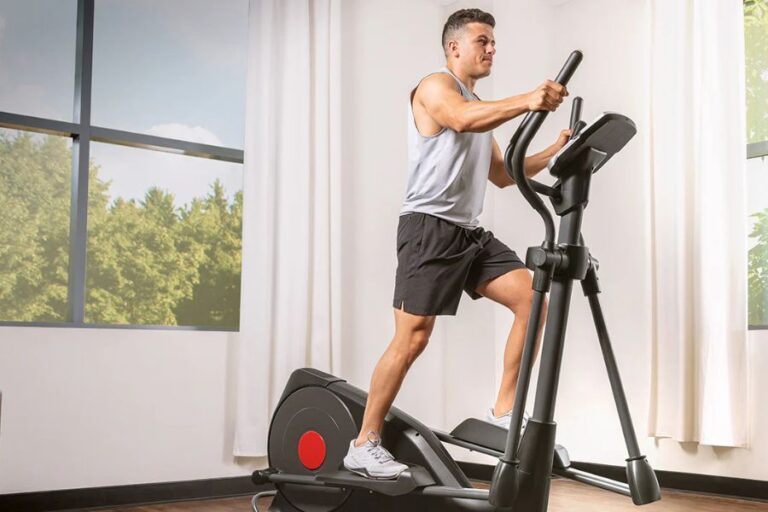
If you have access to machines like an elliptical, treadmill, or stationary bike, you can turn almost any session into a HIIT cardio workout. Machines are especially helpful if you prefer low impact exercise.
Elliptical HIIT for beginners
The elliptical is ideal if you want a joint friendly routine. A beginner friendly format that matches current recommendations looks like this:
- Warm up, 5 minutes at very easy effort
- Intervals, 20 minutes total
- 30 seconds at high intensity, RPE 7 to 8
- 1 minute at low intensity, RPE 3 to 4
Repeat this pattern for 12 to 14 rounds
- Cool down, 5 minutes at very easy effort
This structure lets you safely build fitness, and, over time, you can shorten recovery periods or slightly increase resistance or speed to keep progressing.
Treadmill or outdoor walking HIIT
If you prefer to walk rather than run, you can still master HIIT with simple speed changes:
- 1 minute brisk walk, RPE 7
- 2 minutes easy walk, RPE 3 to 4
- Repeat 8 to 10 times
As you improve, you can increase your brisk segments to a gentle jog or add incline on the treadmill for more challenge.
Balance intensity and recovery
The benefits of a HIIT cardio workout depend not only on how hard you work but also on how well you recover. Overdoing intensity or cutting rest too short can lead to burnout or injury.
Find your sweet spot for intensity
Very high intensity methods like the original Tabata protocol have produced excellent results in trained athletes. For example, Olympic speed skaters following 20 seconds of ultra intense exercise and 10 seconds of rest for 4 minutes showed large aerobic and anaerobic improvements compared to steady training. At the same time, later research in previously untrained adults found that such protocols:
- Were no more effective for fitness gains than steady or moderate interval training over 8 weeks
- Caused more physiological stress, with heart rates near 85 percent of heart rate reserve and very high blood lactate levels
- Were rated less enjoyable and led to longer post workout recovery requirements
For long term success, you generally get more value from a challenging but manageable level of intensity that you can repeat week after week.
Plan your recovery days
Your body adapts to HIIT during rest, not while you are gasping during the intervals. Build recovery into your weekly plan:
- Start with 2 HIIT sessions per week on nonconsecutive days
- Fill the other days with light to moderate activities such as walking, easy cycling, or gentle yoga
- Gradually move to 3 HIIT sessions per week if you feel strong and have no persistent joint pain or unusual fatigue
Listen for signs you need more rest, such as frequent soreness, poor sleep, or declining performance at the same effort.
Use HIIT to support fat loss and health
Many people choose a HIIT cardio workout for fat loss, and the science supports that decision, especially for reducing abdominal and visceral fat. However, the benefits reach beyond changes on the scale.
How HIIT affects fat loss
Several findings summarized in 2024 and 2025 highlight HIIT’s impact on body composition:
- HIIT can reduce abdominal and visceral fat more effectively than some other exercise types
- A review of 13 studies found HIIT and moderate intensity exercise both reduced body fat and waist circumference in adults with overweight or obesity
- In one 2025 study, three 20 minute HIIT sessions per week for three months yielded an average loss of about 2 kilograms of body fat and a 17 percent reduction in visceral fat without dietary changes
HIIT also raises your metabolic rate for hours after you stop exercising. As noted by Healthline, this afterburn effect means you continue to burn extra calories beyond the workout itself.
Keep in mind that nutrition still plays a large role. For best results, pair HIIT with a balanced eating pattern that supports your goals.
Heart and metabolic benefits
HIIT supports your health in ways that go beyond appearance. Current research shows that HIIT can:
- Improve insulin sensitivity and help reduce blood sugar levels, which is especially valuable if you are at risk for or managing type 2 diabetes
- Lower resting heart rate and blood pressure, sometimes more than moderate intensity exercise, particularly in people with overweight or obesity
- Enhance cardiovascular fitness for both healthy adults and those with coronary artery disease
Because HIIT places a strong demand on your heart, it is essential to get medical approval first if you have cardiovascular conditions or if you are unsure about your readiness for intense exercise.
Stay safe while you master HIIT
HIIT is powerful, but it is also demanding. A smart approach helps you avoid common pitfalls so you can enjoy consistent progress.
Safety tips to follow
Use these guidelines whenever you train:
- Start gradually: If you are new to exercise, begin with just 3 to 4 short speed intervals and increase the number or length of intervals over several weeks.
- Prioritize form: Choose movements you can perform safely even when you are tired, such as marching, brisk walking, or low impact jumps.
- Watch for warning signs: Stop immediately and seek medical help if you feel chest pain, severe shortness of breath, dizziness, or sharp joint pain.
- Protect your joints: If you are prone to sprains or strains, lean toward low impact activities like cycling, elliptical, or brisk walking instead of high impact jumping.
- Talk to your doctor: This is especially important if you have heart disease, high blood pressure, diabetes, high cholesterol, joint or muscle problems, or if you are pregnant. The intensity of HIIT can be very taxing on your cardiovascular system.
How often to adjust your routine
Your first few weeks are about learning how your body responds. Every 2 to 4 weeks, consider a small adjustment:
- Add one or two intervals
- Extend each work interval by 5 to 10 seconds
- Slightly reduce rest time
- Introduce a modest incline or resistance level
Make only one change at a time so you can clearly feel its effect. If your performance suddenly drops or you feel unusually fatigued, pull back for a week and then try again more gradually.
Turn HIIT into a lasting habit
Mastering the best HIIT cardio workout is not about one perfect routine. It is about building a habit that fits your life so you keep coming back.
Keep it interesting
You can use the same interval structure with different activities to avoid boredom:
- One day, do a bodyweight circuit at home
- Another day, use the elliptical or bike at the gym
- On weekends, take your intervals outdoors with brisk walking, hill climbs, or short cycling sprints
Variety keeps your mind engaged and challenges your body in new ways without constantly increasing intensity.
Measure what matters to you
Tracking progress helps you stay motivated. You might jot down:
- How many intervals you completed
- How your RPE felt at each round
- Distance covered on the treadmill or bike in your total session time
- Changes in how your clothes fit or your energy levels during the day
When you glance back after a month or two, you will likely see that what once felt impossible now feels comfortably hard. That is a clear sign you have started to master HIIT.
Key takeaways
- A HIIT cardio workout alternates short bursts of intense effort with brief recovery, letting you build fitness quickly.
- Research shows HIIT can improve VO₂ max, reduce abdominal and visceral fat, support better blood sugar control, and lower blood pressure.
- You do not need advanced protocols like Tabata to see results. Moderate intensity intervals that feel challenging but manageable often work best long term.
- Start with 1 to 2 sessions per week, use an RPE of about 7 to 9 for work periods, and prioritize warm up, cool down, and recovery days.
- Always listen to your body and talk with your doctor before beginning HIIT, especially if you have heart, metabolic, or joint conditions.
Begin with a simple 10 to 15 minute routine this week and notice how your stamina, mood, and confidence grow as you make HIIT a regular part of your life.
About the Author