Why dumbbell bicep exercises at home work
If you want stronger, more defined arms without a gym membership, dumbbell bicep exercises at home are one of your best options. A pair of dumbbells takes up very little space, yet lets you hit both heads of your biceps, your forearms, and supporting muscles with a wide range of movements.
According to Mayo Clinic’s Dr. Edward R. Laskowski, the basic dumbbell biceps curl is an effective way to build strength in the front of your upper arm when you perform it with good form and control. When you slow each rep down, you increase time under tension and help your muscles grow more efficiently.
Dumbbells also let each arm work independently. That means you can fix imbalances, improve control, and build more balanced strength than you might get from a barbell alone.
In the sections below, you will learn:
- How to set up your space and choose the right weights
- How to do a perfect dumbbell biceps curl at home
- Key variations that target different parts of your biceps
- A 30 minute dumbbell bicep workout you can follow at home
- Simple training tips to keep making progress
Use this as a guide you can come back to whenever you want to refresh your form or add a new curl variation to your routine.
Get set up at home
You do not need a full home gym to get real results from dumbbell bicep exercises at home. A little planning goes a long way.
Choose your dumbbells
Selecting the right weight is more important than the brand or style. The research suggests keeping at least two pairs of dumbbells at home, one lighter and one heavier, so you can match the weight to the exercise and your fitness level.
As a starting point:
- Light pair: for learning new movements and higher reps
- Heavy pair: for lower reps and when you are ready to push strength
You will know a weight is about right if:
- You can complete your last 2 to 3 reps with good form
- You feel close to fatigue, but not completely out of control
If every rep feels easy, increase the weight or add more reps. If you are swinging or arching your back to move the weight, it is too heavy.
Create a small workout zone
You only need a clear area about the length of your body. For seated or incline variations, a sturdy chair, bench, or even the edge of your bed works.
Before you start:
- Move tripping hazards and loose rugs out of the way
- Check that your floor is stable and not slippery
- Make sure your dumbbells are within easy reach so you do not strain twisting to pick them up
A few minutes to prepare the space makes your workout smoother and safer.
Master the basic dumbbell curl
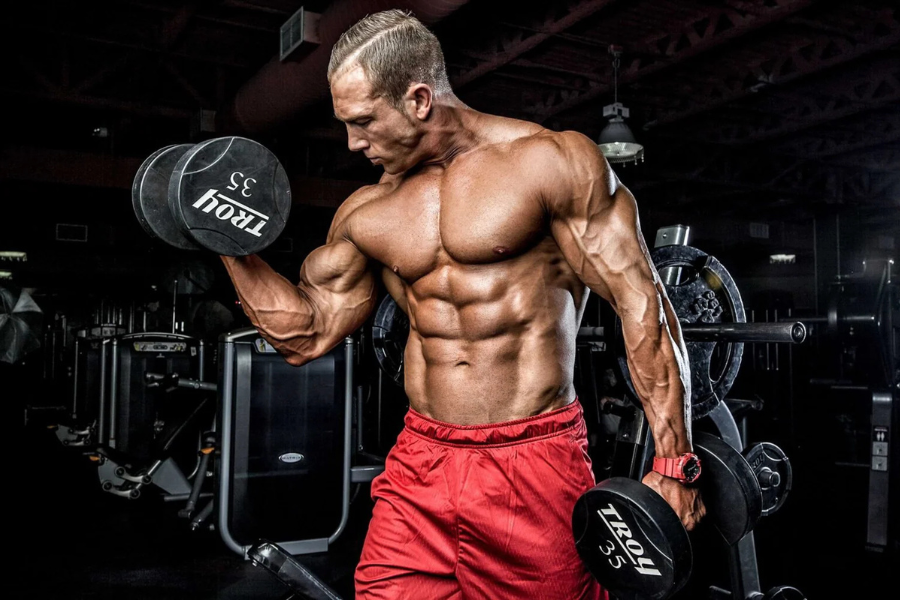
Almost every effective bicep routine includes some variation of the classic dumbbell biceps curl. When you perform it well at home, you build a strong foundation for every other curl you add later.
Step by step standing dumbbell biceps curl
Dr. Laskowski recommends the following approach for a standard dumbbell curl at home:
- Stand tall
- Place your feet about hip width apart.
- Keep a slight bend in your knees.
- Brace your core as if you are about to cough.
- Set your arms
- Hold a dumbbell in each hand with your palms facing forward.
- Keep your elbows close to your sides, just in front of your hips.
- Let your shoulders relax down away from your ears.
- Curl the weights
- Keep your wrists straight and rigid.
- Exhale as you slowly bend your elbows and bring the dumbbells up toward your shoulders.
- Avoid swinging your upper arms or using your back to lift the weight.
- Squeeze at the top
- When your pinky fingers are near your shoulders, pause briefly.
- Squeeze your biceps hard at the top of the movement.
- Control the way down
- Inhale as you slowly lower the dumbbells back to the starting position.
- Maintain a steady, smooth descent to keep tension on your biceps.
For most people training at home, one set of 12 to 15 controlled repetitions can build strength in the upper arm, especially if you are new to strength training.
Common mistakes to avoid
A few habits can quietly reduce the effectiveness of your curls:
- Swinging your elbows away from your sides
- Leaning back to help the weight up
- Letting your wrists bend or go limp
- Dropping the dumbbells quickly without control
Focus on strict form before you ever think about going heavier. You will feel more work in your biceps and less strain in your elbows and shoulders.
Try key dumbbell bicep variations
Once you are comfortable with the basic curl, you can add other dumbbell bicep exercises at home to hit your muscles from different angles.
Alternating dumbbell curl
Alternating curls let you focus on one arm at a time and can help you build a better mind muscle connection.
How to do it:
- Stand as you would for regular curls.
- Curl one dumbbell up while keeping the other arm straight at your side.
- Lower the dumbbell slowly, then switch arms.
By isolating each arm, you can notice and correct any differences in strength or control between sides.
Hammer curl
Hammer curls change your grip so your palms face each other. This simple tweak shifts more work to your brachialis and forearms, which helps build thicker and stronger arms.
Steps:
- Hold the dumbbells at your sides with your palms facing your body.
- Keep your elbows close to your torso.
- Curl both dumbbells up without twisting your wrists.
- Pause and squeeze at the top, then lower under control.
Hammer curls are also great for grip strength, which carries over to many other pulling exercises.
Reverse curl
Reverse curls flip your grip so your palms face down. This variation targets your biceps differently and challenges your forearms.
To perform it:
- Hold the dumbbells in front of your thighs with your palms facing the floor.
- Keep your wrists straight, not bent.
- Bend your elbows to curl the weights up as far as is comfortable.
- Slowly lower the dumbbells back to the start.
Start lighter than you would with regular curls so you can focus on technique. The top of the movement will likely feel tougher, and that is normal.
Incline or seated curls
Changing your body position can emphasize different fibers in your biceps. An incline or seated curl helps you reduce momentum and push tension directly into your arms.
If you have a bench that can incline:
- Set the back at about a 45 degree angle.
- Sit with your back supported and your arms hanging straight down.
- Curl both dumbbells up without letting your shoulders roll forward.
If you only have a chair or bed:
- Sit tall with your feet flat on the floor.
- Keep your elbows close to your sides.
- Perform regular curls, focusing on slow, controlled movement.
Both options can help you focus on form and reduce cheating with the hips or lower back.
Strict wall curl
The strict wall curl is a small tweak that can quickly reveal whether your curls are truly controlled.
How to set it up:
- Stand with your back, shoulders, and the backs of your upper arms pressed gently against a wall.
- Hold the dumbbells in front of your thighs with palms facing forward.
- Curl the weights up using only your elbows, keeping your upper arms in contact with the wall.
- Pause at the top and then lower slowly.
Pressing against the wall increases full body tension and isolates your biceps more effectively. You may need to drop the weight slightly at first.
Cross body hammer curl
Cross body hammer curls mix the neutral grip of a hammer curl with a diagonal path across your torso. This variation challenges your biceps and brachialis in a slightly different way.
To do it:
- Stand with a dumbbell in each hand, palms facing your body.
- Curl the right dumbbell toward your left shoulder in a smooth arc.
- Lower it back down, then curl the left dumbbell toward your right shoulder.
Keep your shoulders still and your core engaged to avoid twisting through your torso.
Follow a 30 minute home bicep workout
When you are ready for a structured session, you can use the dumbbell bicep exercises at home you learned above in a quick, effective 30 minute workout. Aim for 3 to 4 sets of each movement with minimal rest to keep your arms working hard.
Here is one example you can try:
| Exercise | Sets | Reps | Notes |
|---|---|---|---|
| Standing dumbbell curl | 3 | 10 to 12 | Slow and controlled, focus on form |
| Alternating dumbbell curl | 3 | 8 to 10 / arm | Pause briefly at the top of each curl |
| Hammer curl | 3 | 10 to 12 | Keep palms facing each other |
| Reverse curl | 2 | 12 to 15 | Use lighter weight, strict wrist control |
| Strict wall curl | 2 | 8 to 10 | Only elbows move, back stays on wall |
Rest about 45 to 60 seconds between sets. If you have less time, you can reduce to 2 sets of each exercise and still get a solid session.
As guidance from October 2022 suggests, a 30 minute plan like this that combines 3 to 4 sets of different dumbbell bicep exercises with short rest periods can be very effective for growth and strength when you are training at home.
Use smart technique for more growth
How you perform each rep matters just as much as how many reps you do. A few small adjustments can make your dumbbell bicep work at home more productive.
Slow your reps down
Training expert Jeff Cavaliere recommends using a slower tempo, such as about four seconds up and four seconds down, to maximize biceps activation and reduce help from your shoulders and forearms.
You do not need to count every second, but you can:
- Take longer than 1 second to lift the weight
- Avoid dropping the weight quickly on the way down
- Aim for a smooth, steady rhythm over rushing the set
This longer time under tension gives your muscles more reason to grow.
Focus on your grip and wrist
To get more out of each curl:
- Squeeze the dumbbell hard at the top of the movement
- Keep your wrist straight rather than letting it bend back
- Slightly turn your wrist inward toward your body at the top to enhance contraction
Cavaliere also points out that gripping the dumbbell so your thumb and index finger press more firmly against one end can create a gentle challenge for your forearm supination. That extra effort can make each curl more effective.
Train often enough, but not too often
Your biceps grow when you let them recover, not only when you train them. A practical schedule for most people is:
- Up to 2 dedicated bicep sessions per week
- At least 48 hours of rest between those sessions
If you also train your back with rows or pull ups, your biceps are already doing some extra work, so listen to signs of fatigue and adjust when needed.
Use progressive overload
To keep seeing results over time, gradually make your workouts more challenging. You can:
- Increase dumbbell weight by about 5 to 10 percent when sets become easy
- Add a couple of reps per set
- Add an extra set for one or two exercises
The key is to make small, steady changes while keeping your form clean. If technique slips, stay at your current weight a little longer.
Support your bicep training with smart habits
Your dumbbell bicep exercises at home will feel better and pay off more when you support them with a few simple habits.
-
Warm up briefly before you start
-
Light arm circles, shoulder rolls, and a very light set of curls wake up your joints and muscles.
-
Pay attention to your elbows
-
Avoid locking your elbows out aggressively at the bottom of each rep.
-
If you feel sharp pain rather than normal muscle fatigue, stop and reassess your weight and form.
-
Balance your training
-
Pair bicep work with back exercises like single arm dumbbell rows, which personal trainer Monty Simmons recommends as a staple for building pulling strength at home.
-
Balanced training supports healthier shoulders and better posture.
-
Support recovery with food and rest
-
A balanced diet that includes protein, carbohydrates, and healthy fats helps your muscles repair between sessions.
-
Aim for consistent sleep so your body has time to rebuild the tissue you challenge in your workouts.
Putting it all together
With a small space, a couple of dumbbells, and a clear plan, you can build stronger, more defined arms right at home.
Start by mastering the basic standing dumbbell curl with strict form. Then gradually add variations like hammer curls, alternating curls, reverse curls, and strict wall curls to hit your biceps from new angles. Use a simple 30 minute routine, progress your weights over time, and give your muscles at least a day between direct bicep workouts.
Pick one or two of the exercises from this guide to try in your next session. As those become comfortable, layer in more variations and watch your confidence and strength grow together.
About the Author