Understand what your upper abs are
When you build an upper ab workout, you are really targeting the top portion of the rectus abdominis, the muscle that creates the six pack look. This long muscle runs vertically from your ribs to your pelvis, and the upper abs are the area above your belly button.
You cannot completely isolate the upper abs from the lower abs because it is one continuous muscle. You can, however, bias the top portion by choosing exercises and angles that focus on curling your ribcage toward your pelvis, a movement called spinal flexion.
Why training the upper abs matters
Stronger upper abs do more than look good. They also help you:
- Maintain a neutral spine when you lift weights, which supports safer squats, deadlifts, and presses
- Transfer power between your lower and upper body in sports and daily tasks
- Improve posture and reduce the urge to arch your lower back during heavy lifts
When you target this area with a consistent upper ab workout, you build muscle that can eventually become visible once your overall body fat is low enough.
Set realistic expectations about visible abs
Even the best upper ab workout will not make fat disappear from your midsection. Ab exercises build the muscle. Nutrition and overall body fat levels determine whether you can see that muscle.
According to a 2025 Gymshark guide, visible upper abs depend more on:
- A consistent calorie deficit over time
- Enough protein to support muscle retention
- Your natural fat distribution and genetics
In other words, you might feel your upper abs getting stronger and firmer long before you see a defined six pack. This is normal and still very beneficial for strength and stability.
Follow guidelines for safe, effective ab training
Before you jump into specific movements, it helps to understand how often to train and how to structure your sessions so you do not overdo it.
How often to train your abs
For most people, training abs 2 to 3 times per week is enough to build strength without overtraining, especially if you include resistance or weighted movements. Many guides, including Gymshark and Garage Gym Reviews, suggest upper ab focused work 1 to 3 times per week with at least 48 hours between heavy sessions.
You can think of your abs like any other muscle group. They need:
- Stimulus, through progressive overload and good form
- Recovery, so they can rebuild and grow stronger
Training your upper abs hard every single day can backfire and may increase injury risk.
How long an ab session should be
You do not need marathon core workouts. Research and expert guides agree that:
- 5 minutes of focused ab work can be enough for a quick finisher
- 15 to 30 minutes allows for a more comprehensive core session
As long as you move with control and push close to fatigue, short but consistent sessions will serve you better than occasional long ones.
Basic programming guidelines
When you choose upper ab exercises, you will usually work in this range:
- 2 to 4 sets per exercise
- 8 to 15 controlled reps per set for muscle building
- Slow tempo, often something like 3 seconds down, 1 second pause, 1 second up (3-1-1) for extra time under tension
This kind of tempo, especially during the lowering phase, increases muscle activation and strength gains in the upper abs, based on EMG data summarized in 2025.
Learn key movement cues for upper ab activation
Most people lose tension in their upper abs because they rely on momentum or their hip flexors. A few simple cues help you get more from every rep and protect your back and neck.
Core engagement checklist
During almost every upper ab workout move, you will want to:
- Think about pulling your ribcage gently toward your pelvis, not just lifting your head
- Press or gently imprint your lower back toward the floor during supine exercises to reduce arching
- Keep a soft chin tuck, like you are holding a peach under your chin, instead of yanking on your neck
- Breathe steadily, exhaling as you curl up and inhaling as you lower under control
Common mistakes to avoid
Guides from Garage Gym Reviews and Gymshark both highlight the same issues:
- Using momentum and swinging your torso instead of controlled spinal flexion
- Pulling on your head with your hands
- Letting your lower back arch off the floor
- Turning crunches into leg raises, which shifts work to the hip flexors
If you feel your neck or hip flexors more than your upper abs, slow down, lighten the load, and return to these cues.
Start with beginner upper ab exercises
If you are newer to ab training or returning after a break, the best upper ab workout begins with simple, controlled bodyweight moves. These exercises teach you how upper ab engagement should feel.
1. Supine crunch
Focus: Basic spinal flexion for upper rectus abdominis
- Lie on your back with knees bent and feet flat on the floor, hip width apart.
- Cross your arms over your chest or lightly support your head with your fingertips.
- Gently tuck your chin and press your lower back into the floor.
- Exhale as you curl your shoulders and upper back off the floor, thinking about bringing your ribcage toward your pelvis.
- Pause for 1 second at the top, then lower for 3 seconds with control.
Sets and reps: 2 to 3 sets of 8 to 15 reps with a 3-1-1 tempo
2. Hollow hold
Focus: Deep core and upper rectus tension
EMG studies show that hollow holds are an efficient way to engage both the upper abs and the deep transverse abdominis, which acts like a built-in weightlifting belt (Gyulavary, 2024 as summarized).
- Lie on your back with arms extended overhead and legs straight.
- Press your lower back into the floor and brace your core.
- Lift your shoulders and feet a few inches off the ground, forming a gentle banana shape.
- Keep your ribs drawn down and avoid arching your lower back.
- Breathe shallowly and hold.
Sets and time: 2 to 3 sets of 15 to 30 seconds
To make this easier, bend your knees or bring your arms down by your sides.
3. Toe touch crunch
Focus: Upper ab bias through reach and spinal flexion
- Lie on your back and extend your legs straight up toward the ceiling.
- Reach your arms up toward your toes.
- Exhale as you curl your shoulders off the floor and reach toward your feet, focusing on lifting your ribcage, not just your arms.
- Pause briefly at the top, then lower slowly.
Sets and reps: 2 to 3 sets of 8 to 12 reps
Progress to intermediate upper ab movements
Once you can perform the beginner exercises with good form and without neck or back discomfort, you can move into more challenging patterns and longer ranges of motion.
4. Stability ball crunch
Focus: Greater range of motion for upper abs
A Swiss ball or stability ball crunch can create higher upper ab activation than floor crunches, largely because the ball allows your torso to move through a larger arc.
- Sit on the ball and walk your feet forward until the ball supports your mid to upper back.
- Keep your feet flat on the floor and your hips lifted so your body forms a line from knees to shoulders.
- Cross your arms over your chest or lightly support your head.
- Start from a slight extension over the ball, then exhale and curl your ribcage toward your pelvis.
- Pause, then lower over 3 seconds into a gentle stretch.
Sets and reps: 2 to 3 sets of 10 to 15 reps
5. Bicycle crunch
Focus: Upper abs plus rotational core work
Bicycle crunches target the upper rectus and also bring in some oblique rotation.
- Lie on your back with your hands lightly behind your head and legs lifted, knees bent to 90 degrees.
- Press your lower back into the floor.
- Exhale as you curl your shoulders up and bring your right elbow toward your left knee while extending your right leg.
- Switch sides with a smooth pedaling motion.
Sets and reps: 2 to 3 sets of 10 to 20 total reps, moving slowly rather than rushing
6. Weighted dead bug
Focus: Upper abs and deep core with arm movement
- Lie on your back with your arms extended toward the ceiling, holding a light dumbbell or medicine ball.
- Lift your legs so your hips and knees are bent at 90 degrees.
- Press your lower back into the floor and brace your core.
- Slowly lower your right arm and left leg toward the floor while keeping your ribs down.
- Return to start and alternate sides.
Sets and reps: 2 to 3 sets of 8 to 12 reps per side
This move emphasizes control and coordination, which pays off when you do heavier compound lifts.
Advance to heavy upper ab work
If you are comfortable with intermediate movements and want more muscle growth in your upper abs, you can add resisted spinal flexion. Weighted ab training is a key step in progressive overload, rather than just adding endless reps.
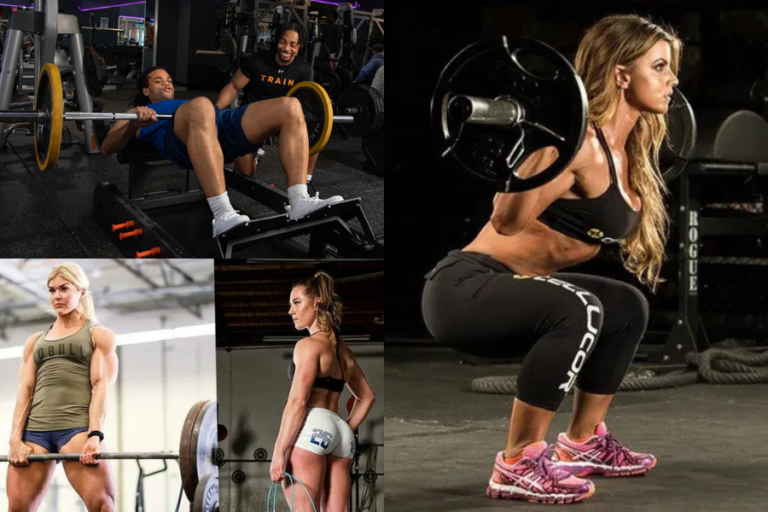
7. Decline bench crunch or sit up
Focus: High upper ab activation with increased difficulty
- Set a decline bench at a moderate angle.
- Secure your feet and lie back with your hands lightly behind your head or crossed over your chest.
- Start with your torso in line with the bench.
- Exhale as you curl your ribcage toward your pelvis, lifting your upper back from the bench.
- Avoid pulling on your neck or using momentum.
- Lower for 3 seconds back to the start position.
Sets and reps: 2 to 3 sets of 8 to 12 reps
You can hold a weight plate or dumbbell across your chest as you get stronger.
8. Cable rope crunch (tall kneeling)
Focus: Heavy, controlled spinal flexion for upper abs
Tall kneeling cable crunches are a favorite in Gymshark’s upper ab workout programming because they allow precise control over load and tempo.
- Attach a rope handle to a high cable pulley.
- Kneel facing the machine, about a foot or two back, and hold the rope by your ears or slightly in front of your face.
- Start with your hips fixed and your spine neutral.
- Exhale as you curl your ribcage down toward your pelvis, thinking about rounding your upper back while your hips stay mostly still.
- Pause, then slowly return to the start over 3 seconds without letting the weight pull you up too fast.
Sets and reps: 2 to 4 sets of 8 to 15 reps
Keep the movement through your spine, not your hips. If you feel your lower back, reduce the weight and refocus on form.
9. Ab rollout (wheel or barbell)
Focus: Anti extension and upper core strength
Ab rollouts challenge the upper abs and deep core by resisting extension rather than repeatedly curling forward.
- Kneel on a mat and hold an ab wheel or barbell with plates that can roll.
- Start with the wheel under your shoulders, arms straight.
- Brace your core and slowly roll forward, letting your hips and shoulders travel together.
- Stop before your lower back sags.
- Pull yourself back by engaging your lats and abs, not just your arms.
Sets and reps: 2 to 3 sets of 6 to 10 reps
Move within a comfortable range and shorten the rollout if you feel stress in your lower back or shoulders.
Include functional and rotational upper ab moves
Many daily tasks and sports involve rotation and resisting rotation. To build a core that looks strong and functions well, add a few multi planar or transverse exercises to your upper ab workout.
10. Dumbbell or cable woodchopper
Focus: Upper abs, obliques, and rotational power
- Stand with your feet shoulder width apart, holding a dumbbell or cable handle high on one side of your body.
- Brace your core and keep a soft bend in your knees.
- Pull across your body in a diagonal pattern, finishing low on the opposite side as if chopping wood.
- Rotate through your torso while keeping your hips controlled.
- Return slowly to the starting position.
Sets and reps: 2 to 3 sets of 8 to 12 reps per side
11. Rotating forearm plank
Focus: Anti rotation, deep core, and upper abs
- Start in a forearm plank with your elbows under your shoulders and your body in a straight line.
- Brace your core and squeeze your glutes.
- Slowly rotate your hips a few inches to the right, then back to center, then to the left.
- Keep your shoulders stable and avoid sagging at the lower back.
Sets and time: 2 to 3 sets of 20 to 40 seconds
These moves recruit your upper abs to help control the spine as your torso moves, which improves carryover to sports, lifting, and everyday movement.
Put it together into sample upper ab workouts
You do not need to use every exercise in one session. Instead, pick 3 to 5 that fit your level and schedule. Here are a few templates to try.
Beginner 10 minute upper ab workout
Do this 2 to 3 times per week with at least one rest day between sessions.
- Supine crunch
- 2 sets of 10 to 12 reps, 3 1 1 tempo
- Hollow hold
- 2 sets of 15 to 20 seconds
- Toe touch crunch
- 2 sets of 8 to 10 reps
- Dead bug (bodyweight or very light weight)
- 2 sets of 8 reps per side
Rest 30 to 45 seconds between sets.
Intermediate 15 to 20 minute upper ab workout
- Stability ball crunch
- 3 sets of 10 to 15 reps
- Weighted dead bug
- 3 sets of 8 to 10 reps per side
- Bicycle crunch
- 2 sets of 16 to 20 total reps, slow and controlled
- Rotating forearm plank
- 2 sets of 20 to 30 seconds
Rest 45 to 60 seconds between sets.
Advanced 20 to 30 minute upper ab workout
Train this 1 to 2 times per week with at least 48 to 72 hours between heavy ab days.
- Decline bench crunch or sit up
- 3 to 4 sets of 8 to 12 reps with slow lowering
- Tall kneeling cable rope crunch
- 3 to 4 sets of 8 to 15 reps
- Ab rollout
- 2 to 3 sets of 6 to 8 reps
- Dumbbell or cable woodchopper
- 2 to 3 sets of 8 to 12 reps per side
Rest 60 to 90 seconds between sets for the heavy movements, then shorten rest on the final exercise if you like a conditioning effect.
Support your upper ab gains with lifestyle
How you sleep and recover affects your core training results just as much as the exercises you choose.
Prioritize rest and recovery
Experts recommend 7 to 8 hours of quality sleep per night to support muscle recovery and hormone balance. Overworking your abs without enough rest can stall progress and increase the risk of strain.
Pay attention to your body’s signals:
- Persistent soreness that lasts several days
- Sharp pain, especially in your lower back or hip flexors
- Reduced performance, such as struggling with a usual weight or rep range
When these show up, take an extra rest day or replace heavy ab work with gentle mobility and walking.
Keep nutrition aligned with your goals
If your goal is visible upper abs:
- Aim for a small calorie deficit rather than an aggressive crash diet
- Keep protein intake adequate to maintain muscle while you lose fat
- Limit alcohol and highly processed foods that make it easier to overshoot calories
If your goal is mainly strength and support for lifting or sports, you might stay closer to maintenance calories so you can train harder and recover more easily.
Key takeaways for your upper ab workout
- You target your upper abs by focusing on spinal flexion, curling your ribcage toward your pelvis, and using controlled tempos like 3 1 1.
- Train your core 2 to 3 times per week, not every day, and leave at least 48 hours between heavy sessions.
- Start with beginner moves such as supine crunches, hollow holds, and toe touches before adding stability ball crunches, dead bugs, and rollouts.
- Progress to weighted work like decline bench crunches and cable rope crunches to build more muscle and definition.
- Remember that nutrition and overall body fat levels determine how visible your abs are, while the workouts build the strength and shape underneath.
Choose one of the sample routines that fits your current level and try it in your next workout. Pay attention to how your upper abs feel during the slow lowering phase, then adjust the weight, tempo, or exercise choice until you feel solid, controlled effort right where you want it.
About the Author