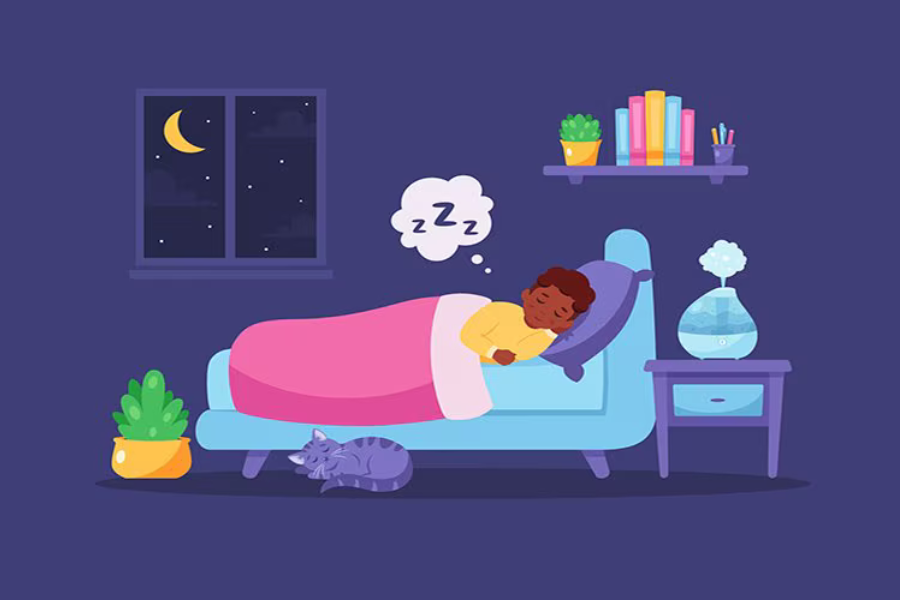
A solid night of sleep is about more than just the number of hours you spend in bed. If you have ever woken up groggy after eight hours, or felt surprisingly refreshed after a shorter night, you have probably wondered: does sleep quality matter more than sleep duration? The research suggests that both are important for your health, but in many situations, sleep quality may be the stronger factor for how you feel and function day to day.
Below, you will learn what quality sleep actually means, how it compares to sleep duration, and what you can do tonight to improve both.
Understand sleep quality vs sleep duration
Before you can improve your sleep, it helps to know what you are aiming for.
What sleep duration means
Sleep duration is simply how long you sleep, usually counted in hours per night.
General recommendations often suggest:
- Adults: about 7 to 9 hours
- Teens: about 8 to 10 hours
- Children: even more, depending on age
Too little or too much sleep is linked with health risks. An umbrella review of 85 meta-analyses found that long sleep duration was highly suggestively associated with an increased risk of all‑cause mortality, meaning people who regularly sleep very long hours have a higher risk of dying from any cause (Frontiers in Medicine). Short sleep duration has been linked with a higher risk of overweight or obesity in children (Frontiers in Medicine).
So sleep duration clearly matters. But it is only part of the picture.
What sleep quality means
Sleep quality focuses on how well you sleep, not just how long. It usually includes:
- How quickly you fall asleep
- How often you wake up during the night
- How long you stay awake if you do wake up
- How rested and refreshed you feel in the morning
- How sleepy you feel during the day
A large research team in Japan concluded that sleep quality is a superior index to sleep quantity for assessing sleep. They found that feeling rested after sleep was a particularly useful way to evaluate sleep quality in people under 65 (PMC – NCBI).
Put simply, if you wake up feeling unrefreshed and sleepy most days, your sleep quality is likely poor, even if you technically get enough hours.
How sleep quality and duration affect your health
You might expect that the more sleep you get, the better. The answer is more nuanced. When you ask, “does sleep quality matter more than sleep duration,” the research points to a shared conclusion: the two work together, but quality often drives how your body and brain perform.
Physical health: heart, blood pressure, and metabolism
Poor sleep, whether short, long, or fragmented, is linked with health conditions like high blood pressure, diabetes, and heart disease. The question is which aspect of sleep is more important.
A large 7‑year Finnish study of over 45,600 working‑age adults found that the onset of sleep disturbances predicted about a 20 percent increased risk of hypertension and dyslipidemia, which refers to unhealthy cholesterol or blood fat levels. Changes in sleep duration alone, becoming a short or long sleeper, were not significantly linked with these outcomes (PMC). Sensitivity analyses confirmed that sleep disturbances independently predicted these heart risk factors, suggesting sleep quality is a more important risk factor than duration for these conditions (PMC).
Meta‑analytic evidence cited in 2016 also showed:
- Poor sleep quality increased the risk of hypertension by about 5 to 20 percent and diabetes by up to 40 percent
- Short sleep duration increased the risk of hypertension by about 20 percent and diabetes by about 30 percent (PMC)
Here, poor sleep quality appears to be the stronger predictor for these specific health issues.
In youth, sleep quality also matters for heart‑related measures. Studies in children and adolescents found that poor sleep quality, measured as sleep efficiency, was associated with a 4.5‑fold higher odds of prehypertension and higher systolic blood pressure. Short sleep duration still had an effect but with a 2.8‑fold higher odds, which is lower than the impact of quality (PMC – NCBI).
On the other hand, long sleep duration is not harmless either. That umbrella review of 85 meta‑analyses highlighted that long sleep duration was associated with increased all‑cause mortality, and that this evidence was graded as highly suggestive (Frontiers in Medicine).
Taken together, both quality and duration influence physical health. Long sleep can be a warning sign, but disturbed or non‑restorative sleep appears especially important for conditions like high blood pressure, cholesterol issues, and diabetes.
Mental health: mood, anxiety, and more
Your emotional health may be even more tightly linked with sleep quality than with simple sleep length.
Research has shown that sleep disturbances more than double the risk of developing mental disorders like depression and anxiety (PMC). Additional work in adults has tied poor sleep quality to higher risk of major depressive disorder, bipolar disorder, generalized anxiety disorder, and chronic pain. Short sleep duration is also associated with these conditions, but usually to a lesser extent (PMC – NCBI).
If you often wake up in the night, feel restless, or wake earlier than you want and cannot fall back asleep, your risk for mood issues may be higher regardless of how many total hours you spend in bed.
When you think about your own experience, this may ring true. A night of fragmented sleep can leave you more irritable, emotionally sensitive, or anxious the next day, even if the total time asleep seems reasonable.
Cognitive function: focus, memory, and performance
Sleep is when your brain does a lot of behind‑the‑scenes work, including organizing memories, clearing waste products, and resetting your ability to focus. Both sleep duration and sleep quality are important for this process.
The Sleep Foundation notes that getting enough hours of high‑quality sleep supports attention, concentration, memory, problem solving, creativity, emotional processing, and judgment, all of which are critical for cognition (Sleep Foundation). Poor sleep, which includes both short sleep and fragmented sleep, can impair brain function because neurons do not have enough time to recuperate, which can contribute to cognitive decline (Sleep Foundation).
Importantly, research suggests that improving sleep quality by achieving the recommended amount of uninterrupted sleep can promote sharper thinking and may help lower the risk of age‑related cognitive decline (Sleep Foundation).
In adolescents, sleepiness itself, which is a key sign of poor sleep quality, appears to have a stronger relationship with academic performance than either total sleep time or general sleep quality scores. One study reported that sleepiness had a stronger negative correlation with academic outcomes than sleep quantity did (PMC – NCBI).
This means that if you feel intensely sleepy during the day, your nighttime sleep may not be doing its job, even if you are in bed for many hours.
So, does sleep quality matter more than duration?
The short answer is that both matter, and they are closely linked. People who sleep very short or very long hours are more likely to report poor sleep quality (PMC), which suggests that sleep quality may help explain why extreme sleep durations are associated with health risks.
Evidence up to 2020 indicates:
- Long sleep duration is more clearly and consistently linked with increased risk of all‑cause mortality, compared to poor sleep quality, in large observational reviews (Frontiers in Medicine)
- Sleep disturbances, a marker of poor sleep quality, are stronger predictors than duration for some specific conditions like hypertension, dyslipidemia, and some mental health issues (PMC)
- Sleep quality, particularly how rested you feel, is considered a better overall index for assessing sleep than hours alone (PMC – NCBI)
So if you are trying to prioritize where to focus your effort, it helps to aim for:
- Enough sleep for your age and lifestyle, and
- Sleep that feels restorative, with minimal waking and daytime sleepiness
Rather than asking if one matters more in every situation, a more helpful question is:
- Are you getting enough high‑quality sleep on a regular basis?
If the answer is no, adjusting both timing and quality will likely help your health more than obsessing over either one alone.
Signs your sleep quality may be a problem
You might assume you sleep “fine” because you fall asleep quickly or stay in bed eight hours most nights. To get a clearer picture, look for these signs that your sleep quality may need attention:
- You often feel unrefreshed, even after what should be enough sleep
- You struggle to get through the day without caffeine or naps
- You wake up multiple times during the night
- You find it hard to fall back asleep if you do wake
- You snore loudly, gasp, or choke during sleep, as reported by a bed partner
- You wake up with headaches or a dry mouth
- Your mood feels consistently low, anxious, or irritable
- You have trouble focusing, remembering details, or making decisions
If several of these feel familiar, your sleep quality is likely affecting your daily life, even if your total sleep time looks normal on paper.
How to improve both sleep quality and duration
You do not need a perfect sleep routine to see benefits. Consistent, small changes can improve how long and how well you sleep.
Create a sleep friendly schedule
Your body likes patterns. When your sleep and wake times shift a lot, your internal clock struggles to stay aligned.
Try to:
- Go to bed and wake up at roughly the same time every day, including weekends
- Allow enough time in bed to realistically get the sleep you need
- Avoid pushing your bedtime later and later, which shortens your sleep window
If you are not sure how much sleep works best for you, aim for the typical range for your age, then adjust based on how you feel. If you still feel groggy after 9 hours on a regular basis, it may be worth speaking with a healthcare provider to rule out underlying conditions.
Build a simple wind‑down routine
Quality sleep starts before you get into bed. A consistent wind‑down routine signals to your body that it is time to slow down.
About an hour before bed, try to:
- Dim lights to reduce stimulation
- Turn off or step away from email, work, and intense conversations
- Swap scrolling on your phone for a quiet activity, like light reading, stretching, or listening to calm music
- Keep screens out of bed if possible, or use blue‑light filters if you must be on a device
The goal is not to create a perfect routine, but to repeat a few calming habits most nights so your body learns the pattern.
Make your bedroom support better sleep
Your environment can easily interrupt or protect your sleep quality.
Aim for a bedroom that is:
- Cool, often in the mid‑60s Fahrenheit for many people
- Dark, with blackout curtains or an eye mask if outside light is a problem
- Quiet, or softened with white noise if you cannot control external sounds
- Comfortable, with a supportive mattress, pillow, and breathable bedding
Even small changes, like moving bright clocks out of your direct line of sight or using earplugs, can reduce nighttime awakenings and make sleep more restorative.
Support your sleep during the day
What you do when you are awake affects how easily you fall and stay asleep at night.
Helpful habits include:
- Getting natural light soon after waking, which helps set your body clock
- Being active most days, even with a short walk or gentle movement
- Keeping large meals, alcohol, and heavy snacks away from your bedtime
- Limiting caffeine in the afternoon and evening
If you nap, keep it short, usually 20 to 30 minutes, and earlier in the day so it does not interfere with your nighttime sleep.
Manage stress and racing thoughts
Stress and worry are common reasons people struggle with sleep quality. If you often lie awake thinking, try:
- A quick “brain dump” before bed, writing down tasks and worries so you do not have to hold them in your head
- Gentle breathing exercises, such as breathing in for a count of four and out for a count of six
- Progressive muscle relaxation, where you tense and then relax one muscle group at a time, from your feet up to your face
If your mind races as soon as you lie down, remind yourself that waking up occasionally at night is normal. Fighting wakefulness can make it harder to fall back asleep. If you cannot drift off again after about 15 to 20 minutes, you might get up, keep the lights low, and do something quiet until you feel sleepy again.
When to talk to a professional about your sleep
Self‑care strategies can improve mild sleep issues, but they are not a replacement for medical care when needed. It is a good idea to reach out to a healthcare professional if you:
- Snore loudly, stop breathing for brief moments in sleep, or gasp
- Feel extremely sleepy during the day, even with what seems like enough sleep
- Have ongoing insomnia that lasts more than a few weeks
- Notice major changes in your mood, such as persistent sadness or anxiety
- Wake very early and cannot fall back asleep, especially if your mood is low
Since poor sleep quality can raise the risk of conditions like high blood pressure, diabetes, depression, and heart problems (PMC, PMC – NCBI), getting help early may protect your long‑term health.
You and your provider can work together to identify causes, which might include sleep apnea, restless legs, mood disorders, chronic pain, or lifestyle factors. Treating these issues often leads to better sleep quality and, in turn, better overall health.
Key takeaways you can use tonight
When you look at the research on “does sleep quality matter more than sleep duration,” a clear pattern emerges:
- Both sleep quality and duration are important for your health
- Long sleep is strongly linked to higher all‑cause mortality risk in large reviews, while
- Poor sleep quality, including frequent disturbances and low restfulness, is often a stronger predictor for issues like high blood pressure, cholesterol problems, diabetes, mental health conditions, and certain heart outcomes (Frontiers in Medicine, PMC, PMC – NCBI, Sleep Foundation)
For your day‑to‑day life, this means:
- Aim for enough sleep for your age, not too little and not excessively long
- Pay close attention to how rested you feel and how sleepy you are during the day
- Focus on routines and environments that improve both how long and how well you sleep
If you are not sure where to start, pick one small change to try tonight, such as dimming the lights an hour before bed or setting a consistent wake‑up time. Over time, these simple steps can add up to deeper, more restorative sleep that supports your body, brain, and mood.
About the Author