A nad supplement can sound like a magic anti aging pill. In reality, nad is a hardworking molecule that helps your cells turn food into energy and repair daily damage. When you understand what nad does and how a nad supplement might support it, you can decide if it is worth discussing with your doctor.
Below, you will learn how nad works in your body, the most talked about nad supplement benefits, what the research actually shows, and how to approach supplements safely.
Understand what NAD is
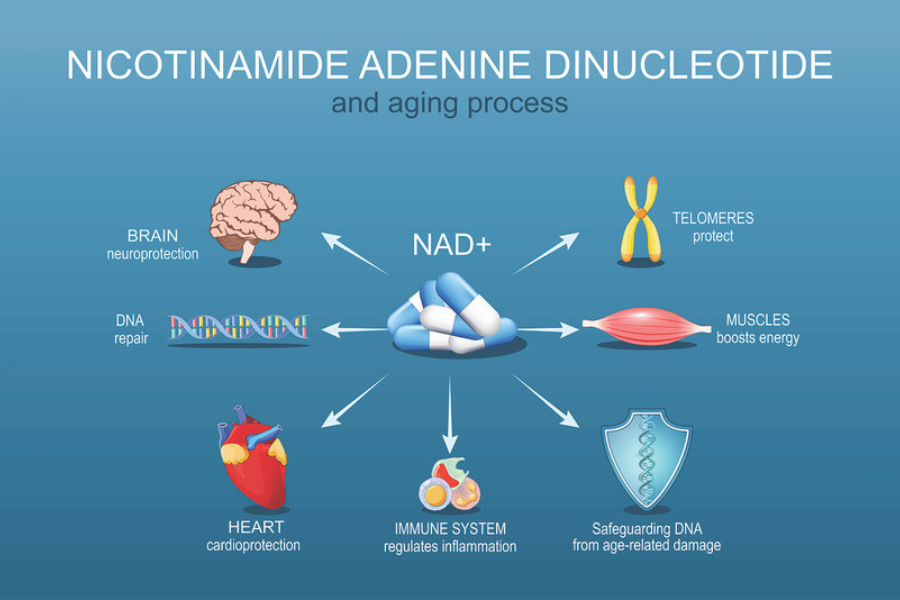
NAD, short for nicotinamide adenine dinucleotide, is a coenzyme found in every cell in your body. You need it to:
- Convert food into usable cellular energy
- Support DNA repair
- Maintain healthy mitochondria
- Regulate your circadian rhythm and inflammation
Your natural nad levels decline as you age and with metabolic stress such as a high fat diet. This drop has been linked to aging and age related conditions in multiple tissues including liver, skin, brain, muscle and blood (National Library of Medicine, GoodRx).
You do not usually take nad directly. Instead, you take precursors, which are building blocks your body converts into nad. Common ones include:
- Niacin or vitamin B3, in the forms nicotinic acid (NA) and nicotinamide (NAM)
- Nicotinamide riboside (NR)
- Nicotinamide mononucleotide (NMN)
Niacin from food can support effective nad production with less than 20 mg per day, although absorption varies with cooking and processing (NCBI PMC). Supplements simply provide a higher or more targeted supply.
How NAD supplements might support your health
Research on nad supplement benefits is still growing, but several areas look promising, especially in older adults and people with certain conditions.
Cellular energy and fatigue
If you feel tired even after a full night of sleep, low nad is one potential piece of the puzzle. Nad helps your mitochondria turn carbohydrates and fats into ATP, the energy currency for your cells.
Raising nad levels appears to:
- Support mitochondrial function and energy production
- Activate sirtuins, a group of enzymes that help regulate metabolism, oxidative stress and cell survival (CNBC)
Clinically, nad therapy that uses nad or its precursors has been used in people with chronic fatigue syndrome to improve mental and physical energy by correcting low energy production and metabolic dysfunction (Natasha Thomas, MD).
You might notice:
- More stable daytime energy
- Less “crash” in the afternoon
- Slightly better exercise tolerance
However, responses vary and supplements are not a cure all. If fatigue is severe or new, you should always rule out underlying medical issues with a healthcare professional.
Brain health and cognitive support
Because your brain is so energy intensive, nad decline hits it especially hard. Lower brain nad levels are associated with cell death and cognitive impairment as you age, which is why researchers are interested in boosting nad as a way to slow brain aging and potentially reduce the risk of Alzheimer disease (UPMC Physician Resources).
In animal and early laboratory studies, raising nad has been shown to:
- Improve cognitive performance
- Protect neurons and support neuro regeneration
- Lower brain inflammation and oxidative stress (UPMC Physician Resources, PMC)
Nicotinamide riboside in particular has reduced brain inflammation and improved cognitive function in diabetic mice (WebMD).
Human data is still limited, so you should see these benefits as “promising but not proven.” Researchers at the Aging Institute are testing new molecules that activate a brain enzyme called NAMPT to keep nad higher in the brain for longer, with plans for clinical trials in the coming years (UPMC Physician Resources).
Metabolic health and insulin sensitivity
Since nad is central to metabolism, it also plays a role in how you handle blood sugar and fats. Declining nad has been linked to metabolic stress, while boosting nad improves mitochondrial function and several metabolic complications in animal models (NCBI PMC).
In early human studies:
- Nad related supplements have improved insulin sensitivity in prediabetic postmenopausal women
- They have increased insulin production in people with type 2 diabetes
Effects on long term blood sugar control and HbA1C are still unclear, so you should not use nad supplements as a stand alone treatment for diabetes (GoodRx).
Heart and vascular support
One of the more encouraging areas of research looks at how nad restoration might support your heart and blood vessels.
Animal studies have shown that restoring nad levels can improve cardiovascular function and reverse some metabolic conditions (National Library of Medicine).
Early human trials suggest nad boosting can:
- Reduce systolic blood pressure and aortic stiffness
- Improve arterial flexibility
- Raise HDL, the so called “good” cholesterol, in some postmenopausal women
- Reduce inflammatory markers in people with advanced heart failure (National Library of Medicine, GoodRx)
These changes are modest and should be viewed as complementary to, not replacements for, standard heart medications and lifestyle changes.
Muscle function and exercise performance
If your workouts feel harder than they used to, low nad might play a small role.
Raising nad in animal models improves muscle function and mitochondrial performance (National Library of Medicine). In older adults, nicotinamide riboside has improved exercise performance and redox balance, which relates to how your cells handle oxidative stress (WebMD).
You might experience:
- Slightly better endurance during cardio
- Faster recovery after moderate exercise
- Less muscle fatigue during daily activities
These effects tend to be subtle rather than dramatic performance boosts.
Skin aging and repair
If you are drawn to nad supplements for anti aging, skin health is a big part of the conversation.
Declining nad in skin interferes with DNA repair and pushes cells toward senescence, where they are alive but no longer functioning well. This contributes to:
- Reduced collagen and elastin
- More inflammation
- Weaker skin barrier and reduced regenerative capacity
All of these changes are linked to visible signs of aging and slower healing (National Library of Medicine).
By restoring nad, at least in theory and in early models, you may support better DNA repair and collagen maintenance from the inside. Topical niacinamide, which is a form of NAM, is already widely used in skincare for barrier repair and brightening, and oral NAM can raise nad and sirtuin activity throughout the body (PMC).
Specific NAD precursor benefits
Not all nad supplements are identical. Different precursors have slightly different profiles.
Niacin and nicotinamide (vitamin B3)
Niacin in food is essential for basic nad production. At pharmacological doses of nicotinic acid, in the gram range, niacin effectively lowers triglycerides and LDL cholesterol and raises HDL. Flushing limits its use at these high doses, and that effect is driven by a receptor mechanism separate from nad synthesis (NCBI PMC).
Nicotinamide (NAM):
- Increases cellular nad and activates protective proteins like SIRT1 and SIRT3
- Supports mitochondrial maintenance, genome stability and antioxidant defenses
- Has shown benefits in neurological conditions, depression, inflammatory diseases and some skin cancers in human studies using 500 to 3000 mg per day (PMC)
Long term intake of 500 to 1000 mg per day has generally been safe in trials, although very high chronic doses above 6 g per day raise more safety concerns including potential liver and metabolic effects (PMC).
Nicotinamide riboside (NR)
Nicotinamide riboside is often marketed as a “next generation” nad booster because it enters cells via nucleoside transporters and is efficiently converted to nad (NCBI PMC).
Research so far has found that NR:
- Safely raises nad levels in healthy middle aged and older adults
- Improves redox balance and some measures of exercise performance in older people
- Protects cardiac function in certain mouse models of heart disease
- Reduces brain inflammation and improves cognition in diabetic mice
- Lowers liver inflammation markers in patients with non alcoholic fatty liver disease when combined with pterostilbene (WebMD)
If you are looking for a well studied nad precursor with a good safety profile, NR is currently one of the better supported options.
Conditions where NAD may be especially relevant
You might be wondering when a nad supplement is most likely to be useful. Research and expert commentary suggest the biggest potential in a few groups.
Aging and age related diseases
Since nad levels decline across multiple tissues with age, and restoring them in animal models improves cardiovascular health, muscle function, mitochondrial performance and even fertility, nad is a key target for healthy aging strategies (National Library of Medicine).
Scientists are particularly interested in:
- Brain aging and Alzheimer disease
- Vascular aging and heart failure
- Metabolic disorders like insulin resistance
Nad is not yet an approved treatment for these conditions, but understanding your own risk factors can guide a more informed discussion with your doctor.
Neurological conditions such as Parkinson’s
Nad has shown neuroprotective effects in animal and cell studies, often by reducing inflammation, protecting mitochondria and activating the Sirt1 PGC 1α pathway (PMC).
In early human research on Parkinson disease, nad related supplements have:
- Shown small improvements in symptoms
- Reduced inflammatory markers in spinal fluid
- Potentially slowed disease progression, although larger studies are needed (GoodRx, CNBC)
If you or a loved one has a neurological condition, you should never change treatment plans without a neurologist, but you can bring up nad as an area of active research.
Chronic fatigue and long COVID
Because nad directly feeds into energy production, it is being explored in fatigue related conditions.
Clinical experience and small studies in chronic fatigue syndrome suggest nad therapy can:
- Improve energy
- Support cognitive function
- Enhance mitochondrial repair (Natasha Thomas, MD)
Experts interviewed in 2025 also mention nad precursors for people with persistent low energy, brain fog, or long COVID symptoms, although larger controlled trials are still needed (CNBC).
How to raise NAD safely
Before you buy any supplement, it helps to know your full set of options.
Lifestyle first, supplements second
Natural ways to support nad include:
- Regular exercise, particularly activities that challenge your cardiovascular system
- A balanced diet with nad supportive foods like avocados, meat and edamame
- Avoiding chronic overeating, since calorie restriction can raise nad in some models (NCBI PMC, CNBC)
These habits benefit your health regardless of what you decide about supplements.
Oral supplements versus IV drips
You will see two main delivery methods marketed for nad:
- Oral nad precursors (niacin, NAM, NR, NMN)
- Intravenous nad infusions
IV therapy can raise nad in the bloodstream quickly and has been used clinically, for example in some fatigue clinics (Natasha Thomas, MD). However, there are some trade offs.
According to recent reporting:
- IV nad is expensive and time consuming
- It may raise nad more in blood than inside cells
- It can cause side effects such as burning sensations, nausea and brain fog
These drawbacks make oral nad precursors a safer and often more practical option for many people (CNBC).
A note on advanced NAD strategies
Some experts argue that effective nad boosting should not just flood the system with precursors. It should also:
- Reduce excessive nad consumption, for example by inhibiting enzymes like CD38
- Improve nad recycling, for example by activating NAMPT
This more comprehensive approach might support more stable nad levels over time (National Library of Medicine). You will mostly see this language in research settings or in more sophisticated supplement formulations.
Safety, side effects and smart use
Most nad precursors have good safety records at typical supplement doses, but more is not always better.
Possible side effects include:
- Flushing, especially with high dose nicotinic acid
- Nausea or digestive upset
- Headache
With very high dose nicotinamide, there are concerns about depleting methyl groups, which may affect liver fat, insulin sensitivity and cardiovascular risk, although this has mostly been seen at doses higher than typical supplements and in research models (PMC).
To use nad supplements wisely, you can:
- Talk with your doctor, especially if you are pregnant, breastfeeding, have liver or kidney disease, or take prescription medications.
- Start at a low dose and increase slowly if needed.
- Choose products from reputable brands that test for purity.
- Re evaluate after 2 to 3 months to see if you notice meaningful changes.
If a supplement promises to “reverse your age” or “cure” serious disease, treat that as a red flag. The current evidence is encouraging in some areas but far from definitive.
Putting it all together
Nad supplement benefits sit at the intersection of energy, metabolism and aging. By raising nad, you may support:
- Steadier energy and mitochondrial function
- Better metabolic and cardiovascular markers
- Brain and nerve health, including potential cognitive support
- Healthier skin structure and repair
At the same time, most of the strongest evidence comes from animal and early human studies. You will get the most out of a nad supplement when you pair it with good sleep, movement and nutrient dense food, and when you treat it as one tool in a wider health toolbox rather than a standalone fix.
If you are curious, your next step can be as simple as bringing up nad with your healthcare provider and asking whether a specific precursor like nicotinamide riboside or nicotinamide fits your personal health goals and medical history.
About the Author