A coq10 supplement can sound like just another wellness trend, but the potential coq10 supplement benefits are backed by a surprising amount of research. From supporting your heart and energy levels to helping with migraines, this nutrient quietly works behind the scenes in almost every cell of your body.
Below, you will learn what coq10 is, what the science actually says, and how to decide whether a supplement might make sense for you.
What coq10 is and why your body needs it
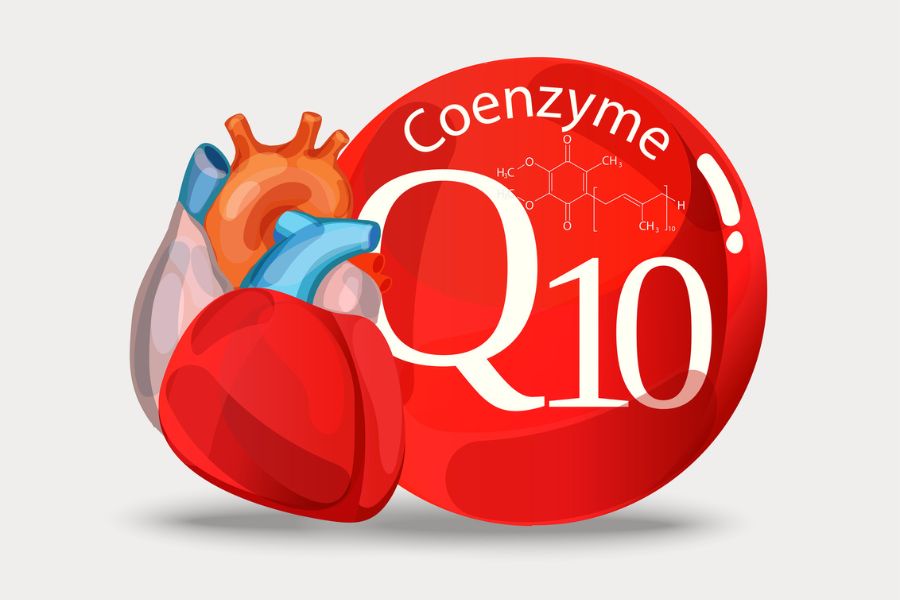
Coenzyme Q10, or coq10, is a vitamin-like compound that your body makes naturally. It lives inside the mitochondria in your cells, where it helps create ATP, the molecule your body uses for energy. It also acts as an antioxidant, which means it helps protect your cells from damage caused by everyday wear and tear, stress, and inflammation (Mayo Clinic).
You have higher levels of coq10 in energy-hungry organs like your heart, liver, kidneys, and pancreas (Healthline). That makes sense when you think about how hard those organs work, every second of every day.
As you age, or if you have certain health conditions such as heart disease or you take statin medications, your natural coq10 levels can drop (Mayo Clinic). When that happens, your cells might not produce energy as efficiently and they may be more vulnerable to oxidative stress.
You do get some coq10 from foods like meat, fish, and nuts, but usually not enough to significantly raise your levels on their own (Mayo Clinic). That is where supplements can come in.
Key coq10 supplement benefits supported by research
Coq10 has been studied for several decades. While it is not a cure-all, some areas are backed by stronger evidence than others. Here are some of the most researched coq10 supplement benefits.
1. Supporting heart health and circulation
Because your heart relies heavily on coq10 for energy, it has been a major focus of research.
In people with heart failure, one large trial found that taking 100 mg of coq10 three times per day for two years reduced cardiovascular deaths and all-cause deaths and also reduced hospitalizations for heart failure. Participants also moved into better New York Heart Association functional classes, which is a way doctors grade how limited you are by heart symptoms (PMC).
Other studies in people with coronary artery disease found that coq10 supplementation reduced inflammatory markers like TNF-α and IL-6 and increased antioxidant enzyme activity and vitamin E levels after 12 weeks at 300 mg per day. This suggests less oxidative stress and inflammation in the cardiovascular system (PMC).
Some research also points to improved outcomes for people undergoing cardiac surgery. As an add-on therapy before surgery, coq10 has been associated with better mitochondrial efficiency, reduced heart muscle damage, fewer arrhythmias, and shorter hospital stays in patients having bypass or valve procedures (PMC).
While you should never swap prescribed heart medications for supplements, coq10 is being increasingly viewed as a potential supportive therapy in this area.
2. Helping manage blood pressure
If your blood pressure runs high, coq10 may offer modest support alongside lifestyle changes and prescribed treatments.
A review of studies up to 2018 found that coq10 supplementation lowered systolic blood pressure by about 11 mm Hg and diastolic blood pressure by about 7 mm Hg in people with hypertension. Interestingly, it did not significantly affect blood pressure in people who already had normal readings (PMC).
This fits with coq10’s role in improving endothelial function and reducing oxidative stress, both of which can impact how flexible and responsive your blood vessels are.
You should still talk with your doctor before adding coq10 if you take blood pressure medication, since combining therapies can sometimes require monitoring or dose adjustments.
3. Reducing migraine frequency and severity
If you live with migraines, you know they can disrupt entire days at a time. Coq10 has been studied as a preventive option for migraine management.
A randomized double-blind placebo-controlled trial that used 400 mg per day of coq10 found that after three months, participants had fewer migraine attacks, and the attacks they did have were shorter and less severe. Inflammatory markers like TNFα and calcitonin gene-related peptide also decreased, which points to an anti-inflammatory effect in the brain (PMC).
A review of six studies also concluded that coq10 can reduce how often migraines occur and how intense they are by improving mitochondrial function in brain cells (Healthline).
You would still need to work with a healthcare professional to integrate coq10 into your migraine plan, but it is one of the more promising supplement options in this category.
4. Supporting energy and reducing fatigue
Since coq10 is directly involved in making cellular energy, it makes sense that one of the top coq10 supplement benefits people look for is better energy.
A meta-analysis of 13 randomized controlled trials with 1,126 participants found that coq10 supplementation produced a statistically significant reduction in fatigue scores compared with placebo. The effect size was moderate overall, and the benefit was especially clear in people who had fatigue-related health conditions (Frontiers in Pharmacology).
The same analysis found that:
- Coq10-only supplements reduced fatigue, while mixed formulations did not show a clear benefit, possibly because they used lower coq10 doses
- Higher daily doses and longer use were linked to better fatigue reduction, which suggests a dose and time dependent effect (Frontiers in Pharmacology)
Specific conditions like Chronic Fatigue Syndrome and fibromyalgia have also shown improvements. For example, in people with CFS, a combination of coq10 and NADH improved fatigue symptoms and markers of mitochondrial function (PMC). In fibromyalgia, doses between 100 and 400 mg per day have reduced fatigue and improved clinical symptoms, possibly by activating AMPK, a key energy regulation enzyme that is often downregulated in this condition (PMC).
You should not expect an instant jolt like caffeine. Instead, coq10 works more like a steady upgrade to your cellular energy machinery over weeks of consistent use.
5. Potential support for metabolic health and blood sugar
Coq10’s role in mitochondrial function and antioxidant defense has led researchers to study it in metabolic conditions like type 2 diabetes and metabolic syndrome.
In people with metabolic syndrome, 100 mg per day of coq10 for eight weeks improved serum insulin, insulin resistance (HOMA-IR), beta-cell function (HOMA-B), and overall antioxidant capacity in the blood (PMC).
Earlier clinical studies also suggested that coq10 might support better blood pressure and blood sugar control in people with type 2 diabetes (WebMD). More recently, a 2024 meta-analysis reported that coq10 supplementation may improve insulin sensitivity and blood sugar regulation while reducing markers of oxidative stress in people with diabetes (Healthline).
This does not replace diet, movement, or medication, but it adds to the reasons why coq10 is being explored as part of a broader metabolic health strategy.
6. Fertility and reproductive health
Oxidative stress does not just affect your heart and brain. It can also damage eggs and sperm, which are especially sensitive cells.
Coq10 supplementation may help protect egg quality in women as they age and improve sperm concentration and activity in men by reducing oxidative damage. Studies up to 2009 reported improved semen parameters and sperm function in infertile men who took coq10 (WebMD, Healthline).
If you are exploring fertility support, coq10 is often one of the supplements your provider may discuss with you, especially when age related egg or sperm quality is a concern.
7. Neurological conditions and brain health
Because coq10 is concentrated in the brain and nervous system, it has been studied in conditions like Parkinson’s disease and Huntington’s disease.
Some early trials suggested that coq10 might slow functional decline in these neurological diseases (WebMD). However, later high dose studies in Parkinson’s disease have shown mixed results. One phase III trial using up to 2400 mg per day did not significantly change disease progression overall, although a subgroup of patients taking 300 mg per day of the reduced form, ubiquinol 10, showed some improvement (PMC).
Researchers also view coq10 as relevant in other neurological and muscular disorders and migraines because of its role in reducing oxidative stress and inflammation in mitochondria (PMC).
For now, you can think of coq10 as a possible supportive piece in brain health rather than a stand alone treatment.
Coq10 is best seen as a helper for your cells, not a replacement for medical care or a guaranteed fix for complex conditions.
Common forms, dosages, and how to take coq10
If you decide to explore coq10 supplement benefits, it helps to know what to look for on the label and how you might take it.
Coq10 supplements come in several forms, including capsules, chewable tablets, liquid syrups, and even intravenous preparations used in clinical settings. For everyday use, capsules and softgels are most common (Mayo Clinic).
Typical daily doses in studies range from 100 mg to 400 mg, although some neurological trials have gone up to 2400 mg under close medical supervision (PMC). Many people start around 100 to 200 mg per day and adjust with guidance from a healthcare professional.
A few practical tips:
- Take coq10 with food that contains some fat to help absorption, since it is fat soluble
- Be consistent. Studies often run for 8 to 12 weeks before measuring benefits
- If you are on prescription medications, especially blood thinners, blood pressure drugs, or chemotherapy agents, talk with your doctor before starting coq10 to avoid interactions
You may see both “ubiquinone” and “ubiquinol” on labels. Ubiquinol is the reduced, active antioxidant form of coq10. Some research suggests it may be better absorbed, especially in older adults, but both forms can raise coq10 levels.
Safety, side effects, and when to be cautious
Overall, coq10 is considered safe for most adults when taken as directed. A large review found that among 602 people receiving coq10 in clinical trials, only one gastrointestinal side effect was reported, and overall side effects were no more common than with placebo (Frontiers in Pharmacology).
According to the Mayo Clinic, mild stomach upset is the most frequently reported issue. In general, side effects are uncommon and usually mild when they do occur (Mayo Clinic).
A few important cautions:
- If you are pregnant or breastfeeding, the safety of coq10 is not fully established, so you should only use it if your healthcare professional agrees it is appropriate (Mayo Clinic)
- If you take statins, coq10 may actually help counteract statin related drops in coq10 levels and associated muscle symptoms, but you still need to speak with your prescriber before adding it (WebMD)
- If you are on complex medication regimens or have serious medical conditions, treat coq10 like any other active supplement and get personalized advice
How to decide if coq10 is right for you
With so many potential coq10 supplement benefits, it can be tempting to add it to your routine simply because it sounds helpful. Instead, it is worth asking a few targeted questions:
- Do you have conditions tied to mitochondrial function or oxidative stress, such as heart disease, migraines, metabolic syndrome, or chronic fatigue related issues?
- Are you on statins or other medications that might lower your natural coq10 levels?
- Are you looking for stamina support and already working on basics like sleep, nutrition, and movement?
If you answer yes to any of these, coq10 might be a reasonable supplement to discuss with your healthcare provider. Together, you can look at your health history, current medications, and the research to see whether it fits into your personal plan and what dose makes sense.
Even if you are generally healthy, using coq10 for its antioxidant and energy support roles can still be worthwhile, as long as you view it as a complement to, not a substitute for, core healthy habits.
Start small, stay consistent, and pay attention to how you feel over several weeks. That kind of thoughtful, informed approach helps you get the most from coq10 and from any supplement you choose to add to your routine.
About the Author