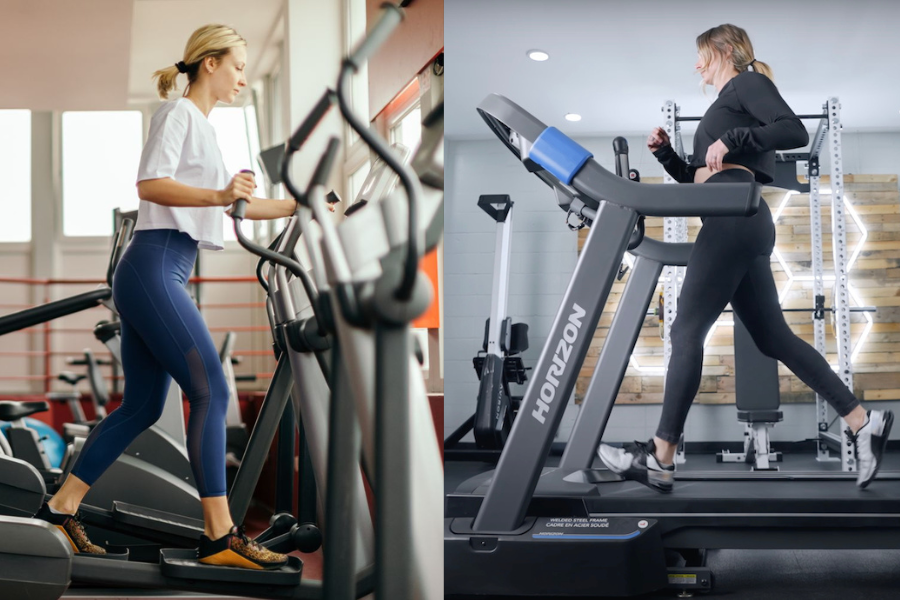
A cardio machine can be the backbone of your home workouts, but choosing between an elliptical and a treadmill is not always straightforward. When you focus on elliptical vs treadmill cardio specifically for weight loss, the right choice depends on your joints, fitness level, and how you like to move.
Below, you will see how each machine affects calorie burn, joint health, and full-body conditioning, plus simple ways to make either one work harder for sustainable results.
Understand elliptical vs treadmill cardio for weight loss
Both the elliptical and the treadmill can help you lose weight by burning calories and improving your cardiovascular fitness. Multiple sources note that your heart rate, oxygen use, and calories burned can be very similar on both machines when effort is matched, which means you can get effective cardio from either option (Healthline, Nike).
Where things differ is how your body feels during and after your workout. Treadmills are higher impact. You support your full body weight with every step, and that extra loading can slightly boost calorie burn but also raise injury risk if your joints are sensitive (Livefit, Healthline). Ellipticals keep your feet planted, which reduces impact and makes it easier to work longer at moderate intensity, a key factor in consistent weight loss.
Compare calorie burn on elliptical vs treadmill
If you only look at numbers, the treadmill usually has a slight edge for raw calorie burn. A Harvard Health estimate cited by Livefit suggests that a 155 pound person burns around 335 calories in 30 minutes on an elliptical and about 372 calories in 30 minutes running at a 10 minute mile on a treadmill (Livefit).
Other research paints a more even picture. A 2010 study found that when intensity is matched, calories burned, oxygen consumption, and heart rate are nearly identical on elliptical and treadmill workouts, which means an elliptical session can stand in for a treadmill run in terms of cardio benefit (Healthline).
One key detail often gets overlooked: the calories that appear on the machine screen can be misleading. A Lifefitness user reported that their elliptical showed roughly 1200 to 1400 calories per hour, while the treadmill reported closer to 700 calories per hour, even though their heart rate and effort were clearly higher on the treadmill (Reddit). This is a good reminder to treat machine readouts as estimates, not exact science.
If your main goal is weight loss, what matters most is not the tiny difference per session but the total time and effort you can realistically sustain each week. If you feel beat up by running, you are less likely to stay consistent, and consistency will always burn more calories in the long run.
Consider joint impact and injury risk
For many people, the biggest difference between elliptical vs treadmill cardio is how it feels on the joints.
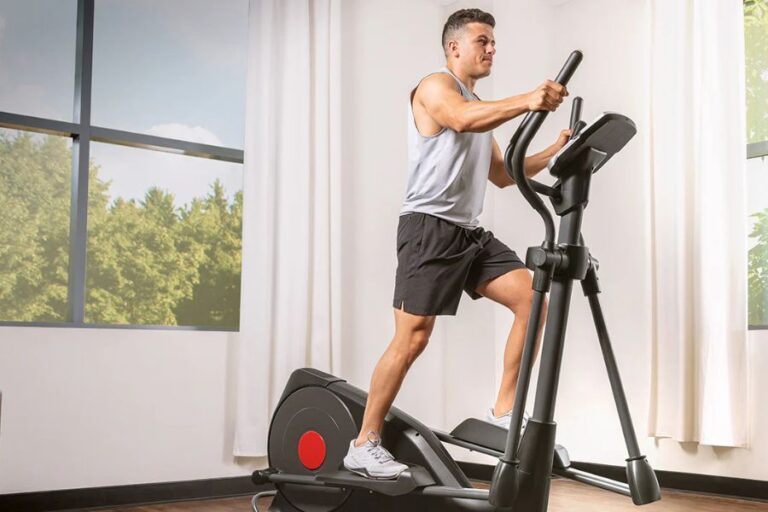
The elliptical is considered low impact because your feet never leave the pedals. This gliding motion lowers stress on your knees, hips, and ankles, which is ideal if you have arthritis, low back pain, or are coming back from an injury (Healthline, Nike, NordicTrack). NordicTrack notes that this makes ellipticals especially helpful for beginners, older adults, and anyone easing back into fitness.
That said, low impact does not mean zero joint load. A 2024 biomechanical study comparing elliptical trainers and stationary bikes found that ellipticals can actually create higher peak knee and ankle forces at faster pedaling speeds, partly because the fixed pedal design changes how torque builds through the movement (Medicina via PMC). The takeaway for you is simple: keep your speed controlled and choose resistance and stride settings that feel smooth instead of jerky. Faster is not always better if your form starts to suffer.
Treadmills, on the other hand, involve repetitive impact with every step. They engage your bones and joints more, which can be useful for maintaining bone density, but that same impact can increase your risk of shin splints, knee pain, and stress fractures, especially if you ramp up speed or mileage too quickly (Healthline). If you are prone to joint issues, you may want to focus more on walking with incline rather than heavy running.
Look at which muscles you work
Targeting more muscle groups in a single workout can support your weight loss efforts by increasing the overall energy cost and building lean mass.
With an elliptical, you can work both your upper and lower body at once. Movable handles engage your arms, shoulders, chest, and back while your legs, glutes, hip flexors, and quadriceps push and pull through each stride (Healthline, NordicTrack). You can also pedal backward to emphasize different muscles, such as the hamstrings and glutes.
Treadmills primarily target your lower body. Walking and running build your quadriceps, hamstrings, calves, and glutes, especially when you use incline (Healthline, NordicTrack). According to Nike, this weight bearing work through the legs is a powerful way to increase cardiovascular fitness and lower body strength at the same time (Nike).
If you want a single machine that lets you recruit more of your body at once, the elliptical has an advantage. If your main goal is stronger legs or preparing for outdoor walking and running, the treadmill will feel more specific.
Use intensity to maximize weight loss
The machine you choose is important, but how you use it matters even more. Both ellipticals and treadmills let you adjust speed and incline or resistance, which gives you several ways to boost calorie burn (Livefit).
High intensity interval training, or HIIT, is a particularly effective method. You alternate short bursts of harder effort with easier recovery periods. This style of training has been shown to reduce body fat and improve fitness in less time compared to steady state cardio, and both machines are well suited for it (Healthline, Livefit).
For example, you might:
- On the elliptical, push hard for 30 seconds at higher resistance, then recover for 60 to 90 seconds at an easier setting. Repeat for 10 to 15 rounds, adjusting resistance so your breathing is heavy during work intervals but you can still control your form.
- On the treadmill, walk or jog at a comfortable pace, then increase speed or incline for 30 to 60 seconds before returning to your base pace. Start with 10 rounds and build from there as your fitness improves.
You do not need to do HIIT every day. A blend of moderate steady sessions and 1 or 2 interval workouts per week is more sustainable and still very effective for weight loss.
Factor in comfort, enjoyment, and goals
Both Nike and Healthline highlight that improvements in heart rate, oxygen use, and calories burned are similar on ellipticals and treadmills when you match effort levels. For that reason, your decision should lean heavily on what you enjoy and what your body tolerates best (Nike, Healthline).
Ask yourself:
- Do your joints feel better gliding or running? If your knees, hips, or back act up, the elliptical’s low impact movement is probably the smarter everyday choice (Healthline, Nike).
- Do you have specific performance goals like a 5K race? In that case, spending more time on the treadmill will prepare you for real world running.
- Do you get bored easily? Alternating your cardio days between elliptical and treadmill, if you have access to both, can keep things fresh and reduce overuse injuries by changing the stress on your body (NordicTrack).
According to experts referenced by Nike, treadmill workouts tend to burn slightly more calories because larger lower body muscles like the quads and glutes work harder, especially at higher inclines and speeds (Nike). That advantage only matters if you actually feel comfortable enough to keep using the treadmill regularly.
Design a simple cardio plan you can stick to
Once you know how your body responds to elliptical vs treadmill cardio, you can build a straightforward plan around your preferences and schedule.
Here is one example of how you might structure a week if your main focus is weight loss and overall health:
3 to 5 cardio sessions per week at a mix of easy, moderate, and higher intensity, plus at least 1 rest day where you walk or move gently but skip formal workouts.
You could try:
- 2 days on the elliptical, focusing on low impact steady state for 30 to 45 minutes
- 1 to 2 days on the treadmill, starting with walking and gradually adding short jogging or incline intervals
- 1 day of higher intensity intervals on the machine that feels best on your joints
Adjust the durations to fit your current fitness level. If 15 minutes is your starting point, that is perfectly fine. As you get stronger, you can add 5 minutes at a time or slightly increase resistance, speed, or incline.
Put it all together
When you compare elliptical vs treadmill cardio for weight loss, both machines can get you where you want to go. The treadmill may burn slightly more calories at higher intensities and better simulate outdoor running. The elliptical is easier on your joints and can engage your upper and lower body at once, which is especially helpful if you are a beginner, older adult, or returning from injury.
Your best choice is the machine that feels comfortable, fits your goals, and encourages you to show up consistently. Start with the option you are most likely to use three or more times a week, dial in a mix of steady and interval sessions, and let your results build over time.
About the Author