A good elliptical interval training workout can help you get stronger and leaner without pounding your joints. By alternating bursts of higher effort with easier recovery, you burn more calories in less time and keep your workouts interesting. You also get the flexibility to match the intensity to your current fitness level, which makes this style of training easy to stick with.
Below, you will learn what elliptical interval training is, how it compares to steady state cardio, and how to build beginner friendly and more advanced workouts that support weight loss and better health.
Understand elliptical interval training
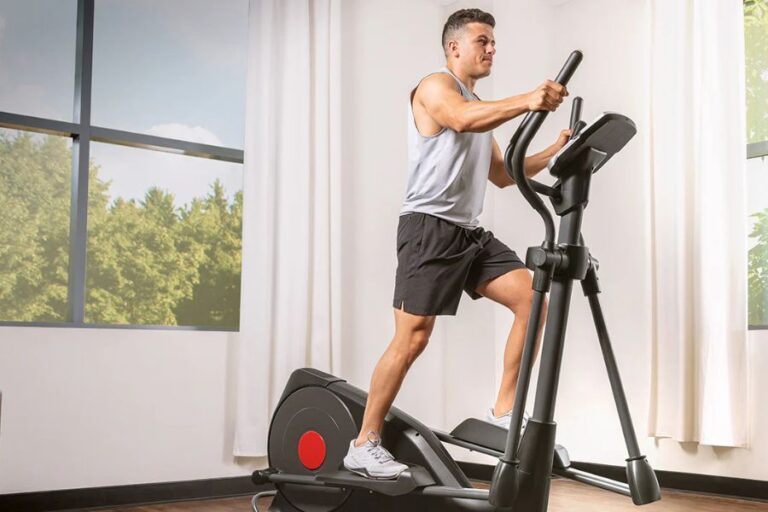
Elliptical interval training is simply alternating periods of harder work with periods of easier effort while you use the elliptical. You play with resistance, speed, and sometimes incline, then you back off to recover without stopping the movement.
For example, you might push hard for 30 to 60 seconds, then pedal more slowly for 30 to 90 seconds. This pattern repeats for 10 to 30 minutes, depending on your fitness. You can think of it as a structured way to get the benefits of high intensity interval training, or HIIT, in a low impact format that is easier on your knees and hips.
Ellipticals are well suited to interval work because you can adjust resistance and incline quickly. You also keep your legs moving even during recovery, which helps you stay warm and ready for the next work phase (Healthline).
Why intervals can help you get leaner
If your main goals are fat loss and better health, elliptical interval training gives you several advantages over just hopping on and pedaling at the same pace.
First, intervals can increase your calorie burn during and after your workout. When you alternate higher and lower intensity, you work more total muscle and raise your heart rate repeatedly. Ellipticals already recruit your upper body, core, and lower body at the same time, which can burn more calories than some other cardio machines (Cleveland Clinic).
Second, intervals help you make better use of limited time. A short HIIT style elliptical session can improve your cardiovascular fitness and support weight loss as effectively as a longer steady workout. In one 12 week study, people with pre diabetes or type 2 diabetes who did three HIIT sessions per week on an elliptical lowered their fasting blood sugar, reduced waist and hip size, improved blood pressure, and improved resting heart rate (PureGym).
Finally, intervals keep boredom in check. Instead of watching the minutes crawl by, you focus on the next hard push or recovery block. That mental engagement can make it easier to stay consistent, which matters more for fat loss than any single workout.
Compare intervals and steady state cardio
You might wonder whether elliptical interval training is actually better than steady state cardio. The answer is more balanced than you might think.
An 8 week study with untrained college students compared steady state workouts with different HIIT protocols, including a very intense Tabata style session. All groups improved their aerobic capacity and anaerobic performance by roughly the same amount, around an 18 percent increase in VO2 max, with no meaningful difference between them (Journal of Sports Science & Medicine).
In other words, hard intervals were not automatically superior to moderate, steady exercise for improving fitness in beginners. The same study also found that the most intense Tabata protocol was less enjoyable and required longer recovery, even though the actual workout time was shorter (Journal of Sports Science & Medicine).
For you, this means:
- Both interval and steady state elliptical workouts can improve your fitness.
- Extremely intense intervals are not required, especially when you are starting.
- Enjoyment and consistency matter more than squeezing in as much intensity as possible.
You do not have to choose only one style. Many people use intervals a few days per week and steady state sessions on other days to build endurance.
Protect your joints while you work harder
One of the biggest benefits of using the elliptical for interval training is joint protection. The movement pattern is similar to walking, jogging, or stair climbing, but your feet never leave the pedals. That reduces stress on your knees, hips, and ankles compared with running on a treadmill or pavement.
The low impact design makes elliptical training especially helpful if you have existing joint pain or arthritis. You can still work at a challenging intensity without the jarring impact that might aggravate your symptoms (Cleveland Clinic). Healthline also notes that elliptical interval training remains low impact even at higher intensities, so you get the cardiovascular benefits without extra pounding (Healthline).
Because the machine often includes moving handles, you engage your arms and upper body along with your legs. This full body effort supports better calorie burn and helps you build strength in your back, shoulders, and core along the way (PureGym).
Set your starting point as a beginner
If you are new to exercise or to the elliptical, it pays to ease in. Your goal in the first couple of weeks is to learn the motion, find comfortable settings, and avoid soreness.
Verywell Fit suggests that true beginners start with short sessions of around 10 minutes and gradually build up to longer workouts over time (Verywell Fit). Aim for a rate of perceived exertion, or RPE, that feels like a 4 to 6 on a scale of 1 to 10. You are breathing a bit harder, but you can still speak in full sentences.
To set up the machine:
- Choose a low to moderate resistance under level 5.
- If your elliptical has incline, keep it between levels 1 and 8 (Garage Gym Reviews).
- Stand tall, hold the handles lightly, and let your arms and legs move in a smooth rhythm.
During this learning phase, your intervals will be modest. Think of them as small pushes, not all out sprints.
Try a simple beginner interval workout
When you feel comfortable with the elliptical motion for at least 10 to 15 minutes, you can move into a basic elliptical interval training session. Start with two or three sessions per week on nonconsecutive days.
Here is an approachable structure that you can complete in about 20 minutes:
- Warm up for 5 minutes at very easy effort. Use low resistance and a relaxed pace.
- Work interval: 1 minute at RPE 6. Increase resistance slightly or speed up your stride.
- Recovery interval: 2 minutes at RPE 4. Lower the resistance or slow your pace.
- Repeat steps 2 and 3 six times.
- Cool down for 3 to 5 minutes at an easy effort.
As you get stronger, shorten the recovery to 90 seconds or increase the number of rounds. Garage Gym Reviews suggests alternating short bursts of 30 to 45 seconds just below your maximum effort with 15 seconds of easy pedaling, repeated for 10 to 20 minutes, to burn a high number of calories in less time (Garage Gym Reviews). You can treat this shorter, more intense style as a progression once your base fitness has improved.
Tip: You know you are in the right zone when the work intervals feel challenging but doable, and you are ready to start the next interval after the recovery, not dreading it.
Build toward steady 30 minute sessions
Your long term goal is to meet or exceed the common guideline of 150 minutes of moderate intensity activity per week. You can work toward this by gradually expanding both your interval workouts and your steady state sessions.
Verywell Fit recommends adding a few minutes of easier ramps and a bit more challenging work each week until you reach a continuous 30 minute session on the elliptical (Verywell Fit). For example, you might:
- Week 1: 10 to 15 minutes, mostly easy with short pushes.
- Week 2: 18 to 20 minutes with more structured intervals.
- Week 3: 20 to 25 minutes, or one longer session plus a shorter interval day.
- Week 4 and beyond: 25 to 30 minutes most days.
On some days, use a steady, moderate pace instead of intervals. This balance lets your body recover while still logging useful movement.
Progress to more advanced interval patterns
Once you have a few weeks of consistent elliptical interval training under your belt, you can experiment with different structures to keep challenging your body.
Here are a few ways to increase the difficulty without jumping to extreme, uncomfortable efforts:
- Lengthen the work phases. Move from 30 seconds up to 60 or 90 seconds.
- Increase resistance or incline slightly during the work intervals to recruit more muscles (Healthline).
- Shorten the recovery periods so you maintain a higher average heart rate.
- Try 1 to 1 work to recovery intervals, such as 3 minutes harder and 3 minutes easier, which Cleveland Clinic notes as an effective HIIT option on the elliptical (Cleveland Clinic).
For a time efficient challenge, you can also test a 15 minute workout like the beginner friendly HIIT routine taught by trainer Sydney Bueckert. That session uses alternating jog and sprint segments with resistance that climbs from level 1 up to 6 and then back down, bracketed by a 1 minute warm up and 1 minute cool down at low resistance (Sunny Health & Fitness).
Keep in mind that more intense does not always mean better for you personally. The earlier VO2 max study on different HIIT styles found that very hard intervals produced more physiological stress, with higher heart rates and blood lactate levels, and they were less enjoyable overall (Journal of Sports Science & Medicine). You can get excellent results by working hard but not to the point of exhaustion.
Make your interval routine sustainable
The most effective elliptical interval training plan is the one you can stay with for months, not days. A few small habits will help you stay consistent:
- Schedule your workouts like appointments. Two or three interval days plus one or two steady days is a strong starting point.
- Vary the settings. Change resistance, incline, or interval patterns occasionally so your routine does not feel stale.
- Track how you feel. Note your RPE, mood, and energy in a simple log so you can see progress beyond the scale.
- Respect rest. Take at least one full rest day each week or use a very gentle walk or stretch session.
If you are new to exercise, have joint issues, or manage a condition like diabetes or heart disease, check in with your healthcare provider before starting high intensity intervals. Once you are cleared, you will have a low impact, full body tool that you can tailor to your needs.
With a bit of structure and gradual progression, elliptical interval training can help you lose weight, build strength, and improve your health, all without beating up your joints. Start where you are, keep your intervals challenging but comfortable, and let consistency do the heavy lifting.
About the Author