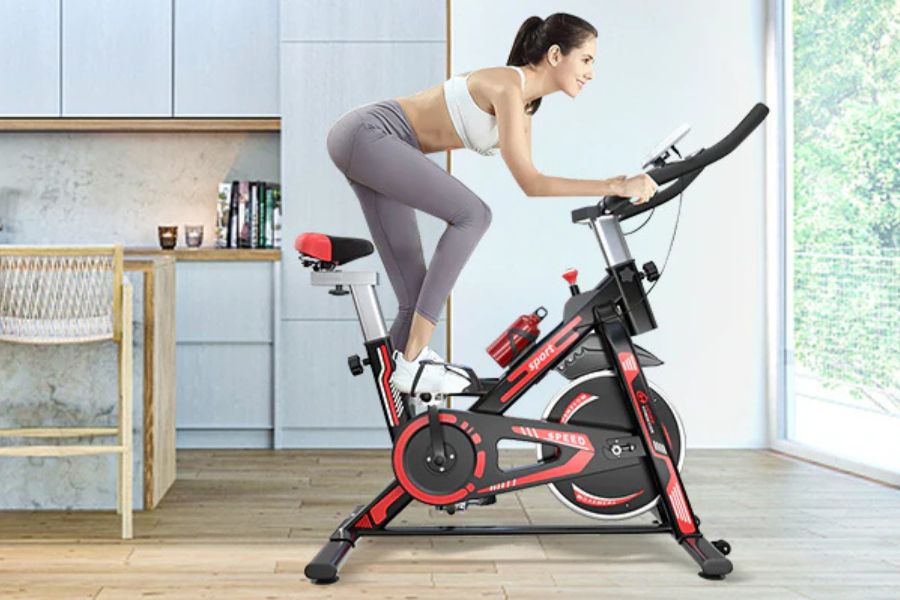
A stationary bike is good for more than steady cardio. With the right plan, exercise bike strength training lets you build muscle, protect your joints, and still enjoy a fun, sweat-worthy ride. By playing with resistance, intervals, and a few smart off-bike moves, you can turn a simple indoor bike into a full strength and conditioning setup.
Below, you will see how to use your bike to build strength, which muscles you are actually training, and how to combine cycling with simple strength exercises for better results.
Understand how an exercise bike builds strength
When you train on an exercise bike, you push against resistance every time you pedal. That resistance is what turns basic cardio into exercise bike strength training.
Indoor cycling targets your biggest lower body muscles, including your quadriceps, hamstrings, calves, and glutes, and it also recruits your abs to keep you stable in the saddle (NordicTrack). As you increase resistance, those muscles must work harder, which helps you build strength and stamina over time.
Because the bike is low impact, it is also gentle on your joints. That makes it a good choice if you want to strengthen your legs without the pounding that comes from running or jumping, or if you are returning to exercise after a break (BarBend).
Pick the right bike and setup
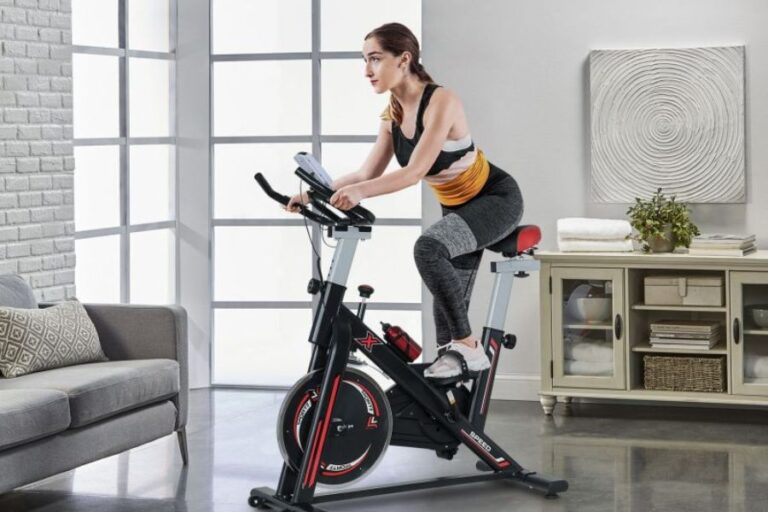
You can build strength on almost any stationary bike, as long as you can adjust the resistance. Different styles feel a bit different and emphasize slightly different muscles.
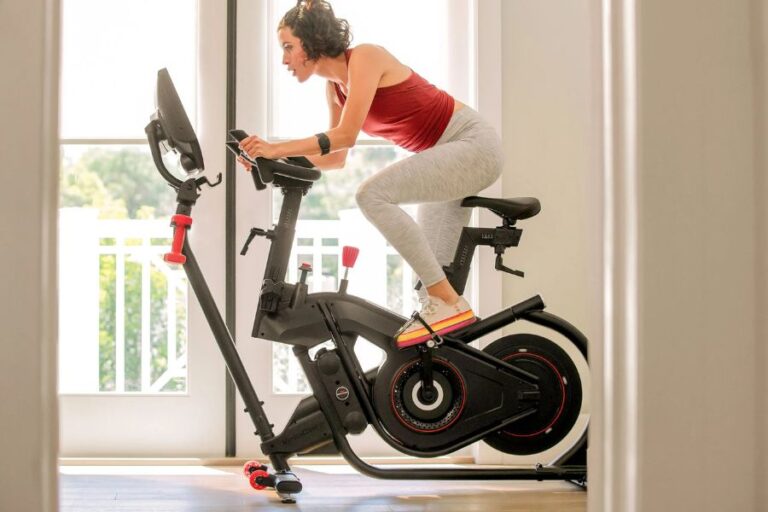
Classic upright bikes mostly work your lower body and core while keeping stress off your joints (NordicTrack). Racing or studio-style spin bikes are great if you want to stand on the pedals and simulate hills. Recumbent bikes are very comfortable and easy on the back, but they do less for your upper body and core.
Whatever style you use, correct setup is essential:
- Adjust the seat so your knee is slightly bent when your foot is at the bottom of the pedal stroke
- Set the handlebars so you can reach them without hunching or locking your elbows
- Make sure your hips stay stable, not rocking side to side, when you pedal
Good setup helps you engage the right muscles, avoid numb hands or back pain, and get the most strength benefit from every session (NordicTrack).
Use resistance wisely for strength gains
Resistance is what turns an easy spin into exercise bike strength training. Too light and you are just coasting. Too heavy and your form falls apart.
Most bikes let you adjust resistance in small increments, usually with a dial or buttons. This micro-adjustment lets you fine tune the load so you can pedal smoothly while still feeling challenged (Sunny Health & Fitness).
You can use a simple effort scale from 1 to 10 to guide you:
- Flat road: about a 5 out of 10 effort
- Jog or moderate hill: about a 6 to 7 out of 10
- Steep hill or heavy sprint: about a 7 to 9 out of 10
Cadence, or revolutions per minute, is another useful tool. At a given cadence, if you increase resistance, your muscles work harder. Tracking both effort and cadence helps you match your session to your goals, whether that is strength, endurance, or fat loss (Sunny Health & Fitness).
Remember, resistance is personal. You know your body best, so treat the numbers as guides, not rules, and adjust up or down when you need to.
Try strength-focused interval workouts
Intervals are one of the most effective ways to use your exercise bike for strength training. Alternating hard work with easier recovery lets you push the muscles harder without burning out too fast.
Short hill intervals
This style of workout mimics climbing hills, which is especially good for your glutes and quads.
- Warm up for 5 to 8 minutes at an easy pace.
- Increase resistance to a 7 or 8 out of 10 effort to create a “hill.”
- Pedal seated for 1 minute, focusing on smooth, strong strokes.
- Reduce resistance and pedal easy for 1 to 2 minutes.
- Repeat the hill and recovery 6 to 8 times.
- Cool down for 5 minutes at very low resistance.
This kind of interval work improves leg strength, power, and cardiovascular fitness together. A 34 minute interval session can help you build cardio, leg strength, and an efficient pedal stroke at the same time (Health.com).
Power sprints for muscle and speed
If you want to build power, short, intense bursts are your friend.
- Warm up for 8 to 10 minutes.
- Add resistance until you feel a tough but controllable 8 or 9 out of 10 effort.
- Sprint all out for 20 to 30 seconds, staying in control of your form.
- Pedal slowly with light resistance for 60 to 90 seconds.
- Repeat for 8 to 10 rounds.
- Cool down for 5 to 8 minutes.
High intensity interval training on the bike like this can improve aerobic capacity, build muscle tissue, and support fat burning when you do it regularly (Health.com).
Fartlek-style rides for all levels
Fartlek training is a flexible way to mix bursts of effort with steady riding. On a stationary bike, that might mean picking moments in a song to push hard, then easing back when the chorus ends. This approach builds power and endurance while letting you adjust on the fly based on how you feel (Health.com).
Add upper body and core work
An exercise bike naturally focuses on your legs and glutes, although your abs and lower back also play a role in balance and posture (NordicTrack). If you want full body strength, you can add simple movements for your arms, shoulders, chest, and back.
One option is to step off the bike between intervals and do a quick bodyweight circuit. For example:
- 10 to 15 pushups
- 10 bodyweight squats
- 20 seconds of plank
- 10 bent over rows with dumbbells or a resistance band
Cyclists in particular benefit from basic moves like pushups, planks, and rows to build upper body support and balanced strength (TrainerRoad).
Another choice is to stay on the bike and use light dumbbells or resistance bands during easier pedaling. While you spin at a low to moderate pace, you can alternate:
- Overhead presses
- Bicep curls
- Lateral raises
- Triceps kickbacks
Combining simple upper body work with steady cycling turns your ride into a full body strength and cardio session (Gymsportz).
Think of your bike as the base of your workout. You can then layer on short breaks for pushups, rows, and core work to cover the muscles your pedals do not reach.
Balance exercise bike days with other strength training
If you love your exercise bike, it is tempting to use it for everything. You will get better results, though, if you combine your rides with some off bike strength work each week.
Research in cyclists shows that strength training improves time to exhaustion, time trial performance, cycling efficiency, and power output, especially when you use heavier loads and compound exercises like squats and deadlifts (Bicycling). For you, that does not have to mean lifting very heavy. It simply means choosing multi joint exercises that train many muscles at once.
Here is a simple weekly structure that balances exercise bike strength training with off-bike work:
- 2 or 3 days of bike workouts, including intervals or hill sessions
- 2 days of strength training with basic movements like squats, deadlifts, presses, and rows
- At least 1 full rest day, with light walking or stretching if you feel like it
You can also place strength work on the same day as an easier ride. This clusters your harder training together and keeps your rest days truly restorative (TrainerRoad).
The Centers for Disease Control and Prevention suggest at least 150 minutes of moderate intensity cardio per week, such as 30 minutes on your exercise bike most days, plus strength training on 2 days each week for overall health and muscle maintenance (NordicTrack).
Support strength and weight loss goals
If your main goals are to build muscle, lose weight, and improve your health, how you combine your bike workouts, strength work, and nutrition matters.
Indoor cycling can help you firm your legs and glutes, engage your core, and support fat loss, especially when you use intervals that alternate faster pedaling and recovery phases (NordicTrack). Sessions on the bike two to three days per week are enough to improve heart health and support weight management, and the low impact design keeps soreness more manageable compared with higher impact options (BarBend).
You will make the most progress if you pair your riding with:
- Consistent strength training, even if that is just 20 to 30 minutes a couple of times per week
- A balanced eating pattern that supplies enough protein for muscle repair
- Adequate sleep and at least one rest day where you avoid intense workouts
Together, these habits help you protect muscle, lose fat more easily, and feel better during and after your workouts (NordicTrack).
Start where you are and build up
You do not need to be an athlete to benefit from exercise bike strength training. You can start with short sessions and lighter resistance, then increase difficulty as your legs and lungs adapt.
A simple way to begin:
- Choose 20 minutes on the bike 2 or 3 times this week
- Warm up for 5 minutes, then add small bursts of higher resistance for 30 to 60 seconds followed by 1 to 2 minutes easy
- Finish with a cool down and a few minutes of gentle stretching
When that feels comfortable, you can lengthen the intervals, add a few more repetitions, and start integrating short strength circuits before or after your ride.
The key is consistency. Each time you climb on the bike, adjust the resistance, and complete those intervals, you are training your muscles to be stronger and more resilient. Over time, that strength carries over into easier daily movement, better health markers, and more confidence in your body.
About the Author