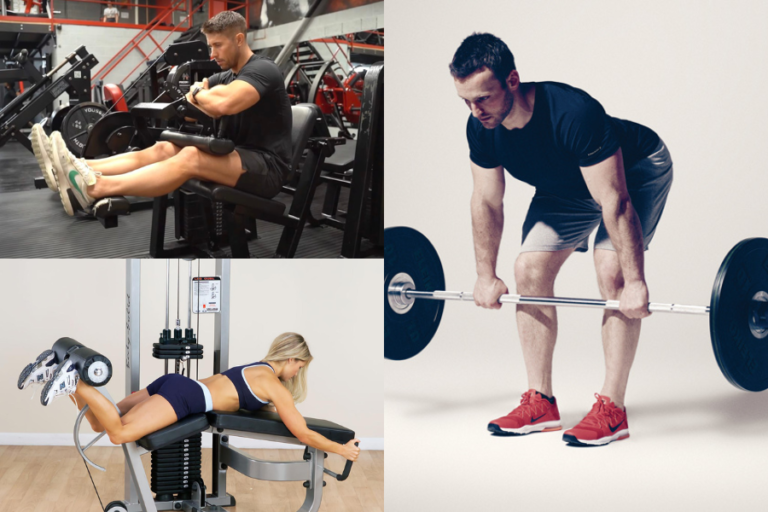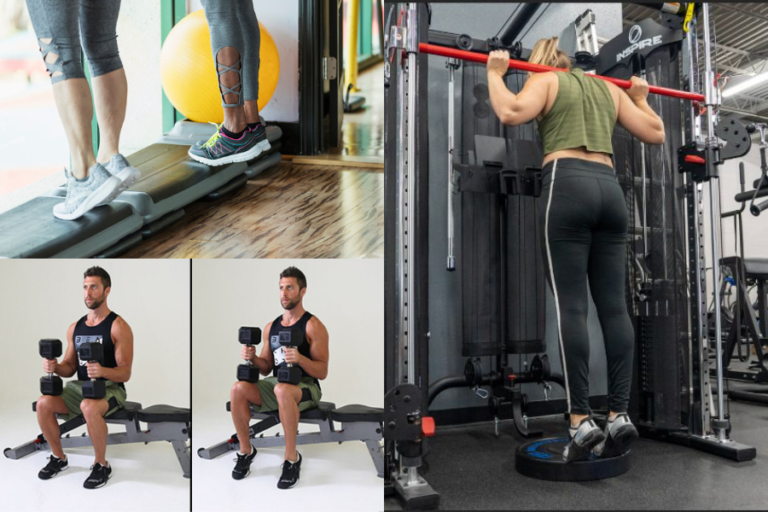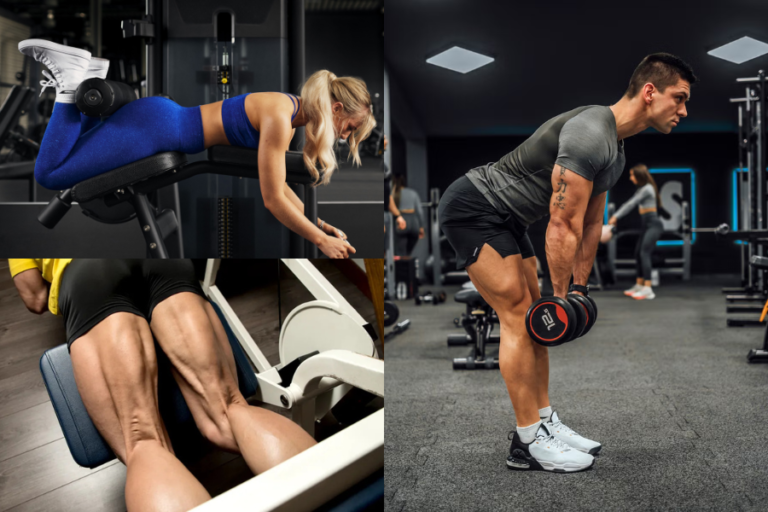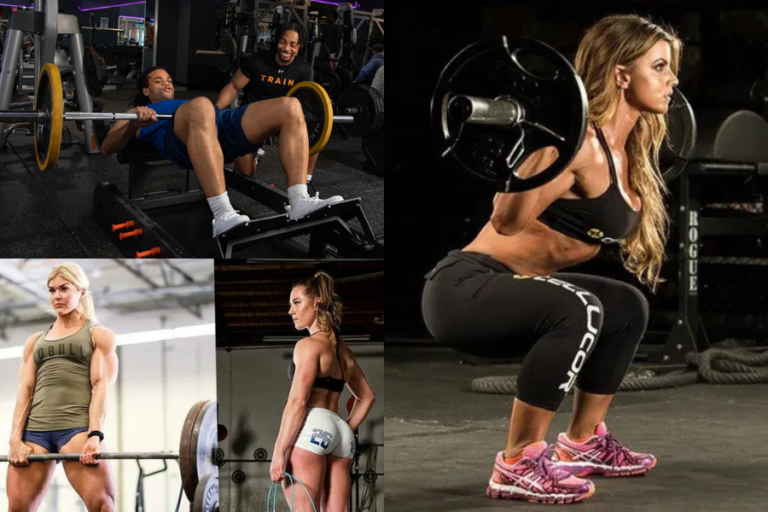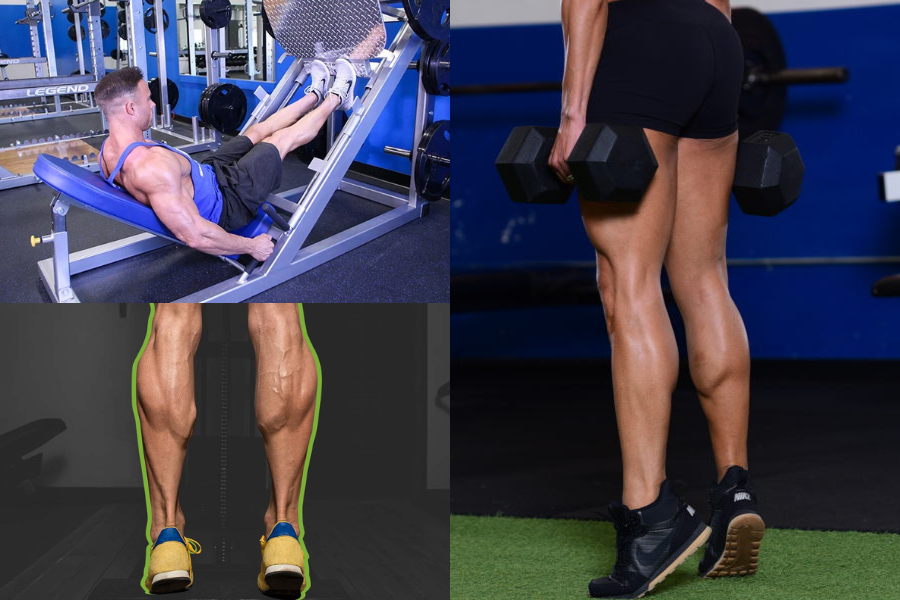
A smart calf routine does more than build definition. With seated calf raises, you train the muscles that support every step you take and lay the groundwork for bigger, stronger calves over time. Whether you work out at home or in a gym, you can tailor seated calf raises to match your experience level and equipment.
Below, you will learn how to perform seated calf raises correctly, how they differ from standing raises, and how to build simple workouts that actually grow your calves.
Understand what seated calf raises work
When you do seated calf raises, you primarily target the soleus, which sits underneath the more visible gastrocnemius muscle. The soleus plays a major role in walking, posture, and overall lower leg endurance. It helps you stay upright, absorb force, and maintain balance with every step.
Because your knees are bent in the seated position, your gastrocnemius cannot contract as strongly. This is known as active insufficiency and it shifts more of the workload onto the soleus. Training the soleus through seated calf raises helps you improve:
- Walking and running efficiency
- Postural support during long periods of standing
- Injury prevention in the lower legs and ankles
If your calves feel weak or fatigue quickly during daily activities, seated calf raises are a direct way to build that missing base strength.
How to do a perfect seated calf raise
You can perform seated calf raises on a dedicated machine or with simple home equipment. The key is consistent form, not fancy gear.
Step by step form
-
Sit tall on a bench or chair
Sit with your back straight and core gently engaged. Keep your feet hip width apart, knees bent at roughly 90 degrees. -
Set your feet on a raised surface
Place the balls of your feet on a block, step, or machine platform. Let your heels hang off the edge so they can drop below your toes during the exercise. -
Position the weight
If you use a machine, the pad rests across your thighs. At home, you can place dumbbells, a barbell, or heavy household items like water jugs or books on your thighs, close to your knees. -
Lift into the top position
Push through the balls of your feet and raise your heels as high as possible. Focus on keeping equal pressure from the big toe joint through to the little toe joint to avoid rolling your ankles or favoring one side. -
Pause and squeeze
At the top, hold for about 1 second and squeeze your calves. Aim to reach full heel height. If you cannot, the weight is probably too heavy. -
Lower with control
Slowly lower your heels for about 2 seconds until they drop below the level of your toes. You should feel a strong stretch in your calves at the bottom. -
Hold the stretch briefly
Pause at the bottom for about 2 seconds, then start your next rep.
A useful tempo guide is 2 seconds down, 1 second pause at the top, 2 seconds up, and 2 seconds stretched at the bottom. This slow, controlled rhythm increases muscle tension and reduces the risk of injury to your Achilles tendons.
Seated calf raises at home and in the gym
You do not need a specialized machine to benefit from seated calf raises. You can adapt the movement to whatever you have available.
Gym options
In a gym setting, you might have access to:
- Seated calf raise machine
- Smith machine with a bench and step
- Leg press machine for a similar bent knee calf press
The dedicated seated machine keeps you stable so you can focus on range of motion and muscle contraction. The lack of balance demands also makes it easier to avoid cheating through momentum.
Home options
At home, a sturdy chair or bench and some basic props are enough. You can use:
- Dumbbells resting on your thighs
- Resistance bands anchored under your feet and looped over your knees
- Heavy household items such as filled backpacks, water jugs, or stacked books
Set your toes on a step or thick book so your heels can drop. Keep both hands resting on your thighs to stabilize the weight and maintain good posture. Start light and increase load gradually as you get stronger.
Common mistakes to avoid
Calves are often stubborn because they are used all day long and respond best to deliberate, high quality reps. These are errors that can hold you back:
Using too much weight
If the load is too heavy, you will not reach a full stretch or full heel height. This shortens the range of motion and reduces muscle activation. Choose a weight that lets you move through the entire range while keeping the tempo controlled.
Bouncing through reps
Letting momentum take over, especially at the bottom of the movement, reduces calf engagement and increases stress on the Achilles tendons. Each rep should start from a dead stop, not a bounce.
Cutting the stretch short
You want your heel to drop below the level of your toes on each rep. This full stretch builds more tension in the muscle and encourages better growth.
Clawing with your toes
If your toes curl or claw into the platform, your long toe flexors are trying to take over. This can happen when your calves are weak or tired. Let your toes relax and keep them straight. If needed, place them slightly off the edge of the step so the ball of the foot, not the toes, carries the load.
Letting your heels drift unevenly
Try to push both heels up to an equal height. If one side consistently lags, you can add an extra single leg set for that calf at the end of your workout.
Seated vs standing calf raises
Both seated and standing calf raises have a place in a balanced lower leg routine. They simply emphasize different muscles and outcomes.
Seated calf raises highlight the soleus because the bent knee position limits how much the gastrocnemius can contribute. This is ideal for building endurance and strength in the deeper calf and for improving walking, running, and posture.
Standing calf raises, on the other hand, hit the larger, more visible gastrocnemius muscle more strongly. This is usually the muscle people think of when they picture bigger calves. If your goal is size and shape, standing raises are very useful.
Many lifters and fitness enthusiasts find that combining both, often in the same session, leads to the best overall calf development. You get the strength and endurance benefits of seated work and the size and power benefits of standing variations.
How often to do seated calf raises
Your calves are used to daily work from walking and standing, so they often need more direct training than other muscle groups. For most people, a good starting point is to perform seated calf raises two to three times per week.
Give yourself at least one rest day between calf sessions so your muscles and tendons can recover. Over time, you can adjust frequency based on how your calves feel. Soreness that lingers for several days, or a drop in performance such as reduced heel height, is a sign you may need more rest.
Because calf muscles contain a high proportion of slow twitch fibers, they respond well to a variety of repetition ranges. Mixing high reps with moderate and lower reps over time can help recruit more motor units and improve growth.
Sample seated calf raise workouts
You can use the structure below as a guide and customize it to your environment and level. The focus is quality movement, not rushing the sets.
Beginner routine
If you are new to strength training or returning after a long break, start here. You can use bodyweight or very light external resistance.
- Frequency: 2 times per week
- Sets and reps: 2 to 3 sets of 10 to 15 reps
- Rest: 45 to 60 seconds between sets
Keep both hands on your thighs for stability. Lift your heels only as high as feels comfortable and lower with control. As you gain confidence, you can add a 2 to 3 second hold at the top of each rep to increase the challenge.
Intermediate muscle building routine
Once you can complete 3 sets of 15 solid reps with a full range of motion, move to a more structured hypertrophy approach.
- Frequency: 2 to 3 times per week
- Sets and reps:
- Day 1: 4 sets of 8 to 12 reps with moderate weight
- Day 2: 3 sets of 15 to 20 reps with lighter weight
- Rest: 60 to 90 seconds between sets
On heavier days, focus on hitting full heel height for all 8 to 12 reps. If your heel height drops before you reach the target rep range, reduce the weight. On lighter, high rep days, maintain the same controlled tempo and aim for a strong burn in the last few reps.
Advanced strength and size focus
If your calves are already conditioned but you want more size and strength, you can incorporate lower rep sets in addition to your higher volume work.
- Frequency: 3 times per week, with at least one lighter day
- Example weekly structure:
Day 1: Heavy
5 sets of 6 to 8 reps, longer rest of 90 to 120 secondsDay 2: Moderate
4 sets of 10 to 12 repsDay 3: High rep / pump
3 sets of 20 to 25 reps
On your heavy day, increase load slightly when you can complete all 5 sets of 8 reps with solid form, full stretch, and full heel height. Progress slowly to keep your Achilles and ankle joints safe.
Progressions and variations to keep improving
Your calves adapt quickly, so you will want to increase the challenge once a certain workload feels easy. You can progress seated calf raises in several ways.
Increase resistance
Add weight gradually using heavier dumbbells, thicker resistance bands, or more load on the machine. Small jumps in load are safer for your tendons and still provide a strong growth signal.
Change foot position
A neutral stance with toes pointing straight ahead is a great default. Over time, you can experiment with slight variations:
- Toes in for a subtle emphasis on the outer calf
- Toes out for a subtle emphasis on the inner calf
These differences are not dramatic, but they can help you feel the movement slightly differently and keep training interesting.
Add pauses and tempo changes
Extend the hold at the top to 2 or 3 seconds per rep to increase time under tension. You can also use 3 to 4 second lowers to emphasize control and strength through the full stretch.
Try single leg seated calf raises
Once you are comfortable with both legs together, you can perform the exercise one leg at a time. This helps correct side to side imbalances and makes lighter weights feel significantly harder.
Combine seated and standing raises
For well rounded development, you can end your seated sets with a few sets of standing calf raises. This combination lets you hit both the soleus and gastrocnemius in the same session for balanced lower leg strength.
Putting it all together
Seated calf raises are a simple and effective way to target the deeper soleus muscle, which supports your walking, posture, and overall leg stability. When you perform them with a full range of motion, slow and controlled tempo, and appropriate weight, they become a powerful tool for building bigger, stronger calves.
Start with a routine that matches your current level, commit to consistent training a few times per week, and pay attention to form cues like equal forefoot pressure and full heel height. Over time, steady progress in weight, reps, or control will translate into visible and functional improvements in your calves.
About the Author