A strong quad workout for women does much more than build visible muscle. Your quadriceps support your knees, power your walks, runs, and jumps, and help you feel stable in everyday movements like climbing stairs or getting up from the floor. When you train them intentionally, you build strength, protect your joints, and shape your legs in a way that matches your goals, whether that is powerful thick thighs or lean, defined muscle.
Below, you will learn how your quads work, the best quad exercises for women at home and in the gym, and how to put them together into simple, effective workouts.
Understand your quad muscles
Your quadriceps sit at the front of your thigh and are responsible for straightening your knee and helping you flex your hip. They are made up of four muscles that work together:
- Rectus femoris, the long muscle that runs down the center of your thigh and crosses both the hip and knee
- Vastus lateralis, the large outer thigh muscle
- Vastus medialis, the inner thigh muscle near your knee that helps form the teardrop shape
- Vastus intermedius, which lies underneath the rectus femoris
Because your quads play a big role in walking, standing, sprinting, and jumping, keeping them strong is one of the easiest ways to support knee health and balance in daily life. Strength training your thigh muscles can also change the appearance of your legs, helping you create either a stronger thick look or a more toned look when combined with the right overall training and nutrition, as explained by PureGym Personal Trainer Hayley Chapman in April 2023.
When you know what these muscles do, it becomes easier to choose quad exercises that actually hit all four heads rather than just working your hips or glutes.
How often to train your quads
You do not need to train quads every day to see a difference. In fact, your muscles grow and get stronger when you rest and recover between tough sessions.
Most trainers suggest that you:
- Work your quads 1 to 2 times per week
- Leave at least 48 to 72 hours between hard quad workouts
- Aim for a total of at least 10 sets of direct quad work per week in the 8 to 12 rep range
For women who want noticeable quad growth, training your quads twice a week with at least two quad exercises per workout and 3 to 4 sets per exercise is a solid target. This level of volume gives your muscles enough challenge without overwhelming your joints, as long as you progress gradually and pay attention to form.
If you are brand new to strength training, you can start with one quad workout per week and simple bodyweight movements. Once you feel more comfortable and your soreness is more manageable, add a second session.
Best quad exercises for beginners
If you are new to working out or returning after a long break, focus on technique before adding heavy weights. Isometric holds and basic bodyweight exercises let you build stability and endurance so your knees and hips are ready for more challenging work.
Isometric squats
Isometric squats involve holding the bottom position of a squat without moving. They are useful when you are learning to brace your core and keep your knees tracking over your toes.
To do them, stand with your feet about shoulder width apart and your toes slightly turned out. Sit your hips down and back as if you are sitting into a chair. Once you reach a comfortable depth, pause and hold. Keep your chest lifted and your knees over the middle of your feet, then push through your whole foot to stand back up after the hold.
Split squat isometric holds
Split squat holds help you improve balance and single leg strength without worrying about going up and down repeatedly. Step one foot forward and the other foot back into a staggered stance. Lower down until both knees are bent and your back knee is hovering just above the floor or as low as you can control. Hold there while you keep your torso tall and your front knee pointing in line with your toes.
These two isometric options are a smart starting point before you move into full squats and lunges.
Bodyweight squats
Bodyweight squats are one of the best all around quad exercises you can do at home. They train your quads, glutes, core, and even your calves. If you are a beginner, you can reduce the squat depth to make them easier while still building strength.
Stand tall with your feet just wider than hip width. Brace your core, then bend your knees and hips at the same time. Keep your heels down and your knees aligned with your toes. Lower as far as your mobility and confidence allow, then push the floor away to stand back up.
If you struggle with balance, you can hold on to the back of a chair or a countertop for support until you feel more stable.
Walking lunges
Walking lunges train your quads, glutes, and core while also challenging your coordination. They are especially helpful as a bridge between beginner movements and more advanced unilateral work.
Start standing tall. Step one foot forward and bend both knees so your back knee lowers toward the ground. Push through the front foot to stand and step straight into a lunge on the other side. You can adjust difficulty by taking shallower steps, lunging only halfway down, or by adding dumbbells once your technique feels solid.
Gym based quad workout for women
If you have access to a gym, you can build a quad workout for women that uses both compound and isolation exercises. Compound lifts work multiple muscles at once, while isolation exercises focus almost entirely on your quads.
Back squats for strength and size
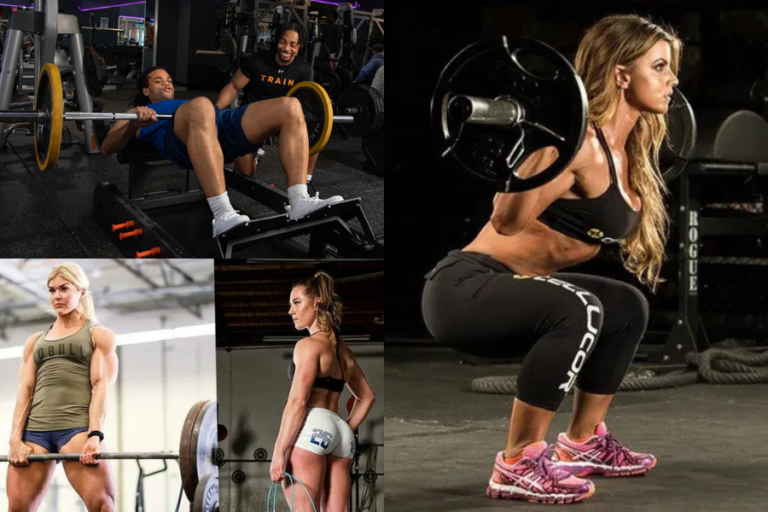
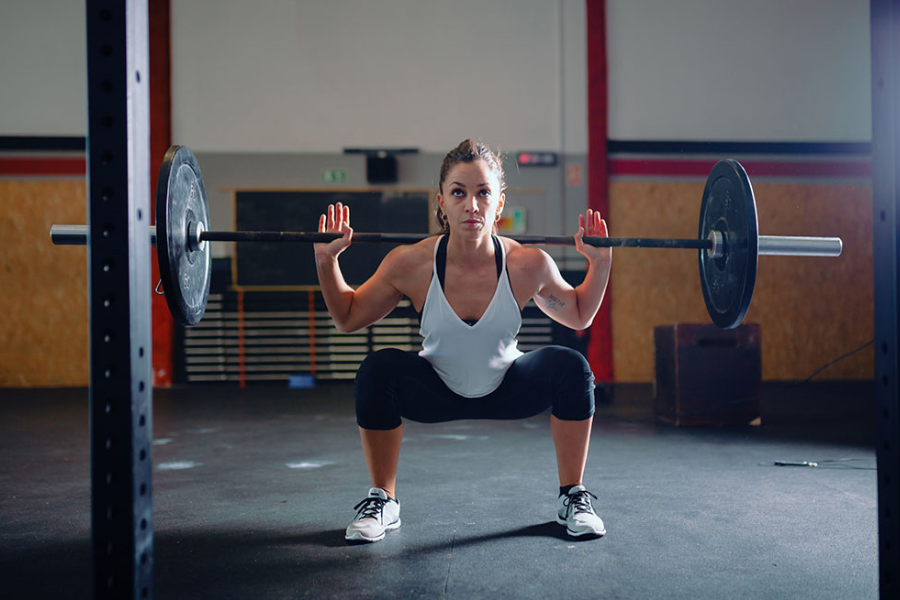
The back squat is often considered the most effective exercise for building quad strength, power, and size. With a barbell on your upper back, you can gradually increase the weight over time and challenge all four heads of your quadriceps.
To make the back squat more quad focused, use a slightly narrower stance, keep your torso more upright, and think about letting your knees travel forward over your toes while keeping your heels planted. This increases knee bend and quad involvement while slightly reducing hip dominance.
Because the back squat is demanding, it usually belongs near the start of your workout when you are fresh.
Front squats and heel elevated squats
For even more emphasis on the quads, front squats and heel elevated squats are excellent choices. Holding the barbell in front of your body or elevating your heels on small plates allows you to keep a very upright torso and drive the knees forward, which locks in quad activation.
Women who want to build thicker quads often include barbell front squats, heel elevated goblet squats, and machine hack squats as core movements. All of these allow progressive overload while placing a large share of the work on your thigh muscles rather than just your hips and glutes.
Lunges and Bulgarian split squats
Unilateral exercises correct muscle imbalances and force each leg to work on its own. That means no cheating with your stronger side.
Forward lunges already hit your quads hard. To shift even more focus to the front thigh, you can:
- Raise the front foot slightly on a plate so the knee can bend more
- Take a shorter stance and keep your torso upright
- Let the front knee travel over the toes while maintaining control
Bulgarian split squats, where your back foot is on a bench or box, challenge the stabilizing muscles around your hips and knees even more than standard squats. For a quad focused variation, use a shorter step, stay tall, and think about driving the front knee forward and straight over the toes.
Beginners can start with bodyweight and limit how deep they go. As you get stronger, add dumbbells or a barbell.
Leg press and machine variations
The leg press is another useful tool in a quad workout for women. By placing your feet lower on the platform, you increase knee flexion and make your quads work harder. A higher foot position tends to shift more work to the glutes and hamstrings, so adjust according to your goals.
If your gym has a hack squat machine, you can use that in a similar way. Lower foot placement and a controlled, deep range of motion translate to a deep quad burn, especially in the vastus lateralis and rectus femoris.
Quad isolation work with leg extensions
While compound lifts should make up the bulk of your program, isolation exercises like leg extensions are valuable for finishing a session and targeting the quads without much fatigue on the rest of your body.
Leg extensions are performed on a dedicated machine. You sit with your knees bent and your ankles against a padded bar, then straighten your legs against the resistance. This motion isolates knee extension, which is the primary job of your quadriceps.
Leg extension machines allow you to:
- Work both legs together or one leg at a time
- Add isometric holds at the top of the movement for a stronger contraction
- Train in higher rep ranges to get a strong pump in the muscle
Because they are very focused and place stress directly on the front of the knee, it is smart to start with light loads, stay in a controlled range of motion, and keep your form precise. They are a useful complement to squats and lunges, not a replacement for them, as highlighted in the PureGym thigh workout guide updated in April 2023.
At home quad workout for women
You can still train your quads effectively without a squat rack or machines. A simple at home quad workout for women can rely on bodyweight and basic household items.
Here is a sample routine you can try 1 to 2 times per week. Rest 60 to 90 seconds between sets.
- Bodyweight squats, 3 sets of 10 to 15 reps
- Walking lunges, 3 sets of 8 to 12 steps per leg
- Bulgarian split squats with rear foot on a chair or sofa, 2 to 3 sets of 8 to 10 reps per leg
- Single leg raises (lying or seated), 2 sets of 12 to 15 reps per leg
Single leg raises, where you sit or lie down and lift one straight leg, are especially useful for targeting the rectus femoris that crosses your hip joint. Together, these moves help strengthen and tone your quads, improve knee stability, and reduce the risk of knee injuries in daily life.
If exercises feel too easy, you can slow down the lowering phase, add a short pause at the bottom, or hold water bottles or backpacks for extra resistance.
If you are ever unsure about your form or you have a history of knee pain, check in with a qualified trainer or healthcare professional before pushing intensity.
Tips to get more from your quad training
Small adjustments can make a big difference in how much your quads work in each exercise and how your legs develop over time.
Focus on these habits:
- Let your knees travel forward, not collapse inward. Think about keeping them over your second and third toes.
- Use a full, controlled range of motion that feels safe for your knees rather than shallow half reps.
- Raise your heels slightly on squats or lunges if your ankles feel stiff. This lets your knees bend more and increases quad involvement.
- Progress by adding a little load, a few extra reps, or another set only once your current level feels comfortable and your form is consistent.
- Pair your training with adequate protein and sleep so your muscles can repair and grow between sessions.
Training your quads might feel intense at first, especially if you are not used to leg workouts. With consistent practice 1 to 2 times a week and a mixture of squats, lunges, unilateral work, and isolation exercises, you will build strength that shows up in the gym and in everyday life. Start with one or two of the exercises above this week, pay attention to how your body responds, and build from there at a pace that feels sustainable.
About the Author