A strong lower body starts with your quadriceps. These four muscles on the front of your thighs drive knee extension and help with hip flexion, so you rely on them every time you walk, run, climb stairs, or get out of a chair. Focused quadriceps exercises can increase your lower body power, protect your knees, and boost performance in everything from daily tasks to sports.
Below, you will learn how your quads work, the best quadriceps exercises for strength and size, smarter at-home options, and how to put it all together into a simple, effective routine.
Understand your quadriceps muscles
Your quadriceps, or quads, are a group of four muscles on the front of your thigh:
- Rectus femoris
- Vastus lateralis
- Vastus medialis
- Vastus intermedius
Together, they straighten your knee and assist with hip flexion. The rectus femoris crosses both the hip and knee, so it plays a role when you lift your knee and when you extend it. The other three muscles sit deeper and help create that teardrop shape near your knee when they are well developed.
Strong quadriceps are not just for looks. When you strengthen these muscles, you:
- Reduce stress on your knees by helping support and stabilize the kneecap
- Improve your performance in compound lifts like squats, deadlifts, and lunges
- Move more powerfully in sports like soccer, basketball, and American football
Because your quads attach around the knee joint, keeping them strong and balanced with your hamstrings and glutes is an important part of long-term knee health.
Master foundational squat technique
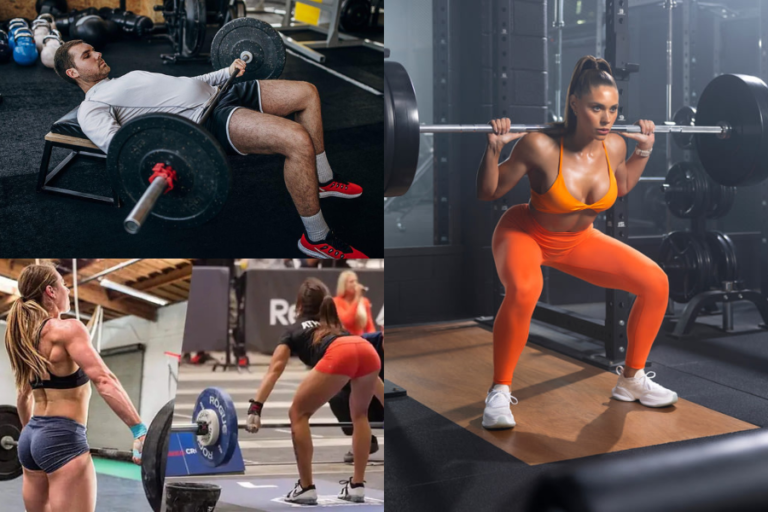
If you only chose one quadriceps exercise, the squat would be a strong candidate. It trains your quads, hamstrings, and glutes, and it carries over directly to real-world movements.
According to guidance from the Mayo Clinic, proper squat form starts with your setup and body alignment so your quads and hips can share the load safely and effectively.
Basic bodyweight squat
You can do this anywhere without equipment. It is a good starting point before you add weight.
- Stand with your feet slightly wider than shoulder width and toes pointing straight ahead.
- Brace your core so your abdominal muscles feel gently tight.
- Bend at your hips, knees, and ankles together, lowering your body as if you are sitting in a chair. Aim to reach about a 90 degree bend at the knees.
- Keep your spine in a neutral position and your chest up. Your knees should stay centered over your feet, not collapsing inward.
- Press through your whole midfoot to return to standing, then repeat.
The Mayo Clinic notes that one set of 12 to 15 repetitions is generally enough for many people to work the quads effectively, especially when you are starting out. As you get stronger, you can add extra sets, or add load with dumbbells or a barbell.
Quad squat variation
A quad squat is a tweak on the traditional squat that pushes more of the effort onto your quadriceps and a bit less onto your glutes and hamstrings.
Key differences include:
- Hip or narrow stance instead of very wide
- Toes slightly forward instead of turned out a lot
- More upright torso, with less sitting back and more letting the knees bend forward
- Pressure through the midfoot rather than shifting your hips way back into the heels
By increasing knee bend while limiting your hip hinge, you ask your quadriceps to do more of the work. This variation is especially useful when you want to prioritize quad growth or feel your standard squats mostly in your hips and glutes.
Use squat variations to target your quads
Once your basic squat feels comfortable, you can use specific variations that naturally emphasize your quads. The goal is to make the movement slightly more knee dominant so the front of your thighs take the lead.
Heel elevated squats
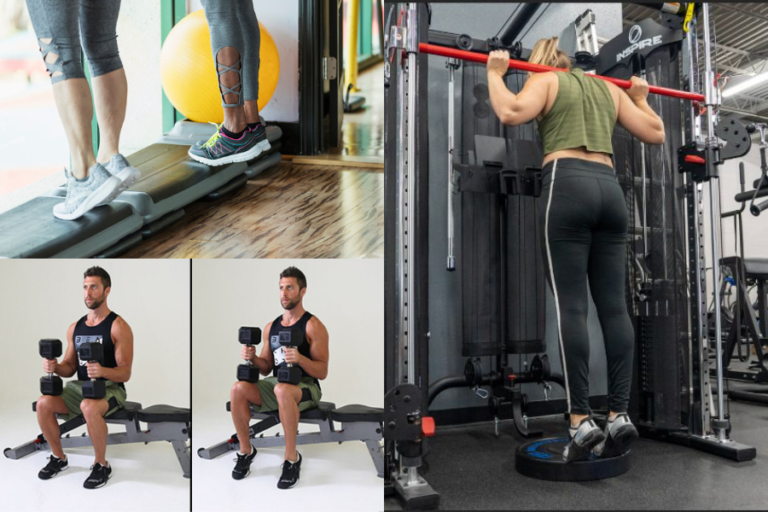
Placing your heels on a small wedge, weight plate, or even a folded mat changes your body angle. Elevated heels allow your knees to track farther forward, which increases knee flexion and in turn boosts quad activation.
To try it:
- Stand with the balls of your feet on the floor and your heels raised on a stable support.
- Keep your stance at hip width or slightly wider.
- Squat down smoothly, letting your knees travel forward while your torso stays relatively upright.
- Press through your midfoot to stand up again.
Heel elevation can feel easier on your lower back since you do not need to lean forward as much. It is also helpful if you have tight ankles that limit your squat depth.
Front squats and goblet squats
Front-loaded squats place the weight in front of your body, which naturally encourages an upright torso and increases the demand on your quads.
- In a front squat, you hold a barbell in front of your shoulders.
- In a goblet squat, you hold a dumbbell or kettlebell close to your chest.
Both styles shift the center of mass forward, which increases how much your quads need to work to extend your knees. If you do not have a barbell, heel elevated goblet squats are an excellent quad builder.
Hack squats and sissy squats
If you have access to gym equipment, hack squats and machine-based sissy squats are powerful tools for quad development.
- Hack squats guide your movement pattern on a sled so you can focus on pushing through your feet and extending at the knees without worrying as much about balance.
- Sissy squats keep the hips more fixed and ask for deep controlled knee flexion, which heavily targets the quadriceps.
Because these variations can load your knees more, you will want to increase difficulty gradually and pay close attention to how your joints feel during and after your training.
Add unilateral quad exercises for balance
Training one leg at a time helps you correct strength imbalances and makes sure both quads develop evenly. This reduces your risk of injury and often improves your overall stability and coordination.
Bulgarian split squats
Bulgarian split squats are a staple unilateral exercise that hits your quads, glutes, and stabilizing muscles.
To make them more quad focused:
- Place your back foot on a bench or sturdy surface, front foot on the floor.
- Use a slightly shorter stance so your front knee can move forward over the toes.
- Keep your torso more upright instead of leaning far forward.
- Lower straight down until your front thigh is around parallel to the floor, then drive through your front midfoot to stand.
Adjust your stance length to find a position where you mainly feel the work in the front leg quad. Start with bodyweight before adding dumbbells.
Lunges with elevated front foot
Standard lunges are already good quad builders, but you can emphasize the quads further by elevating your front foot on a low step or plate. This increases knee bend and range of motion.
Focus on:
- Smooth, controlled lowering
- Knee tracking in line with your toes
- Strong push through the midfoot of your front leg to return to standing
Reverse lunges, walking lunges, and lateral lunges all play a role in building powerful quads that are strong in different directions and movement patterns.
Use isolation moves to finish your quads
Compound lifts provide the foundation of quad strength, but isolation work lets you directly fatigue the muscle with less overall stress on your system. This is useful when you want extra growth without overloading your joints and nervous system.
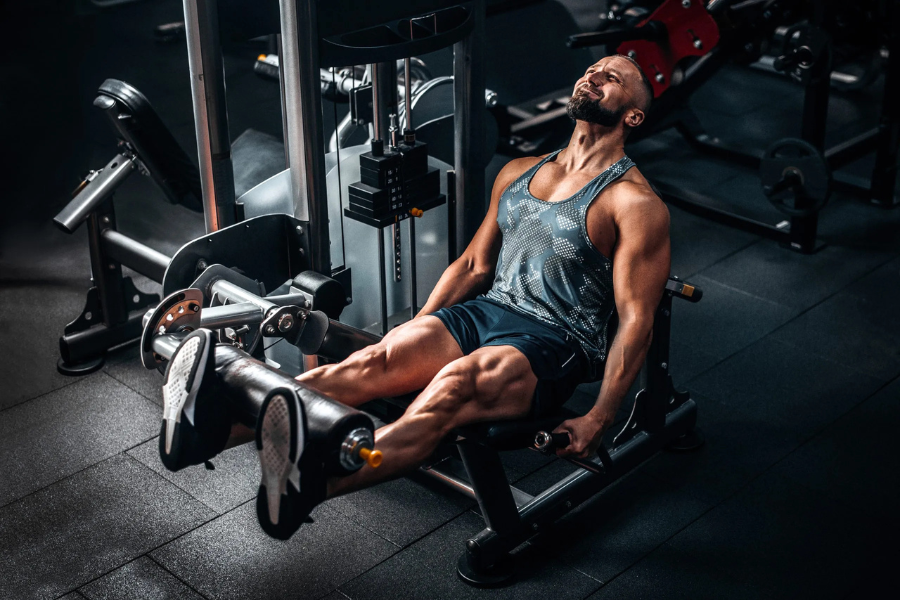
Leg extensions
The leg extension is the classic quad isolation exercise. It directly trains knee extension with little help from other muscle groups, which makes it ideal for targeted quad work.
Because it is less taxing on your whole body than squats or lunges, you can include leg extensions more frequently in your routine. Use a controlled tempo, squeeze your quads at the top of each rep, and avoid swinging the weight.
Straight leg raises
At home, the straight leg raise is a simple isolation move that focuses on your rectus femoris, the quad muscle that crosses your hip joint.
To perform it:
- Lie on your back with one leg straight and the other bent.
- Tighten the muscles in the straight leg, then lift it to about the height of the opposite knee.
- Pause briefly, then lower with control.
This is a good option if you are easing into quad training or need a gentle way to wake up your quads before heavier work.
Build at-home quadriceps strength
You do not need a gym membership to strengthen your quads. Many effective quadriceps exercises use only your bodyweight or minimal equipment.
Solid at-home quad movements include:
- Bodyweight squats and quad squats
- Walking lunges and reverse lunges
- Step-ups on a stable chair or bench
- Bulgarian split squats using a sofa or low table
- Lateral lunges
- Squat jumps and box jumps for power, once your form is solid
- Single-leg raises and, when ready, single-leg or pistol squats
For beginners, a good starting point is 2 sets of 10 to 12 repetitions for each exercise, done after a 5 to 10 minute warm up. As your strength improves, you can add another set or gradually choose more challenging variations, such as deeper range of motion or single-leg progressions.
Structure your quad workouts for growth
How you put these exercises together matters as much as the moves themselves. You want enough volume and frequency to stimulate progress, but also enough rest so your quads can recover and grow.
Weekly training guidelines
For most people aiming for muscle growth and strength:
- Train your quads about twice a week.
- Include at least two quad-focused exercises in each workout.
- Aim for a total of at least 10 sets per week that clearly target your quads.
- Keep most working sets in the 8 to 12 rep range, which balances strength and hypertrophy.
Allow at least 48 hours of recovery between intense quad sessions. Light walking, cycling, or mobility work on off days can actually help you recover by increasing blood flow.
Sample quad-focused session
Here is an example of how you could organize a lower body workout centered on quadriceps exercises:
- Heel elevated goblet squat: 3 sets of 8 to 10 reps
- Bulgarian split squat: 3 sets of 8 to 10 reps per leg
- Walking lunges: 2 sets of 12 steps per leg
- Leg extension: 2 sets of 12 to 15 reps
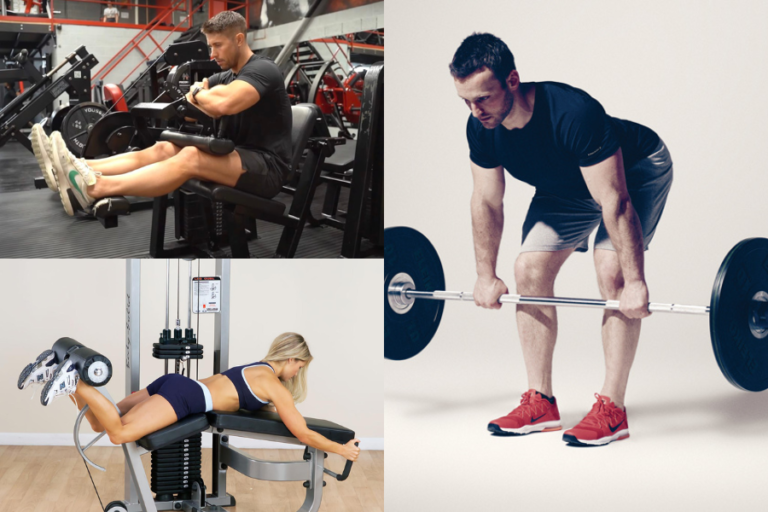
You could pair this with some hamstring curls and calf raises to round out your lower body training.
Simple structure works well. Pick a few proven movements, perform them with good form, and add small progressions over time.
Avoid common quad training mistakes
Even the best exercises lose their impact if your form or programming is off. A few patterns tend to hold people back with quadriceps work.
Technique pitfalls
Common issues include:
- Very wide stances that turn squats into hip dominant movements and reduce quad involvement
- Leaning so far forward that your back and hips do most of the work
- Pushing only through the heels instead of keeping pressure through the midfoot
- Letting your knees cave inward, which increases stress on your joints
You also want to respect full range of motion where your joints allow it. Half reps on squats and leg presses may let you use more weight, but they often limit quad development because the muscles are not working through their full length.
Programming and recovery issues
It is possible to overdo quad work. When you chase every squat variation at once, push volume very high, or train hard on sore knees, you increase the risk of chronic knee problems and imbalanced leg development. This can show up as tight quads, undertrained hamstrings and glutes, and a higher risk of ACL injuries during sports.
On the other side, skipping warm up mobility work before leg sessions can limit how deeply you can squat or lunge, which then caps your quad growth. Neglecting post workout stretching can leave your quads overly tight and uncomfortable, especially if you sit a lot during the day.
You will get better long term results if you:
- Warm up with light cardio and dynamic leg movements
- Choose a manageable number of quad exercises per session
- Push some sets close to muscular fatigue, but not every set in every workout
- Stretch your quads and hips briefly after training
Turn strong quads into everyday power
Quadriceps development pays off every time you stand up, climb stairs, or sprint after a bus. They are also key players in two of the three big barbell lifts, the squat and the deadlift, so building them will raise your total body strength.
If you are new to quadriceps exercises, start simple. Learn a solid squat, add lunges and step-ups, then progress to front squats, heel elevated squats, and Bulgarian split squats when your body feels ready. If you are more experienced, refine your technique, use targeted variations, and ensure your weekly volume lines up with your goals.
Pick one or two ideas from this guide to apply in your next lower body workout. As your quads grow stronger and more powerful, the rest of your training and daily life will feel stronger too.
About the Author