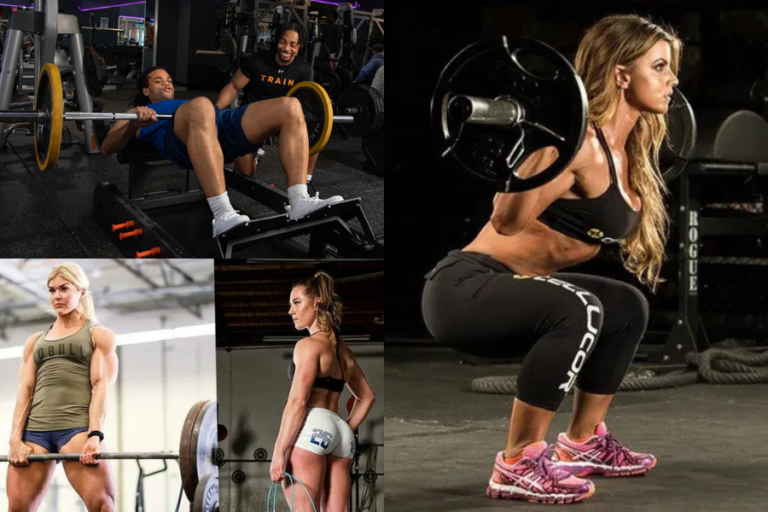
A quad workout with barbell can turn leg day into one of your most effective muscle building sessions. With the right exercises, form, and loading, you can shift more work onto your quadriceps, reduce strain on your lower back, and build serious mass through your entire front thigh.
Below, you will learn how to use the barbell to target your quads from multiple angles, plus get a sample workout you can follow as written or adapt to your own routine.
Understand how your quads grow
Your quadriceps are a group of four muscles that extend your knee and help stabilize your hip. To build them, you need three things: tension, range of motion, and enough training volume.
Barbell exercises are ideal for creating high tension because they let you progressively add weight over time. According to Built With Science, traditional barbell squats often tax your lower back nearly as much as some parts of your quads, which can cause your back to fatigue before your legs are fully trained. This is why form, exercise selection, and your stance matter so much for quad growth.
When you design a quad workout with barbell, your priorities should be:
- Keeping tension on the quads instead of shifting work to hips and lower back
- Using a full range of motion so your knees bend deeply and your thighs travel below parallel when safe
- Working mostly in a moderate rep range, around 6 to 15 reps, to balance strength and hypertrophy
Key form principles for quad focused barbell work
Before you load the bar, it helps to understand a few simple tweaks that move more of the work into your quads.
Allow your knees to travel forward
Letting your knees move over your toes increases your shin angle and exposes your quads to more tension, especially at the bottom of squats. Built With Science notes that increasing the forward shin angle, for example by elevating your heels, shifts stress away from your glutes and lower back and into your quads.
This may feel counterintuitive if you have always tried to keep your shins vertical, but as long as your heels stay flat and you control the movement, it can be both safe and very effective for muscle growth.
Stay more upright through the torso
If you lean too far forward or push your hips far back, you load your hips and back more than your quads. Built With Science recommends maintaining an upright torso at the bottom of quad focused squats so the front of your thighs take the brunt of the work instead of your spinal erectors.
A more upright torso often means:
- Slightly narrower stance
- Heels slightly elevated or using lifting shoes
- Thinking about keeping your chest “proud” throughout the rep
Slow the descent and use full range of motion
To get more out of every rep, slow down your way down and do not cut your depth short. Dr. Mike Israetel suggests a 2 to 5 second controlled descent to improve time under tension and mind muscle connection during barbell squats, plus a 1 to 2 second pause at the bottom to remove the bounce effect and challenge your quads even more.
Stopping early at half reps lets you lift more weight, but it also limits growth. Bodybuilders often lose quad gains by doing heavy half squats that never let the thighs travel to at least perpendicular to the calves. Aim to move through a full, comfortable range with good control.
Best barbell exercises for quad growth
You have several barbell options that load the quads in slightly different ways. Mixing two or three in your weekly plan can cover your quads from top to bottom.
Barbell back squat
The barbell back squat is often called the king of leg exercises and for good reason. It builds your quads, glutes, and overall lower body strength at the same time, and it responds very well to progressive overload.
To make the back squat more quad dominant:
- Use a moderate, shoulder width stance instead of an extremely wide one
- Let your knees move forward over your toes while keeping your heels down
- Keep your torso as upright as you can without losing balance
- Focus on pushing your knees forward and out as you descend
Built With Science highlights that if you lean too far forward or push your hips back aggressively, you end up training your hips and back more than your quads. For mass, moderate weights with deep, controlled reps in the 8 to 12 range will usually beat very heavy, shallow squats.
Barbell front squat
If you want a barbell exercise that automatically forces a more upright torso, the front squat is your best option. Because the bar rests in front on your shoulders, you have to keep your chest high and allow your knees to travel forward, which dramatically increases quad activation. This is why front squats are often described as a “mean quad burner” in practice.
Key cues for front squats:
- Keep your elbows high so the bar does not roll forward
- Sit down between your heels, not back behind them
- Allow your knees to move over your toes while keeping your heels flat
- Use a controlled tempo both down and up
Beginners should start with lighter loads than their back squat, since the front rack position can feel demanding at first. If holding the bar is limiting you, mobility work for wrists and shoulders and practicing the rack position can help, as suggested in recent recommendations on front squat technique.
Safety Squat Bar and other specialty squats
If you have access to specialty bars, the Safety Squat Bar is one of the most quad friendly squat variations available. Westside Barbell notes that the SSB emphasizes the anterior chain, including your hip flexors and quads, while also building your trunk and upper back.
Other barbell squat variations that can shift more stimulus to the front of your thighs include:
- Low box squats with a narrow stance, which increase quad and hip flexor demand out of the bottom
- Zercher squats, where the bar is held in the crook of your elbows and the front of your body is loaded
- Overhead squats, which require an upright torso and high mobility, and train your quads while challenging your core and balance
These can be cycled into your training for variety or used when standard back squats bother your lower back.
Add unilateral barbell work for extra quad focus
Single leg movements make it hard for your stronger side to take over, and they often allow you to find angles that hit your quads more directly without requiring huge loads.
Barbell lunges
Barbell lunges are an advanced variation that you usually should not start with on day one. BarBend recommends performing lunges with a barbell across your traps only once you are comfortable with bodyweight and dumbbell versions and can maintain stable balance. Start with an empty bar first, and if you struggle to control the movement, reduce the load.
Lunges target your quads, hamstrings, glutes, and calves, which makes them a comprehensive leg developer for leg day. BarBend notes they also improve balance, coordination, and joint stability at the ankle, knee, and hip, which carries over to other big lifts and athletic movements.
For quad emphasis:
- Take a step long enough so your front shin stays mostly vertical at the bottom
- Lower until your front thigh is almost parallel to the floor
- Avoid leaning forward so tension stays on the front leg
- Push through the whole foot of the front leg to stand
Short steps, half reps, or a heavy forward lean all reduce quad activation and can increase knee stress, as highlighted by both BarBend and Hevy.
For muscle growth, BarBend recommends 12 to 15 repetitions per leg for 3 to 4 sets when using weight. For strength, use 6 to 8 reps per leg across 4 sets with a moderate, but not maximal, load.
Barbell split squats
Barbell split squats look similar to lunges, but your feet stay in place instead of stepping each rep. This makes them slightly more stable and better for steady tension on the front leg.
To maximize quad work:
- Place at least 90 percent of your weight on the front leg
- Let your front knee track over the toes
- Keep your chest elevated so you do not fold at the hip
Because your back foot simply supports balance, you can load the front leg heavily without overtaxing your lower back. This is why split squats are popular in both bodybuilding and strength training plans for quad development.
Other unilateral barbell movements
The barbell step up is another strong option for your quads. As you step onto a bench or box, the front leg has to lift your body weight and the added load of the barbell against gravity. Research cited in 2024 and 2026 notes that step ups activate your glutes significantly and make an excellent complement to squats.
Reverse lunges, which step backward instead of forward, tend to emphasize the posterior chain a bit more and can be easier on the knees. Including them occasionally can round out your lower body development while still taxing your quads.
Do not forget isolation style quad work
While your barbell exercises will provide most of the mass building stimulus, your quads, especially the rectus femoris, respond very well to direct isolation. Built With Science points out that the rectus femoris, which attaches at the pelvis, does not grow much from squats or leg presses alone. It requires movements like leg extensions or sissy squats, where the hip joint stays relatively still and the knee extends against resistance.
You can pair your barbell quad workout with:
- Leg extensions at the end of your session, 2 to 3 sets of 12 to 20 reps
- Bodyweight or assisted sissy squats, performed with a support for balance
These moves create a deep burn and help fill in the parts of your quads that heavy compound lifts sometimes miss.
Sample barbell quad workout for mass
Use the template below one or two times per week, leaving at least 48 hours between sessions that target your quads hard.
- Barbell front squat
- 3 to 4 sets of 6 to 10 reps
- Slow 2 to 3 second descent, 1 second pause at the bottom
- Focus on knees over toes and upright torso
- Barbell back squat or Safety Squat Bar squat
- 3 sets of 8 to 12 reps
- Use moderate weight you can control through full depth
- Stop 1 to 2 reps before technical failure on the first two sets
- Barbell walking lunges or split squats
- 3 sets of 10 to 15 reps per leg
- Keep steps long enough for a vertical front shin
- Choose a weight that challenges you without compromising balance
- Leg extensions or sissy squats
- 2 to 3 sets of 12 to 20 reps
- Pause briefly at the top to squeeze the quads
- Limit rest to 45 to 60 seconds for a strong pump
Work within the 6 to 15 rep range for most barbell sets. This aligns with recommendations for barbell based quad workouts that emphasize a balance of strength and hypertrophy through meaningful tension and fatigue.
If you cannot keep full range of motion or your form breaks down, it is a sign the load is too heavy, not that you need to “push through”. Reducing the weight while keeping depth and control will almost always result in better quad growth over time.
Progress, recovery, and safety tips
To keep building mass month after month, focus on consistency and small, measurable improvements.
- Add weight slowly as long as you can complete all planned reps with clean form
- Increase sets or reps when you hit plateaus, not just load
- Adjust your stance and heel elevation to find what best targets your quads without pain
- Prioritize warm up sets for squats and lunges, paying attention to how your knees and hips feel
Since quads are a large muscle group, they can usually handle being trained hard twice per week, provided that your sleep, nutrition, and overall recovery are in a good place. If your knees or lower back feel irritated, reduce load, shorten your session, or swap in machine based work like hack squats or Smith machine squats, which are known to reduce stabilizer demands and can sometimes be more quad focused for certain lifters, as Built With Science explains.
By applying these principles and sticking with a structured quad workout with barbell, you give your legs every reason to grow. Start with one or two of the exercises above, learn them well, then layer on volume and variations as your confidence and strength climb.
About the Author