Why back exercises matter for your whole body
When you focus on the best back exercises, you are doing more than building visible muscle. Strong back muscles support your spine, improve posture, and help you move with less pain and more confidence. They also make everyday tasks, like carrying groceries or picking something up off the floor, feel easier and safer.
A consistent beginner back workout can help you:
- Build strength in your lats, traps, rhomboids, and lower back
- Protect your spine by improving posture and stability
- Boost performance in big lifts like squats and deadlifts
- Create a more athletic, “V taper” look
Below, you will find back exercises organized into three helpful groups: strength builders, posture and stability moves, and stretches that support recovery.
Build strength with key back exercises
These strength exercises target the major muscles in your upper and lower back. If you are a beginner, you can start with 3 to 4 sets of each move and stop at least 5 reps before failure, as recommended in a 2026 guide from Men’s Journal that outlines a 10 move beginner back routine focused on foundational size and strength.
Deadlift
The deadlift is a fundamental back exercise that trains almost your entire posterior chain, from your calves and hamstrings up through your glutes, lower back, and upper traps. Bodybuilder Jay Cutler recommends it as one of the most effective overall back builders when you use proper technique and appropriate weight.
How to do it
- Stand with your feet about hip to shoulder width apart, barbell over mid foot.
- Hinge at your hips, bend your knees slightly, and grip the bar just outside your legs.
- Keep a neutral spine, chest up, and core braced.
- Push through your feet, extend your hips and knees, and stand tall with the bar close to your body.
- Lower the bar with control by hinging at the hips and bending the knees.
Tips
- Keep your back flat and avoid rounding.
- Start light and focus on smooth, consistent form.
Bent over row
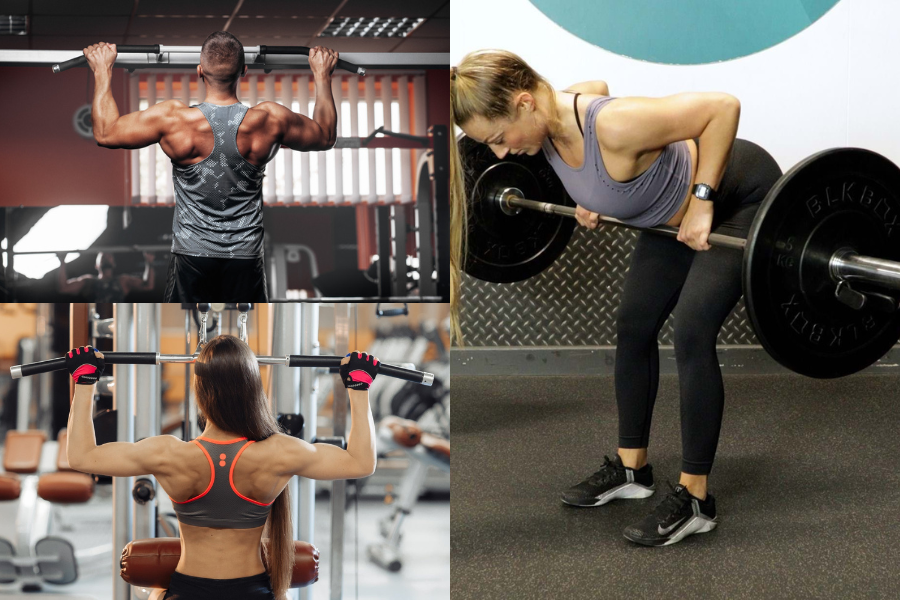
The bent over barbell row is a staple compound exercise for upper and mid back strength. It emphasizes muscles like the rhomboids, teres major and minor, posterior deltoids, and trapezius, and it also helps your core stability and posture. Progressively adding weight here is a reliable way to build size and strength.
How to do it
- Stand with your feet hip width apart, barbell in front of you.
- Hinge at your hips until your torso is roughly 45 degrees to the floor, knees slightly bent.
- Keep your spine neutral and core tight.
- Pull the bar toward your lower ribs while squeezing your shoulder blades together.
- Lower the bar under control to the starting position.
Tips
- Avoid jerking the weight.
- Think about pulling your elbows back, not just lifting the bar.
Pendlay row
The Pendlay row is a stricter variation of the bent over row. You reset the bar on the floor between every rep, which removes momentum and forces more explosive, balanced recruitment of your upper and lower back muscles. This style can help you build power and strength.
Key differences from a normal row
- Torso is closer to parallel with the floor.
- Every rep begins from a dead stop on the ground.
- Movement is fast and powerful on the way up, then controlled on the way down.
Pull up and assisted pull up
Pull ups are among the best back exercises for your lats and teres major. They also train your biceps and grip and help create that wide upper body look.
If you cannot yet perform a full bodyweight pull up, use:
- Resistance band pull ups
- Assisted pull up machines
- Variations like ring rows or lat pulldowns
These options let you build strength through the same overhead pulling pattern while you progress toward unassisted reps.
T bar row
The T bar row is a powerful back builder that lets you safely handle heavier loads. By adjusting your grip width, you can emphasize different areas of your back:
- Wider grip, more focus on the lats
- Neutral or closer grips, more focus on the middle back
You can place T bar rows after deadlifts, as long as you maintain solid technique and avoid using your lower back to cheat the weight up.
Chest supported row
Chest supported rows are ideal if you want to train your back hard while reducing stress on your lower spine. With your chest braced on a bench or pad, you can pull heavy without relying on momentum.
Benefits include:
- Less lower back fatigue
- Stricter technique
- Helpful posture work, especially if you sit a lot
Other effective back strength moves
Guides like the 2026 Men’s Journal beginner back workout and a 2024 Gymshark roundup highlight several other strong choices for building your back:
- Supported pull ups or chinups
- Trap bar deadlifts
- One arm dumbbell rows
- TRX or suspension trainer rows
- Gorilla rows
- Renegade rows
- Dumbbell shrugs
You do not need every exercise in one workout. Choosing 3 or 4 compound movements and focusing on good form and progression is enough for steady results.
Improve posture and spine stability
Great back training is not only about lifting heavy. You also need exercises that help you maintain a neutral spine, support your shoulders, and train your core to work with your back, not against it.
Therapists at the Orthopedic Institute emphasize that keeping a neutral spine during movements like squats and hip hinges helps cushion and protect the back and reduces injury risk. You can read more about their spine and core advice in their 2021 guides on back safety and exercise form.
The Cleveland Clinic also shares posture focused exercises that strengthen your upper back and help prevent your shoulders from rounding forward, which can strain your neck and lower back.
Superman
The Superman exercise strengthens your upper back while teaching you to lift with control instead of arching excessively through your lower back.
How to do it
- Lie face down with your arms extended in front of you.
- Engage your core and glutes.
- Lift your arms and legs off the floor at the same time.
- Pause briefly, then lower with control.
Aim for 4 to 5 sets of 8 to 12 reps.
Reverse snow angel
Reverse snow angels are a more controlled, targeted way to work your upper back and shoulders.
How to do it
- Lie face down with arms extended overhead, palms facing down.
- Keeping your arms slightly off the floor, slowly sweep them out to your sides and down toward your hips.
- Reverse the motion to return to the starting position, focusing on smooth control.
Try 4 to 5 sets of 8 to 10 reps.
Cat cow
Cat cow is often thought of as a stretch, but it also helps you learn how your spine moves and how to find a neutral position, which is crucial for squats and deadlifts.
How to do it
- Start on your hands and knees.
- Inhale, gently arch your back and lift your chest and tailbone, this is “cow.”
- Exhale, round your spine and tuck your chin and tailbone, this is “cat.”
- Move slowly between these positions.
You can start with 2 sets of 10 reps.
Planks and side planks
High planks and side planks build the core and back strength you need for good posture.
- High plank: Hold a top of push up position, shoulders stacked over wrists, body in a straight line.
- Side plank: Lie on your side and prop yourself up on your forearm, stacking your feet and lifting your hips to create a straight line from head to heels.
These exercises train your core to support your spine during everyday movement and lifting.
Bridges and glute bridge
Glute bridges strengthen and activate your glutes, which can relieve lower back strain and help align your hips and pelvis. In 2021, Orthopedic Institute experts highlighted bridge variations as a key way to support the back and nearby muscles.
How to do it
- Lie on your back with knees bent and feet flat, hip width apart.
- Tighten your belly and buttock muscles.
- Lift your hips until your body forms a straight line from knees to shoulders.
- Hold for three deep breaths, then lower.
Start with about five repetitions each day and build toward 30 as you grow stronger.
Wall walks and isometric pulls
If you want to challenge your upper back and shoulders without traditional weights, wall walks and isometric pulls are useful options.
- Wall walks: In a plank or push up position with your feet on the floor, walk your feet up a wall while your hands move closer to the wall. This builds intense upper back and shoulder strength. Stop 2 reps short of failure and rest well between sets.
- Isometric pulls: Use a bar or sturdy strap that will not move and pull as hard as you can without any actual motion. This trains the muscles that help you hold good posture over time.
Shoulder blade and posture drills
Cleveland Clinic physical therapist Jennifer Danzo recommends several exercises to address rounded shoulders and forward head posture, which can overload your back.
These include:
- Standing row with bands: Attach a band to a doorknob, stand tall, and pull the band toward your ribs while squeezing your shoulder blades together. This strengthens your upper back and helps keep your shoulders from rolling forward.
- Shoulder blade squeeze: Sit upright and gently pull your shoulder blades together, hold for 5 seconds, and relax. Repeat 3 to 5 times, twice per day.
- Shoulder blade push: Lying on your back with knees bent, press your shoulder blades down and back into the floor. This teaches your body to keep shoulders set and supported.
- “Pull your head back” drill: Gently draw your chin back to align your head over your shoulders. This helps correct forward head posture and can reduce strain on your neck and upper back.
- Wall angels: Stand with your back against a wall and your arms in a goal post position. Slowly slide your arms up and down, as if making a snow angel. This stretches the chest and trains you to keep your shoulders open.
These moves are simple, but when you do them regularly they can make a noticeable difference in how your upper back feels and how you carry yourself.
Support your back with smart stretching
Back strengthening becomes more effective when you pair it with stretching that reduces stiffness and pressure. Orthopedic Institute specialists note that regular hamstring stretching and gentle back mobility work can help ease or prevent low back pain, though you should always check with your physician about what is safe for you.
Child’s pose
Child’s pose gently lengthens your spine, glutes, and hamstrings while releasing tension in your lower back and neck.
How to do it
- Start on your hands and knees.
- Sit your hips back toward your heels as you stretch your arms forward.
- Let your forehead rest on the floor and breathe slowly.
Hold for 20 to 30 seconds, or longer if it feels comfortable.
Knee to chest stretch
This simple move helps relieve pressure in the lower back.
- Lie on your back with knees bent and feet flat on the floor.
- Pull one knee toward your chest while tightening your abdominals and pressing your spine into the floor.
- Hold, then switch legs.
Repeat each stretch 2 to 3 times. You can do the routine once in the morning and once in the evening.
Lower back rotational stretch
This stretch can improve flexibility and ease discomfort around your lower back.
- Lie on your back with knees bent.
- Slowly roll both knees to one side while keeping your shoulders on the floor.
- Hold for 5 to 10 seconds and return to center.
- Repeat on the other side.
Do 2 to 3 repetitions on each side, twice daily.
Cat stretch
The cat stretch, also recommended by Orthopedic Institute experts, gently mobilizes the spine and reduces back tension.
- Start on your hands and knees.
- Arch your back upward as you drop your head.
- Then sag your back and lift your head.
Repeat 3 to 5 times, twice a day.
Hamstring stretches
Tight hamstrings can pull on your pelvis, which may increase strain on your lower back. Regular hamstring stretching can relieve some of this pressure, but the right stretch and intensity are personal. It is wise to consult your physician or a physical therapist to choose the best approach for you.
How to put these exercises into a simple plan
With so many options, it helps to keep things straightforward when you start. You can build a basic weekly structure around these best back exercises:
Two or three times per week
- Choose 3 to 4 strength moves
- One or two heavy compound pulls, such as deadlifts, bent over rows, or pull ups
- One or two supported or machine variations, such as chest supported rows or TRX rows
- Add 2 to 3 posture or core drills
- For example, Superman, cat cow, and planks
- Finish with 5 to 10 minutes of stretching
- Child’s pose, knee to chest, or lower back rotational stretch
Guidelines
- Start with 3 to 4 sets per exercise.
- Keep at least 5 reps “in the tank” to avoid failure early on.
- Increase difficulty slowly by adding a bit of weight, a couple of extra reps, or one more set as your form and confidence improve.
- If you are unsure about your form, consider a session with a personal trainer, as many experts recommend for beginners to prevent bad habits and injuries.
Key takeaways
- Strong back muscles support your spine, improve posture, and boost performance in other lifts.
- The best back exercises include a mix of heavy compound moves, posture work, core stability, and gentle stretching.
- Maintaining a neutral spine and steady, controlled form is more important than lifting the heaviest weight.
- Consistency matters more than perfection. A few well chosen back exercises, done regularly, can make you feel stronger, taller, and more comfortable in your body.
You do not need to overhaul your routine all at once. Try adding one or two of these exercises to your next workout and notice how your back feels afterward. Over time, those small additions can add up to a stronger, healthier you.
About the Author