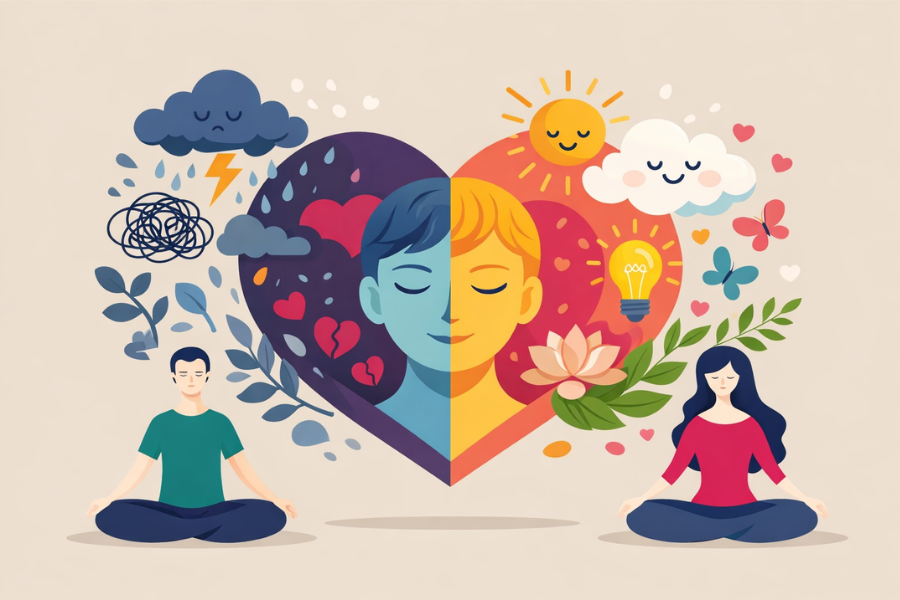
Understand childhood trauma and adult mental health
If you are exploring childhood trauma and adult mental health, you are already taking a meaningful step toward understanding yourself. Childhood trauma is not only about one dramatic event. It can include ongoing experiences like abuse, neglect, instability at home, exposure to violence, or losing a caregiver.
Researchers often describe these experiences as adverse childhood experiences, or ACEs. Large studies show that ACEs are common. In the original ACE Study of over 17,000 participants, about 64% reported at least one type of childhood trauma and most of them had more than one type of exposure (NCTSN). Later research suggests that roughly 61% of adults in the United States have experienced at least one ACE (Palo Alto University).
Childhood trauma can shape your adult mental health in ways that show up in how you feel, how you relate to others, and even how your body functions. Understanding that connection is not about blaming your past. It is about seeing the full picture so you can choose what healing looks like for you now.
Recognize what counts as childhood trauma
You might second guess whether what you went through was “bad enough” to count as trauma. Many people do. It can help to look at the broader definition.
Common types of childhood trauma
Childhood trauma can include:
- Physical, emotional, or sexual abuse
- Emotional neglect, such as consistently feeling ignored or dismissed
- Physical neglect, such as not having your basic needs met
- Living with caregivers who misuse substances or have untreated mental illness
- Witnessing domestic violence or community violence
- Having a caregiver who is incarcerated
- Experiencing discrimination, bullying, or chronic humiliation
- Losing a parent or caregiver through death, abandonment, or separation
When these experiences are ongoing, especially in unstable or abusive caregiving environments, they are often described as complex trauma. Children living in this kind of environment may develop unhealthy attachments that make it harder to manage stress or trust others later in life (NCTSN).
Why your body and brain remember
Childhood is a time of rapid brain and nervous system development. When you grow up in a stressful or unsafe environment, your brain adapts to keep you alive. That might mean:
- Staying on high alert for danger
- Shutting down or numbing your feelings
- Learning to please others to avoid conflict
These adaptations can be helpful in a threatening environment, but they can become exhausting in adult life. Research shows that childhood trauma affects neurodevelopment, your fight or flight stress response, and key brain networks involved in learning and survival (University of Rochester Medical Center).
See how childhood trauma affects you as an adult
You might notice the effects of childhood trauma in your thoughts, emotions, relationships, and health, even if you do not immediately link them to your earlier experiences.
Emotional and psychological signs
Adults who lived through childhood trauma often notice:
- Persistent anxiety, fear, or a sense that something is “about to go wrong”
- Depression, emptiness, or hopelessness
- Difficulty identifying what you feel or putting emotions into words
- Emotional outbursts that feel bigger than the situation
- Numbing, disconnection, or feeling “shut down”
- Intrusive memories, nightmares, or flashbacks
- Feeling ashamed, “broken,” or fundamentally not good enough
Children with complex trauma histories often struggle with emotional regulation, and these patterns can carry into adult life, leading to explosive reactions or emotional numbing (NCTSN).
In a study of chronically depressed adults, more than three-quarters reported significant childhood trauma and those with multiple trauma types had more severe symptoms (PubMed Central). This reflects a common pattern, which is that the more types of trauma you experienced, the higher your risk of depression and other mental health challenges later on.
Relationship patterns you might notice
Childhood trauma can also shape how you connect with others as an adult. You might:
- Struggle to trust people, even if you want close relationships
- Feel clingy, overly dependent, or terrified of being abandoned
- Push people away when they get too close
- Find yourself in repeated unhealthy or abusive relationships
- Have trouble setting or respecting boundaries
- Feel uncomfortable with authority figures or conflict
Research shows that early trauma often leads to difficulties forming and maintaining healthy attachments in adult relationships (Talkspace). If you recognize yourself in any of these patterns, you are not alone and it is not a character flaw. It is a sign of how your nervous system learned to protect you.
Physical and health-related effects
Childhood trauma is strongly linked to later physical health problems. Over time, a chronically activated stress response can affect your immune system, cardiovascular system, and metabolism.
Studies connect high ACE scores to higher risks of conditions like:
- Heart disease and stroke
- Diabetes and obesity
- Chronic lung disease
- Some cancers and autoimmune issues
Multiple sources point out that childhood trauma influences the body’s stress response system. This can lead to long-term health effects and higher rates of chronic illness in adulthood (University of Rochester Medical Center, Palo Alto University).
If you struggle with ongoing health issues and a history of childhood trauma, it does not mean you caused your illness. It means your body has been carrying a heavy load for a long time.
Learn about PTSD and complex trauma
Not everyone who experiences childhood trauma develops posttraumatic stress disorder (PTSD), but many people live with some trauma-related symptoms.
PTSD in adults with childhood trauma
PTSD can include:
- Intrusive memories or flashbacks
- Avoiding people, places, or situations that remind you of what happened
- Negative beliefs about yourself (“I am worthless,” “I am not safe”)
- Feeling detached from others
- Being easily startled, irritable, or hypervigilant
Around 70% of people experience at least one traumatic event in their lifetime, and roughly 10% develop PTSD (NCBI Bookshelf). Childhood trauma can increase that risk and can also contribute to other conditions like anxiety, depression, or personality disorders.
Complex and developmental trauma
Complex or developmental trauma refers to chronic trauma during childhood, especially in caregiving relationships. This can lead to:
- Chronic difficulty regulating emotions
- Identity confusion or a poor sense of self
- Dissociation or feeling disconnected from your body
- Deeply ingrained shame and mistrust
- Ongoing relationship instability
Research highlights that developmental trauma can contribute to severe mental health outcomes and that treatment often needs to address emotional regulation, attachment, dissociation, and trauma memories together within a trauma-informed framework (NCBI Bookshelf).
If you feel like your struggles do not fit into one neat diagnosis, that does not make them less real. It may simply reflect how complex trauma can affect many areas of life at once.
Understand why healing is possible
The connection between childhood trauma and adult mental health can sound discouraging, but there is important hopeful news. Your brain and nervous system remain capable of change throughout your life. This is known as neuroplasticity.
The dose response pattern, and what it means
Studies show a “dose response” relationship between ACEs and later health problems. In other words, the more types of trauma you experienced, the higher your risk for challenges like depression, anxiety, or physical illness (Palo Alto University).
This pattern is not destiny. It describes increased risk, not a fixed outcome. Many people with significant childhood trauma build meaningful, connected, and healthier lives with the right support.
Why early and ongoing support matters
Early intervention can reduce the long-term impact of childhood trauma by calming the stress response system and supporting healthy development. At the same time, if you did not receive help earlier, you can still heal now.
Trauma-informed therapy shifts the focus from “What is wrong with you?” to “What happened to you?” This approach emphasizes safety, collaboration, and empowerment, which can be especially important if trust was violated in your past (NCBI Bookshelf).
Explore therapies that help you heal
If you want to improve your mental health as an adult, healing childhood trauma often starts with finding the right kind of support.
Trauma-informed therapy approaches
Several evidence based therapies have been shown to help adults who lived through childhood trauma. These include:
-
Trauma focused cognitive behavioral therapy (TF CBT)
Helps you notice and change unhelpful thought patterns, gradually face painful memories in a supported way, and build coping skills. -
Eye movement desensitization and reprocessing (EMDR)
Uses specific types of bilateral stimulation, such as guided eye movements, while you recall aspects of traumatic experiences. This process aims to help your brain reprocess and integrate the memories with less distress (Palo Alto University, NCBI Bookshelf). -
Exposure based therapies
Gradually and safely expose you to trauma related memories or triggers while you practice new coping skills. Over time, this can reduce the intensity of your fear and avoidance. -
Mindfulness based cognitive therapy
Combines mindfulness practices with CBT principles to help you observe your thoughts and feelings without becoming overwhelmed by them (Palo Alto University). -
Somatic therapies
Focus on the mind body connection. These approaches help you notice physical sensations, release tension, and complete “stuck” survival responses. -
Play informed therapy for adults
Emerging research suggests that play and creative expression can help adults access and process early memories and emotions in a gentle, indirect way (Palo Alto University).
If you live with ongoing depression that has not responded well to medication alone, therapy that actively addresses childhood trauma can be especially important. One study of chronically depressed adults found that multiple childhood traumas were associated with more severe symptoms, and that treatment may need to emphasize psychotherapy over relying on medication alone (PubMed Central).
Your role in the healing process
Healing from childhood trauma is not about “fixing” yourself. It is about learning new ways to relate to your thoughts, feelings, body, and relationships.
You do not have to do everything at once. Small, consistent steps can add up over time. Therapy can support you with:
- Understanding how your past affects your present
- Learning emotional regulation skills
- Practicing healthier boundaries and communication
- Challenging long held beliefs about yourself
- Processing traumatic memories at a pace that feels safe
Build day to day tools for emotional regulation
While professional support is important, there are also practical skills you can use on your own to support your mental health.
Grounding skills for feeling overwhelmed
Grounding techniques help you reconnect with the present when you feel triggered or flooded by emotion. You might try:
-
5 4 3 2 1 sensory exercise
Name 5 things you can see, 4 things you can touch, 3 things you can hear, 2 things you can smell, and 1 thing you can taste. -
Temperature shifts
Splash cool water on your face or hold a cold pack against your skin for a short time. This can help regulate your nervous system. -
Feet on the floor
Sit or stand, press your feet into the ground, and notice the support beneath you. Remind yourself gently, “Right now, I am here. This moment is different from the past.”
Daily habits that support your nervous system
You do not have to overhaul your entire routine. Even one or two small habits can begin to shift how your body handles stress.
Consider experimenting with:
- A short daily walk, even around the block
- A simple breathing practice, such as inhaling for four counts and exhaling for six
- Reducing or spacing out caffeine and alcohol if they increase anxiety or low mood
- Keeping a gentle bedtime routine to support more regular sleep
These habits cannot erase trauma, but they can help your nervous system spend less time in survival mode, which supports your overall mental health.
Improve relationships after childhood trauma
Your relationships are often where the impact of childhood trauma feels most intense, and also where some of the deepest healing can happen.
Notice your patterns without judgment
Start by observing your own patterns with compassion. You might ask yourself:
- When I feel close to someone, do I get scared or pull back?
- Do I often feel “too much” or “not enough” in relationships?
- How do I usually respond when I am upset, ignored, or criticized?
- What did I have to do as a child to feel as safe as possible?
Seeing these patterns clearly can be uncomfortable, but it is also a powerful step toward change. Remember that many of these responses were once ways you protected yourself.
Practice small changes in how you relate
You do not have to transform your relationships overnight. Instead, you can experiment with small changes, such as:
- Sharing a feeling with a trusted friend a little sooner than you usually would
- Saying “I need a short break, I will come back to this conversation” instead of disappearing
- Asking for reassurance directly instead of hinting or testing
- Stating a boundary clearly, then noticing what happens in your body
Because childhood trauma often involves a violation of trust, it makes sense that trust is complicated now. Practicing these small steps, especially with supportive people or within therapy, can gradually build a new template for safer connection.
Work with your healthcare and support network
If you are living with childhood trauma and adult mental health challenges, you deserve a support team that takes your history seriously and responds with care.
Partnering with mental health professionals
When you look for a therapist or psychiatrist, you can ask about:
- Their experience with childhood trauma and complex trauma
- Whether they use trauma informed approaches
- What kind of therapies they practice, such as EMDR, TF CBT, or somatic methods
- How they handle pacing and safety in trauma work
You can also share that certain environments or interactions feel triggering, and ask how they can work with you to create a sense of safety.
Including medical providers
Because childhood trauma can impact your physical health as well as your mental health, it can help to let your primary care provider know about your history if you feel comfortable. They can:
- Watch for conditions that are more common after ACEs
- Coordinate care with your mental health providers
- Adjust treatment plans in ways that respect your triggers and needs
You always have the right to set boundaries around how much you share and with whom.
Take gentle next steps
Overcoming the impact of childhood trauma on your adult mental health is not a quick or linear process. Some days you may feel strong and hopeful. Other days you may feel like you are back at the beginning. That is part of the work, not a sign of failure.
You might choose one small next step from this article, such as:
- Looking up trauma informed therapists in your area or online
- Practicing one grounding technique when you notice a trigger
- Journaling about one relationship pattern you want to understand better
- Sharing with a trusted person that you are exploring how your past affects you
Whatever step you choose, try to meet yourself with the same compassion you would offer a friend with a similar history. Your reactions make sense in light of what you have lived through. With information, support, and practice, you can build a life that feels safer, more connected, and more aligned with who you want to be now.
About the Author