Understand what chronic stress really is
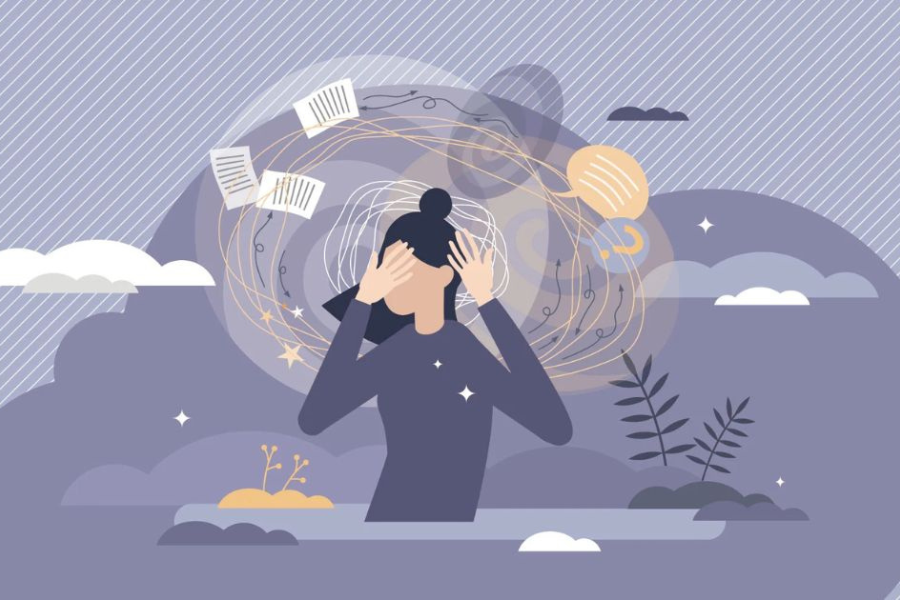
The causes of chronic stress are not just “a lot of stress” or a busy week. Chronic stress happens when your body’s stress response is turned on most of the time and rarely gets a chance to reset. You feel under pressure constantly, even when nothing dramatic is happening in the moment.
When you sense a threat, your brain tells your adrenal glands to release hormones like adrenaline and cortisol. This is your fight or flight response, and it is useful in short bursts. According to the Mayo Clinic, when this response stays switched on for too long, excess cortisol begins to disrupt essential body functions like your immune system, digestion, and even growth and reproduction (Mayo Clinic).
Chronic stress might show up as:
- Feeling tense or “on edge” most days
- Trouble sleeping or staying asleep
- Headaches, stomach issues, or muscle pain
- Irritability, sadness, or numbness
- Changes in appetite or energy
The tricky part is that you can get used to feeling this way. It starts to feel normal, which makes it even more important to look closely at what might be causing it.
Recognize the main causes of chronic stress
You live in a world that pulls your attention and energy in many directions. Chronic stress often comes from several areas of life at once. By spotting your biggest stress “zones,” you can make choices that protect your mental health instead of draining it.
Work problems and job pressure
Work is one of the most common causes of chronic stress. In a national survey from Japan, work-related problems were the leading source of long-term stress, ahead of health and money worries (PMC). In the United States, more than 80 percent of workers report experiencing workplace stress, and over half say it spills over into their home life (OSHA).
You might feel chronic stress at work when you:
- Have more tasks than time, with constant deadlines
- Feel you have no control over decisions that affect your job
- Worry about losing your job or being demoted
- Experience little support from your manager or coworkers
- Put in high effort but feel underpaid, overlooked, or unappreciated
Researchers describe two patterns that help explain this. The job demand control support model says that you are most at risk when demands are high but your control and support are low, a situation often called “iso strain” (PMC). The effort reward imbalance model adds that stress builds when the effort you invest at work is not matched by rewards like salary, promotion, or respect.
Temporary or contract work can be especially stressful. In Japan, temporary workers reported high levels of fatigue and work stress, especially during the 2008 recession, because job insecurity acted as both a short-term and long-term stressor (PMC).
Ask yourself:
- Do you often feel trapped in your job situation?
- Are you working harder and harder without feeling recognized?
- Do you dread work most days, not just occasionally?
If the answer is yes, your job may be a central driver of your chronic stress.
Family conflict and unhealthy dynamics
Your home life can be a powerful source of comfort or one of the major causes of chronic stress. Stress in one family member, especially a parent, can ripple through the entire household and affect how everyone communicates and behaves (Child Focus).
Family-related chronic stress can look like:
- Frequent arguments, resentment, or cold silences
- A sense that you are “walking on eggshells” around someone
- Outbursts that feel bigger than the situation
- Stress that people in the family hide but never really resolve
When family stress is ignored, it often does not fade. It can grow into what feels like a full-blown family crisis (Child Focus).
How early experiences shape long-term stress
Unhealthy family dynamics in childhood can plant the seeds for chronic stress later in life. These patterns are sometimes called adverse childhood experiences, or ACEs. They include:
- Emotional, physical, or sexual abuse
- Ongoing neglect
- Parental divorce or separation
- A parent with mental illness or substance use problems
- Violence or criminal behavior in the household
Research links ACEs to higher risks of heart disease, depression, and anxiety in adulthood (NCBI Bookshelf). Negative family interactions are associated with poor sleep, higher heart rate and blood pressure, and a heavier allostatic load, which is the total burden of stress on your body over time (NCBI Bookshelf).
Family relationships also affect your immune system. Supportive family connections are related to lower allostatic load, while stressful family relationships are linked to higher allostatic load and weaker immune function (NCBI Bookshelf).
You might notice the impact of family stress when you:
- Get more colds or feel run down when conflict at home increases
- Turn to unhealthy coping habits like substances or overeating
- See your children acting out more when tension rises
Recognizing that your family environment plays a role in your stress is not about blame. It is about understanding where pressure shows up so you can respond differently now.
Financial pressure and money worries
Money is another major cause of chronic stress, but it is not just the numbers in your bank account that matter. A large national survey of more than 22,000 U.S. adults found that financial worries, such as concerns about bills, medical costs, or retirement, were strongly linked to psychological distress (PMC).
One key insight from that research is that subjective financial worries, which are your emotional reactions to feeling financially insecure, can affect your mental health more than objective measures like your exact level of debt or income (PMC). In other words, how you experience your financial situation is just as important as the situation itself.
Financial stress can be especially intense if you are:
- Unemployed or underemployed
- Single or unmarried
- Earning under about $35,000 per year
- Renting instead of owning your home
In these groups, financial worries predicted distress even more strongly, suggesting that having fewer safety nets or resources makes the emotional weight of money problems heavier (PMC). On the other hand, marriage, employment, higher income, and homeownership seem to buffer this stress to some degree.
You might be living with chronic financial stress if you:
- Lose sleep over bills or future expenses
- Avoid opening mail or checking your accounts
- Feel ashamed or stuck when you think about money
- Argue often about finances with your partner or family
If that sounds familiar, it is understandable that your body feels like it is in a constant state of alert.
Social stress, discrimination, and your environment
Chronic stress does not only come from your job, home, or bank account. The environment around you, including your neighborhood and the way you are treated in society, also matters. These are sometimes called social determinants of health.
Continuous stressors can include:
- Racism and racial discrimination
- Food insecurity or not having reliable access to healthy food
- Financial insecurity and unstable housing
- Living in an unsafe neighborhood
The Institute for Functional Medicine notes that these ongoing social and environmental pressures contribute to conditions like cardiovascular disease, metabolic problems, and depression (Institute for Functional Medicine). A 2021 review of 267 studies found that lower socioeconomic status, poorer neighborhood health, and higher racial discrimination were all tied to higher allostatic load, meaning more cumulative stress on the body (Institute for Functional Medicine).
The impact of discrimination can be especially severe. In one Canadian project focused on Black communities, people who experienced high racial discrimination were more than 36 times as likely to have severe depressive symptoms compared with those who faced low discrimination (Institute for Functional Medicine).
These stressors are not about individual choices. They reflect larger systems and conditions, and they help explain why chronic stress is not distributed evenly across different groups.
Health issues and persistent worry about your body
Physical health problems can cause stress, and chronic stress can worsen physical health, which creates a cycle that is hard to break. Work-related stress has been linked to conditions like cardiovascular disease, insomnia, depression, and anxiety (PMC).
Ongoing health stress might sound like:
- Worrying constantly about a diagnosis or symptom
- Managing a long-term illness without much support
- Struggling with sleep, pain, or fatigue nearly every day
Chronic stress affects your heart, digestion, immune system, and even cellular energy. Research shows that long-term stress can reduce how well your mitochondria, the energy centers of your cells, produce energy and it can change their structure (Institute for Functional Medicine). Over time, this can leave you feeling exhausted and more vulnerable to illness.
Personality patterns and the push to “do more”
How you relate to pressure also shapes your risk. You might notice that you often push yourself to do more in less time, feel restless when you are not busy, or get impatient with delays. This pattern, sometimes called Type A behavior, has been associated with higher risk of coronary heart disease because of the way it fuels stress responses (American Journal of Lifestyle Medicine).
Common sources of chronic stress in modern Western life include:
- Constant busyness and overcommitment
- Worry about safety
- Pressures around appearance, productivity, and success
- Ongoing health and financial concerns
Employers around the world have identified stress as a major health risk for employees, which shows how widely this pattern has spread (American Journal of Lifestyle Medicine).
Your own reaction to stress is also shaped by personal factors. The Mayo Clinic notes that people vary widely in how they respond to life events. What feels overwhelming to you might not affect someone else in the same way and that is normal (Mayo Clinic).
Big life events and ongoing uncertainty
Sometimes chronic stress grows out of a mix of personal challenges and broader events. A survey from the Centers for Disease Control and Prevention in June 2020 found that about 40 percent of U.S. adults were experiencing negative mental or behavioral health effects related to stress, including symptoms of anxiety, depression, trauma, increased substance use, or suicidal thoughts (OSHA).
During times of crisis, you might face:
- Grief and loss
- Health fears for yourself or loved ones
- Isolation or loneliness
- Rapid changes to work, income, or routines
OSHA notes that workplace stressors today can include loneliness, uncertainty, grief, and fear, all of which can erode your overall sense of well-being (OSHA).
See how chronic stress affects your mind and body
Understanding the causes of chronic stress is important, but it also helps to see how this stress actually shows up inside you.
When you are under ongoing stress, your body:
- Keeps releasing stress hormones like cortisol
- Increases heart rate and blood pressure
- Shifts energy away from digestion, immune function, and growth
Long-term activation of this system can raise the risk of many problems, including heart disease, sleep disorders, depression, and anxiety (Mayo Clinic; Yale Medicine).
Yale Medicine notes that chronic stress can slowly drain your psychological resources and damage both your brain and your body over time (Yale Medicine). You might notice:
- Difficulty focusing or remembering things
- Feeling emotionally flat, numb, or constantly on edge
- Turning to substances, food, or other habits to cope
- Trouble unwinding even when you have free time
Family-based stress can compound these effects. Negative family interactions are linked to higher allostatic load, poorer sleep, and greater risk of unhealthy coping behaviors like substance use, especially in adolescents (NCBI Bookshelf).
Ask yourself if your stress has become chronic
It can be hard to tell when “busy and stressed” has crossed into chronic stress. One sign is feeling stressed all day, every day, with no real breaks. Child Focus notes that this kind of ongoing stress usually points to a deeper issue that needs attention (Child Focus).
You can start by asking yourself a few simple questions:
- Do I feel tense or overwhelmed more days than not, for months at a time?
- Are there areas of my life, such as work, family, money, or safety, that feel stuck or unchangeable?
- When I try to rest, do I still feel “on alert” inside?
- Have I noticed more health issues, sleep problems, or changes in mood that do not really go away?
If you answered “yes” to several of these, it is worth considering that chronic stress may be part of the picture.
Take first steps toward relief
You cannot remove every stressor from your life, and some causes of chronic stress are outside your control. What you can do is begin to shift how you respond and where you can influence your environment.
Here are small starting points that respect the reality of your situation:
-
Name your main stress zones
Pick one area, such as work or money, and write down what feels most stressful about it. Naming it clearly can make it feel less overwhelming and more workable. -
Look for one tiny, practical change
That might be setting a firmer boundary around work hours, scheduling a financial counseling session, or asking for a short, regular check in with a supervisor for more support. -
Pay attention to your body
Even a few minutes of slow breathing, a short walk, or gentle stretching can signal to your nervous system that it is allowed to stand down for a bit. Over time, these small practices can help counter the constant “on” state. -
Consider professional support
Chronic stress is not a sign of weakness. It is often a sign that you have been carrying too much for too long, in conditions that would challenge anyone. Therapists, counselors, and medical professionals can help you untangle what is happening and suggest specific next steps that fit your life. -
Reach for connection where you can
Supportive relationships, whether with friends, family, coworkers, or community groups, are one of the most powerful buffers against chronic stress. Even one person who listens without judgment can make a difference.
Key points to remember
- Chronic stress is more than a busy schedule. It is a long-lasting state where your stress response rarely turns off.
- Major causes of chronic stress include work pressure, family conflict, financial worries, discrimination, unsafe environments, health problems, and personality patterns that push you to overdo it.
- These stressors affect both mind and body, raising the risk of issues like heart disease, depression, anxiety, and sleep problems.
- Many causes of chronic stress are tied to larger social and economic conditions, not just personal choices.
- Small, steady steps such as naming your main stressors, making one practical change, and seeking support can begin to restore a sense of safety and ease.
You deserve a life that feels more peaceful than constantly “on edge.” Understanding the causes of chronic stress in your own story is a powerful first step toward reclaiming that peace.
About the Author