How alcohol really affects your sleep
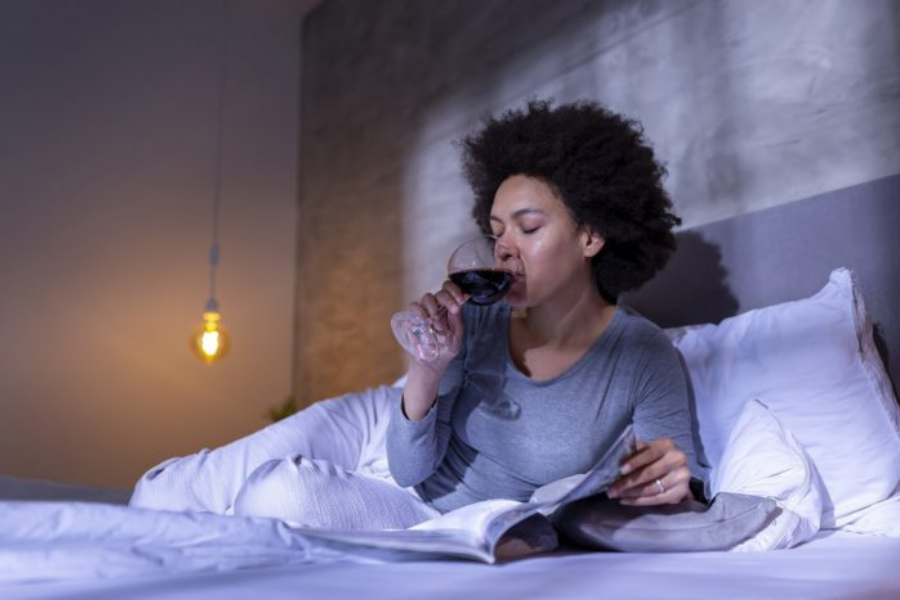
If you have ever wondered, “does alcohol help or hurt sleep,” you are not alone. A nightcap can make you feel pleasantly drowsy, and you might fall asleep faster. The catch is that what alcohol does to your sleep later in the night is very different from how it feels in the first 30 minutes.
Understanding how alcohol changes your sleep stages, your breathing, and your next-day energy can help you decide what is right for you.
What happens in your body when you drink before bed
Alcohol works on some of the same brain receptors as sleep medications, so it acts like a sedative at first. Experts at MD Anderson explain that it can help you drift off more quickly by promoting slow wave, or deep, sleep early in the night (MD Anderson).
As your body begins to metabolize the alcohol, the effect flips:
- Your brain becomes more alert
- Your sleep gets lighter and more fragmented
- You are more likely to wake up in the second half of the night
The Sleep Foundation notes that alcohol can shorten the time it takes you to fall asleep, but later it leads to more awakenings and lighter, poorer quality sleep overall (Sleep Foundation).
So in simple terms: alcohol can help you start sleep, but it tends to hurt how you stay asleep.
How alcohol changes your sleep stages
Your sleep is made up of repeating cycles of non-REM and REM sleep. Alcohol reshuffles that pattern.
According to the Sleep Foundation and MD Anderson:
- Early in the night, alcohol increases deep N3 sleep
- At the same time, it suppresses REM sleep, the stage tied to memory, learning, and emotional regulation (Sleep Foundation, MD Anderson)
- Later in the night, your sleep shifts into very light N1 sleep, which makes frequent awakenings more likely
The National Council on Aging (NCOA) adds that alcohol can delay the start of REM, shorten how long you spend in it, or sometimes prevent you from entering REM at all (NCOA).
Since REM sleep is important for feeling mentally refreshed, alcohol’s impact on this stage is a key reason you can sleep 7 or 8 hours and still wake up groggy after drinking.
Why you may wake at 2 or 3 a.m.
If you often find yourself wide awake in the middle of the night after drinks, that is not in your head. MD Anderson experts describe this as “rebound insomnia” that appears as the sedative effect of alcohol wears off, especially around 2 or 3 a.m. (MD Anderson).
By this point:
- Your body is clearing alcohol from your system
- Your nervous system is more activated
- Your sleep is lighter, so small noises or discomforts can fully wake you
Once you are awake, it can feel much harder to fall back asleep, even if you still feel tired.
Alcohol, snoring, and sleep apnea
If you snore or have suspected sleep apnea, alcohol can be especially disruptive.
Several sources, including the Sleep Foundation, MD Anderson, and American Addiction Centers, highlight the same pattern:
- Alcohol relaxes the muscles in your throat
- This narrows your airway and increases resistance to airflow
- Snoring becomes louder and more frequent
- If you have obstructive sleep apnea, breathing pauses can become longer and more severe (Sleep Foundation, MD Anderson, American Addiction Centers)
A meta-analysis of 21 studies cited by American Addiction Centers found that people who drink alcohol have a 25% higher risk of obstructive sleep apnea compared with non-drinkers, and heavy alcohol use can worsen existing symptoms (American Addiction Centers).
A Korean hospital-based study even found that in men, higher alcohol use was linked to more nighttime awakenings from snoring, suggesting a direct effect on sleep disruption (Korean Journal of Family Medicine).
If your partner complains about your snoring on nights you drink, or if you wake up choking or gasping, alcohol may be playing a bigger role than you realize.
Does alcohol affect men and women differently?
Some research suggests that alcohol’s effect on sleep is not the same for everyone.
In a 2015 study from Gangneung Asan Hospital in Korea:
- Men with higher alcohol use scores had significantly poorer overall sleep quality, shorter sleep duration, and more sleep disturbances
- In women, alcohol use did not show a strong link with overall sleep quality scores, but it was associated with more daytime dysfunction, such as feeling tired or unfocused (Korean Journal of Family Medicine)
Across both men and women, symptoms of depression and anxiety were strongly linked to poor sleep, regardless of alcohol use levels (Korean Journal of Family Medicine).
So while alcohol may show up slightly differently by sex in research, mental health and stress are also major players in how well you sleep. If your mood has been low or your anxiety is high, addressing those issues is just as important as looking at your drinking habits.
How common are sleep problems with alcohol?
You are not imagining it if you feel like drinking is tied to your restless nights.
Several sources highlight how widespread sleep trouble is among people who use alcohol:
- In data from about 160,000 Sleep Foundation profiles, nearly 90% of people who regularly drink in the evening reported at least one sleep-related problem (Sleep Foundation)
- American Addiction Centers report that between 35% and 70% of people who use alcohol experience insomnia symptoms (American Addiction Centers)
- NCOA notes that about 30% of people with chronic insomnia say they use alcohol as a sleep aid, and two thirds of those individuals believe it helps them fall asleep (NCOA)
There is a gap between how alcohol feels in the moment and what it does over the whole night. It might help you drift off, but for many people it also sets the stage for poorer quality sleep overall.
Why using alcohol as a sleep aid backfires
If you are tempted to rely on alcohol for sleep, it can help to see how the tradeoffs add up.
Short-term effects
In the short term, alcohol can:
- Help you fall asleep faster
- Make you feel less stressed at bedtime
At the same time, it:
- Reduces REM sleep
- Shifts you into lighter stages of sleep later in the night
- Increases awakenings and bathroom trips, since alcohol is a diuretic (NCOA)
You might sleep longer on paper, but your sleep may be less restorative.
Tolerance and the “more to get the same effect” trap
American Addiction Centers note that your body quickly develops tolerance to the sedative effect of alcohol. In one small study they reference, the deep sleep boost faded within about a week, while people kept drinking, which can:
- Lead you to increase how much you drink at night
- Raise your risk for alcohol use disorder
- Still leave you with fragmented sleep and more awakenings (American Addiction Centers)
Over time, long-term use of alcohol to induce sleep can also disrupt your circadian rhythms, worsen insomnia, and increase the risk of depression, dementia, heart disease, and other health problems (NCOA).
So while alcohol may feel like a quick fix, it tends to create bigger sleep and health problems in the long run.
Alcohol, insomnia, and withdrawal
If you already struggle with insomnia, alcohol can complicate things further.
American Addiction Centers share that:
- Between 35% and 70% of people who drink experience some form of insomnia
- Between 36% and 91% of people going through alcohol withdrawal report sleep problems, including difficulty falling asleep, fragmented sleep, and reduced REM sleep
- These disturbances can last from the acute withdrawal phase into early recovery (American Addiction Centers)
This means that if you stop or cut back after drinking heavily for a while, your sleep may get worse before it gets better. Knowing this ahead of time can help you prepare and get support instead of assuming something is wrong with you or giving up on the idea of change.
How close to bedtime is “too close” to drink?
If you choose to drink and you care about your sleep, timing and amount both matter.
Experts at the Sleep Foundation and MD Anderson generally recommend:
- Avoid alcohol for at least 3 hours before you go to bed
- Some people may need a longer window, such as 4 hours or more, depending on how they metabolize alcohol (Sleep Foundation, MD Anderson)
Drinking closer to bedtime or in larger amounts tends to:
- Intensify the sedative effect early in the night
- Increase rebound awakenings as the alcohol wears off
- Exaggerate breathing issues like snoring and sleep apnea
If you are experimenting with your own patterns, you might try:
- Choosing nights without alcohol to compare how you sleep
- Stopping drinking at least 3 to 4 hours before bed on nights you do drink
- Keeping a simple journal of bedtime, drinks, night awakenings, and morning energy
Seeing your own data laid out can be very motivating.
Practical ways to protect your sleep if you drink
You do not have to be perfect to see improvements. Small consistent changes are usually more sustainable.
Here are some ideas you can try:
Adjust your evening routine
- Set a “last drink” time, such as 7 p.m. if you go to bed at 10 or 11 p.m.
- Alternate alcoholic drinks with water or a nonalcoholic option
- Have food with your drink instead of drinking on an empty stomach
Support better sleep quality
- Keep your bedroom dark, cool, and quiet
- Build a wind-down routine that does not involve alcohol, such as reading, stretching, or a warm shower
- If you wake up at 2 or 3 a.m., try a calm, low-light activity like gentle breathing or reading rather than screens
Pay attention to breathing symptoms
You may want to talk with a health care provider if you or a partner notice:
- Loud, frequent snoring that is worse after drinking
- Pauses in breathing, gasping, or choking during sleep
- Morning headaches or very dry mouth
- Persistent daytime sleepiness even after a full night in bed
Since alcohol can worsen obstructive sleep apnea and raise risks for heart attack, stroke, and sudden death, especially with heavy long-term use (American Addiction Centers), it is worth taking these signs seriously.
When to ask for help
You might consider reaching out to a health care professional if:
- You feel unable to fall asleep or stay asleep without alcohol
- Your insomnia has lasted more than a few weeks
- You notice mood changes like depression or anxiety along with poor sleep
- You are trying to cut back on drinking and your sleep gets significantly worse
A provider can help you sort out whether your main issue is insomnia, sleep apnea, alcohol use, mood, or some combination. Treatments like cognitive behavioral therapy for insomnia, light therapy, or medical support for alcohol use disorder may all play a role in getting you back to more restful nights.
Key takeaways
To come back to your original question, does alcohol help or hurt sleep, the overall picture from research is clear:
- Alcohol may help you fall asleep faster, especially at higher doses
- It disrupts sleep architecture by cutting into REM sleep and shifting you into lighter sleep later in the night
- It increases the risk and severity of snoring and obstructive sleep apnea
- Evening drinking is strongly linked with insomnia and fragmented, nonrestorative sleep
- The closer you drink to bedtime and the more you drink, the more your sleep tends to suffer
If you are curious about how much alcohol is affecting your own rest, try a simple experiment this week: choose two or three nights without alcohol, keep your bedtime routine the same, and notice how your sleep and energy feel the next day. That lived experience, paired with what you now know about how alcohol interacts with sleep, can help you make choices that support the kind of rest you want.
About the Author