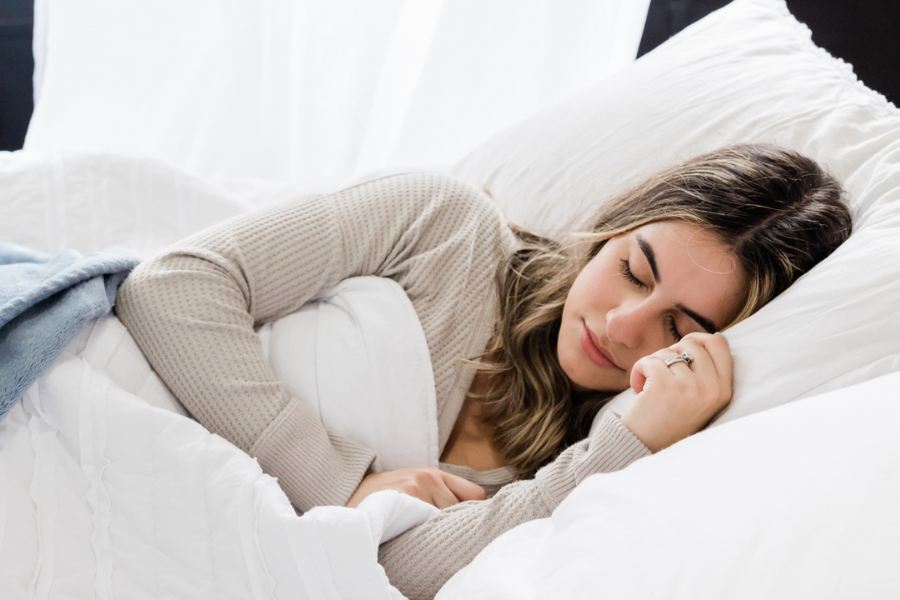
A short nap on the couch can feel great. Sleeping in on a weekend can too. But when you start wondering, “is it bad to sleep too much?” it is worth taking a closer look at your habits.
You need enough sleep to think clearly, regulate your mood, and stay healthy. At the same time, regularly sleeping far beyond the typical 7 to 9 hours for adults has been linked to several health problems and might signal that something else is going on with your body.
In this guide, you will learn what counts as oversleeping, how it can affect your health, how it connects to your mood, and what to do if you feel like you can never get enough rest.
Understand how much sleep you really need
Most healthy adults are advised to get at least 7 hours of sleep a night. The American Academy of Sleep Medicine and the Sleep Research Society recommend 7 or more hours for adults 18 to 60 to support overall health and daily functioning (NIH / PMC).
Many experts consider 7 to 9 hours the sweet spot for most adults. If you frequently sleep longer than 9 or 10 hours and still feel tired, that pattern is often referred to as oversleeping.
Typical sleep ranges for healthy adults
You always have some individual wiggle room, but these ranges are a useful starting point:
- 7 to 9 hours: Commonly recommended range for most adults
- Under 7 hours: Often considered too little on a regular basis
- Over 9 hours: May be too much for many adults, especially if it happens most nights
Research shows that sleep duration is one of the most studied sleep measures and is tied to many health areas, including cardiovascular health, metabolism, mental health, pain, and mortality (NIH / PMC).
Learn what counts as oversleeping
Sleeping longer than usual after a very busy or stressful week is not a problem by itself. Your body sometimes needs extra rest to recover. Oversleeping becomes more concerning when it is:
- Happening most nights, not just once in a while
- Lasting more than 9 or 10 hours of sleep on a regular basis
- Paired with daytime grogginess, low energy, or low mood
Experts at Johns Hopkins Medicine note that if you routinely need more than 8 or 9 hours to feel rested, it could signal an underlying sleep or medical issue that deserves attention (Johns Hopkins Medicine).
See how oversleeping can affect your health
Oversleeping is linked with several physical health issues. In many cases, it is not clear whether sleeping too much directly causes these problems or whether existing health conditions lead you to sleep longer. Still, the associations are important to know so you can discuss them with a healthcare provider if needed.
Potential health risks tied to oversleeping
Research summaries from WebMD and healthcare organizations highlight several concerns linked with regularly sleeping longer than 9 hours a night.
Some of the potential issues include:
-
Heart disease and stroke
Studies have found that people who sleep 9 to 11 hours may face higher risks of coronary heart disease and stroke compared with those who sleep 7 to 8 hours (WebMD, BJC Health System). One analysis cited by WebMD reported a 38% higher likelihood of coronary heart disease in women who slept 9 to 11 hours versus 8 hours. -
Diabetes and metabolic issues
Oversleeping has been linked with a higher risk of diabetes. Changing sleep patterns may affect hormones that influence blood sugar and appetite, which can contribute to weight gain and metabolic concerns (WebMD, BJC Health System). -
Obesity and weight gain
In one study, people who slept 9 or 10 hours nightly were 21% more likely to become obese over six years compared to those who slept 7 to 8 hours, even after accounting for diet and exercise habits (WebMD). -
Headaches and body aches
Sleeping too long can trigger headaches for some people. Changes in neurotransmitters like serotonin and disruptions to your usual sleep pattern may play a role. Oversleeping can also disrupt nighttime sleep, which can lead to morning headaches (WebMD). -
Higher accident risk
Excessive sleep can sometimes leave you feeling groggy and slow, which may affect reaction time and coordination. People who oversleep may face a higher risk of accidents at home or work, similar to people who are sleep deprived (BJC Health System). -
Overall mortality risk
Oversleeping has been associated with an increased risk of death in some large population studies, although the exact reasons are not fully understood (WebMD).
Experts at Johns Hopkins emphasize that it is not yet clear whether oversleeping itself causes these health problems or if underlying illnesses lead to longer sleep times, so it is important to consider the full picture of your health rather than only the number of hours you sleep (Johns Hopkins Medicine).
Notice the connection between oversleeping and mood
Sleep and mood are closely linked. When you feel depressed or anxious, your sleep often changes. For many people with depression, that change shows up as trouble falling asleep or staying asleep. For others, it shows up as oversleeping.
Oversleeping and depression
Several sources highlight a strong relationship between oversleeping and depression:
- Around 15% of people with depression tend to oversleep (WebMD, Cleveland Clinic)
- In a 2017 study, more than 92% of people with major depression had some kind of sleep issue, such as hypersomnia (excessive sleep) or insomnia (Healthline)
- Oversleeping appears more often as a symptom of depression rather than a direct cause, according to research reviewed in 2015 (Healthline)
Sleep psychologists note that some people with depression oversleep as a kind of escape. If you feel like there is nothing to look forward to in your day, staying in bed can seem easier than getting up and facing tasks or decisions (Cleveland Clinic).
How oversleeping can worsen low mood
Even though oversleeping can feel comforting in the moment, it can feed a cycle that is hard to break:
- You sleep in very late or nap for long stretches.
- You wake up feeling groggy, disoriented, or behind on the day.
- You may feel you have wasted time, which can lead to guilt or lower self-esteem.
- That low mood can make you want to sleep even more, and the pattern repeats.
Oversleeping can also disrupt your circadian rhythm, your internal 24-hour clock that helps regulate sleep and wake cycles. When this rhythm gets confused, you may feel more tired during the day and have more trouble falling asleep at a consistent time at night (Healthline).
People who regularly sleep more than 8 hours a night may report stronger depression symptoms than those who sleep 8 hours or less, which suggests that excessive sleep can be tied to a worsening of depressive symptoms (Healthline).
Recognize when oversleeping is a symptom
Sometimes, oversleeping is your body’s way of signaling that something deeper is happening. In addition to depression, several conditions and sleep disorders can increase your need for sleep or make you feel exhausted even after a long night in bed.
Possible underlying causes of oversleeping
Some examples include:
-
Sleep apnea
Sleep apnea interrupts your breathing throughout the night, which fragments your sleep. You might not realize you are waking up many times. As a result, you can feel very tired during the day and try to catch up by sleeping longer, but you still do not feel refreshed. Sleep apnea and depression often show up together (Cleveland Clinic). -
Hypersomnia
Hypersomnia is a sleep disorder where you sleep excessively, feel very sleepy during the day, and struggle to feel rested even after long sleep. Its symptoms can overlap with depression, so a professional evaluation is key for an accurate diagnosis (Healthline). -
Chronic medical conditions
Heart disease, diabetes, and other chronic illnesses can reduce sleep quality or increase your overall need for rest. You might spend a lot of time in bed but still feel tired. These conditions can also be linked with depression, which can complicate the picture (Johns Hopkins Medicine). -
Medication side effects
Certain medications can cause drowsiness or fatigue and might encourage longer sleep or frequent naps. -
Atypical depression
Chronic oversleeping can be a sign of atypical depression, a form of depression where mood can temporarily improve in response to positive events but symptoms like oversleeping, heaviness in the limbs, and sensitivity to rejection are common. Sleep psychologist Michelle Drerup notes that about 15% of people with depression experience oversleeping as a symptom (Cleveland Clinic).
If you suddenly need a lot more sleep than usual or your sleep needs steadily increase over time, it is worth mentioning to your healthcare provider.
Understand that more sleep is not always better
You might hear that because many people are sleep deprived, getting extra sleep must be good. The reality is more nuanced.
The current consensus focuses on making sure you get at least 7 hours, but it does not say that sleeping far beyond that is automatically beneficial. Researchers still need to clarify exactly how and why very long sleep durations affect health (NIH / PMC).
A sleep specialist at Johns Hopkins points out that oversleeping is linked with many health issues, but so far it is unclear whether sleeping too much directly leads to those illnesses or whether being sick drives people to sleep more (Johns Hopkins Medicine).
You can think of oversleeping like a fever. A fever is a sign that something is off in your body. The higher the fever, the more you pay attention. Oversleeping works the same way. It is a sign that invites you to check in with your health and habits.
Reset your sleep schedule gently
If you suspect you are regularly sleeping too much, small changes can help you move toward a healthier sleep pattern without shocking your system. It can be tempting to make a huge change overnight, but gentle shifts are often easier to stick with.
Step 1: Track your current sleep
Start with a simple log for one to two weeks. Each day, jot down:
- What time you went to bed
- About how long it took you to fall asleep
- Nighttime awakenings you remember
- What time you got up
- Naps during the day
- How rested you felt in the morning and afternoon
This gives you a clearer sense of your true sleep schedule and how often you are sleeping beyond 9 hours.
Step 2: Aim for a consistent wake-up time
Instead of focusing only on when you go to bed, pick a reasonable wake-up time and stick to it every day, including weekends. This consistency helps stabilize your circadian rhythm.
If your current wake-up time is very late, you can move it earlier in 15 to 30 minute steps every few days until you reach a schedule that feels realistic.
Step 3: Adjust your bedtime gradually
Once your wake-up time is consistent, adjust your bedtime so that you have about 7.5 to 8.5 hours available for sleep. If you are currently in bed for 10 or 11 hours, you might:
- Shorten your time in bed by 15 to 30 minutes every few nights.
- Notice how your body responds. If you still feel very tired, hold that schedule for a few days before shortening again.
The goal is not to force yourself into the lowest possible number. Instead, you want to find the smallest amount of sleep that leaves you feeling fairly rested most days.
Step 4: Strengthen your daytime routine
What you do during the day strongly affects how you sleep at night. Helpful daytime habits include:
- Getting morning light by opening your curtains or stepping outside for a short walk
- Moving your body in a way you enjoy, such as stretching, walking, or gentle exercise
- Eating regular meals so your blood sugar stays more stable
- Limiting long, late-day naps that can make it harder to fall asleep at night
These changes support your sleep-wake rhythm so you feel more naturally sleepy at night and more alert during the day.
Build a bedtime routine that supports healthy sleep
You cannot fully control how long you sleep, but you can shape your evening environment to encourage good quality rest. A calming wind-down routine makes it easier to fall asleep and less likely that you will lie awake and then oversleep to make up for it.
Simple bedtime habits to try
You can experiment with:
-
Screen break
Turn off bright screens 30 to 60 minutes before bed if you can. If that is not possible, dim your devices or use night mode. -
Repeatable routine
Choose 2 or 3 calming activities and do them in the same order each night, like: -
Light stretching or gentle yoga
-
A warm shower or bath
-
Reading a book in soft light
-
Comfortable sleep environment
-
Keep the room on the cooler side
-
Darken the room with curtains or an eye mask
-
Reduce noise with earplugs or a white noise machine if needed
These small habits add up, especially when you repeat them at the same time each night.
Know when to talk with a professional
Self-help strategies are useful, but they are not the whole picture. Since oversleeping can be a sign of medical or mental health conditions, it is important to get professional guidance, especially if your pattern has changed recently.
Signs you should reach out
Consider contacting a healthcare provider if:
- You regularly sleep more than 9 or 10 hours and still feel exhausted
- Your need for sleep increased suddenly or over a short period of time
- You snore loudly, gasp, or wake up choking at night
- You wake with headaches frequently
- You feel low, hopeless, or lose interest in activities you usually enjoy
- You suspect you might have depression, sleep apnea, or another sleep disorder
Experts at Johns Hopkins suggest that people who find themselves oversleeping may benefit from a medical evaluation or a sleep study to rule out conditions like sleep apnea or hypersomnia (Johns Hopkins Medicine).
A mental health professional can also help you work through patterns of oversleeping connected to depression, anxiety, or stress. They can support you in building a daily routine that feels manageable rather than overwhelming.
Balance your sleep for better health
If you are asking yourself, “is it bad to sleep too much?” the honest answer is that it can be, especially if it becomes your daily pattern. Oversleeping is linked with several health concerns, including heart disease, diabetes, weight gain, depression, and a higher risk of accidents (WebMD, BJC Health System, Cleveland Clinic).
At the same time, it is just as important to recognize that oversleeping is often a symptom rather than the root cause. Your body and mind may be trying to tell you that something needs attention.
You do not have to fix your sleep all at once. You can:
- Notice your current patterns
- Make gentle shifts toward a more consistent schedule
- Strengthen your daytime and bedtime routines
- Reach out for medical or mental health support if oversleeping does not improve or if you suspect an underlying condition
With time and the right support, you can move toward a sleep routine that helps you wake up feeling more rested, more present, and more ready to enjoy your day.
About the Author