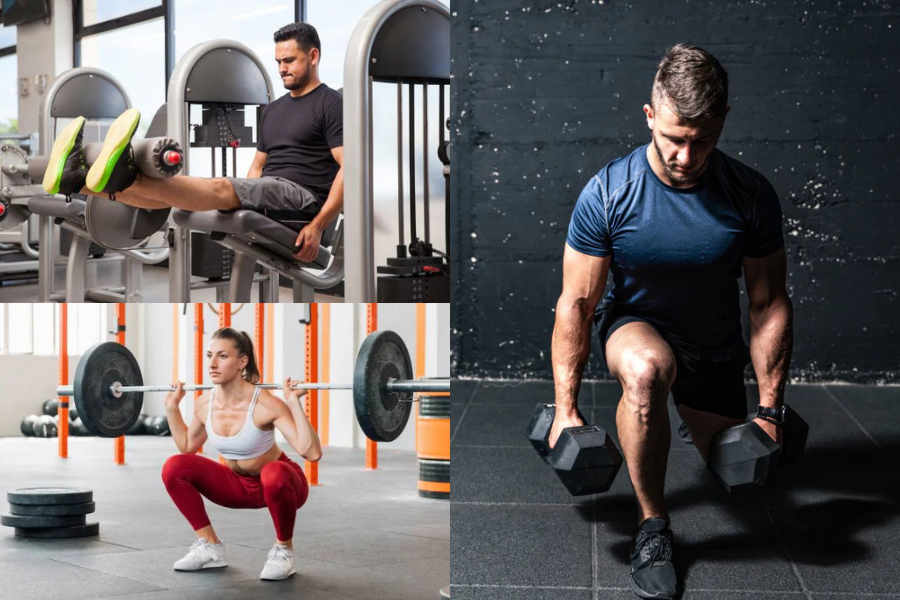
Building strong, defined quads is about more than leg day aesthetics. Effective quad workouts help you squat heavier, jump higher, protect your knees, and move more confidently in everyday life. With the right quad exercises and training structure, you can build both strength and size without wrecking your joints.
Below you will find a clear guide to the best quad workouts, how often to train, and simple form tweaks that make a big difference in results.
Understand your quad muscles
To get the most from quad workouts, it helps to know what you are actually training. Your quadriceps are a group of four muscles on the front of your thigh:
- Rectus femoris
- Vastus lateralis
- Vastus medialis
- Vastus intermedius
Together they extend your knee and, in the case of the rectus femoris, also flex your hip. When all four muscles are strong and balanced, your thighs look fuller from every angle and your knees feel more supported during squats, lunges, running, and sports.
Strong quadriceps are closely tied to better performance in compound lifts like squats, deadlifts, lunges, and sled pushes, and they also stabilize your knee joint by strengthening muscles and tendons around it. They are also essential for daily movements such as standing up, walking, climbing stairs, and getting out of a chair without discomfort.
Why quad strength and size matter
When you focus on well designed quad workouts, you are not just chasing bigger legs. You are building a foundation for long term movement and health.
Stronger quads can:
- Improve athletic moves like jumping, kicking, sprinting, and quick changes of direction
- Help protect your knees by improving kneecap tracking and reducing joint stress
- Support bone density and lower the risk of osteoporosis as you age
- Make everyday activities like stair climbing and long walks feel easier
There is also a clear benefit for older adults. Keeping your quadriceps strong through activities like walking, cycling, and basic strength work can preserve stair climbing ability and reduce leg weakness or pain later in life.
Key principles of effective quad workouts
Before you dig into specific exercises, set yourself up with a plan that actually drives progress.
How often to train your quads
For strength and size, you will usually do best training your quads twice per week. Aim for:
- At least 2 quad focused exercises per session
- A minimum of 10 working sets per week that truly challenge you
You might split those sets over two lower body days, such as a quad dominant day and a more glute and hamstring focused day, with at least 48 hours of rest between hard sessions for the same muscles.
Sets, reps, and effort
For muscle growth, work mostly in the 8 to 12 rep range for 3 to 4 sets per quad exercise. The last 2 or 3 reps of each set should feel tough while still allowing you to hold good form.
You can occasionally include higher rep sets of 15 or more, especially as finishers on machines or bodyweight moves. Some coaches recommend pushing sets close to failure or pairing exercises back to back, such as hack squats followed immediately by lunges, to really challenge the quads when your form is solid.
Balance with other leg muscles
It is easy to overdo quad work because you feel the burn quickly at the front of your thighs. If you only load up quad moves and neglect hamstrings and glutes, you can create muscular imbalances that increase strain on the knee and limit total leg strength.
To stay balanced, make sure your weekly training also includes hip hinge patterns like deadlifts or Romanian deadlifts, plus hamstring curls and glute focused movements. This will support your knees, hips, and lower back over the long term.
Best quad focused compound exercises
Compound exercises hit several muscles at once and let you move heavier loads. These are the backbone of effective quad workouts.
Front squats
Front squats shift the weight in front of your body, which encourages a more upright torso and deeper knee bend. That combination puts more emphasis on your quads compared to traditional back squats.
To perform a front squat:
- Rack the bar across the front of your shoulders, with your elbows high.
- Stand with feet about hip to shoulder width apart, toes slightly turned out.
- Sit straight down, letting your knees travel forward over your toes while keeping your chest up.
- Descend until your thighs are at least parallel to the floor, then drive through your mid foot to stand.
Because front squats demand good core stability and ankle mobility, start light and increase weight only when you can consistently reach a full range of motion.
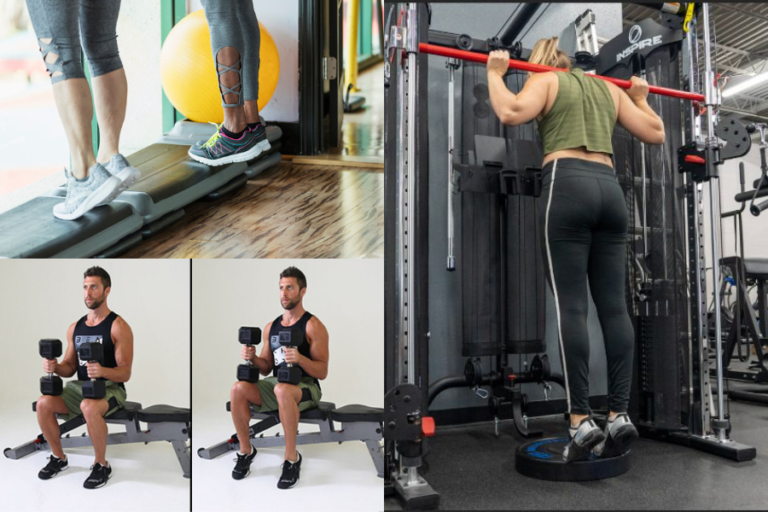
Heel elevated goblet squats
Heel elevated goblet squats are one of the most quad dominant squat variations. Elevating your heels increases knee flexion and lets your torso stay more upright, which pushes more of the load onto your quads instead of your hips and glutes. This variation is especially helpful if you have limited ankle mobility.
To try them:
- Place your heels on a small wedge, plates, or a slant board.
- Hold a dumbbell or kettlebell at your chest like a goblet.
- Squat down, allowing your knees to travel over your toes while keeping your heels planted.
- Stand back up, focusing on pushing the floor away with your whole foot.
Hack squats and leg press
Machine based squats and presses can be powerful tools for quad growth because they stabilize your body so you can push heavier loads safely.
For quad emphasis on these machines:
- Place your feet lower on the platform
- Let your knees travel over your toes at the bottom of the movement
- Move through a full range of motion rather than stopping halfway
A leg press with low foot placement increases knee flexion and forces your quads to do more of the work. Just be careful not to go so heavy that you cut your reps short or bounce the weight.
Sissy squats
Sissy squats are an advanced bodyweight move that heavily isolates the quads. You lean back while bending your knees, keeping your hips extended so your quads control the entire movement.
If you are new to them, start with supported variations, such as holding onto a stable post for balance and limiting your range until your knees and quads adapt.
Isolation and bodyweight quad exercises
Once you have your main compound lifts set, you can add isolation and bodyweight work to fully fatigue your quads and build endurance.
Leg extensions
Leg extensions target knee extension almost exclusively, which means they load your quadriceps directly. They are useful near the end of a workout when your stabilizing muscles are tired but you still have energy for focused quad work.
To use them safely:
- Adjust the pad so it rests just above your ankles
- Keep your hips firmly against the seat
- Extend your legs under control, pause briefly at the top, then lower slowly
Work in moderate rep ranges and avoid jerking the weight up or locking your knees forcefully.
Lunges, split squats, and Bulgarian split squats
Single leg variations are excellent for building balanced strength between your right and left sides and for improving stability around your knees and hips.
- Split squats focus on pushing through the front leg as you move straight up and down.
- Bulgarian split squats elevate your back foot on a bench or step, which increases the stretch and the demand on your front quad.
To target the quads more, keep your torso slightly more upright and allow your front knee to travel forward over your toes while your heel stays planted.
Wall sits and other endurance moves
Simple bodyweight exercises like wall sits build quad endurance with minimal impact on your joints. To perform a wall sit, slide your back down a wall until your knees are around 90 degrees, as if you are sitting in an invisible chair. Hold as long as you can while keeping your knees stacked over your ankles.
You can also use step ups and basic bodyweight squats for higher rep endurance work, especially on home training days or active recovery days.
Foot placement and form tips for better quad activation
Small adjustments in your stance can significantly change how much your quads contribute in an exercise.
- Let your knees track over your toes rather than forcing them to stay behind.
- Use a slight heel elevation on squats or lunges if it helps you reach more depth comfortably.
- On machines like leg press or hack squat, keep your feet lower on the platform to increase knee bend and quad load.
A common myth is that a very wide stance only hits your outer quads or a very narrow stance only hits your inner quads. In reality, your four quadriceps work together across a range of stances. Focus more on depth, control, and where you feel the work rather than chasing extreme foot positions.
One more key point, avoid leaning excessively forward and sending your hips too far back on squats. That pattern turns the movement into a hip dominant good morning and shifts effort away from your quads.
Think of sitting straight down between your feet, not pushing your hips far back behind you, when your goal is quad growth.
Sample quad focused workout plan
Use this sample as a starting point and adjust based on your experience, equipment, and recovery. Rest 60 to 90 seconds between sets for most moves, and a bit longer for heavy compound lifts.
Day 1, Heavy quad focus
- Front squat, 4 sets of 6 to 8 reps
- Heel elevated goblet squat, 3 sets of 8 to 10 reps
- Leg press with low foot placement, 3 sets of 10 to 12 reps
- Bulgarian split squat, 2 to 3 sets of 10 reps per leg
- Leg extension, 2 sets of 12 to 15 reps
Day 2, Machine and unilateral focus
- Hack squat, 3 to 4 sets of 8 to 10 reps
- Walking lunges or split squats, 3 sets of 12 steps per leg
- Leg extension, 3 sets of 12 to 15 reps with controlled tempo
- Wall sit, 2 sets of 30 to 45 seconds
If you are a beginner, you can reduce the total sets, stay closer to 2 sets per exercise, and use mostly bodyweight or light dumbbells until your form feels comfortable.
Common quad training mistakes to avoid
Even with the best quad workouts, a few habits can slow your results or increase your risk of pain.
- Using too much weight and doing partial reps, especially on leg press or hack squat, which limits muscle growth by cutting the range of motion short
- Ignoring your hamstrings and glutes, which can lead to knee strain and poor coordination during heavy lifts
- Allowing your form to break down, such as collapsing your knees inward or rounding your lower back
- Training quads hard several days in a row with no recovery, which can irritate your joints and stall progress
Aim for full, controlled reps, balanced leg training, and at least one or two easier days between intense quad sessions.
Putting your quad workouts into action
You do not have to overhaul your entire routine in one go. Start by adding one or two of the quad focused exercises above to your next leg day and paying attention to how your quads feel during and after the session.
Over time, work toward:
- Training your quads twice per week
- Hitting at least 10 challenging sets per week
- Using thoughtful foot placement and full range of motion
With consistent effort and smart progress, your quad workouts will build not only bigger, stronger thighs but also a more stable, powerful lower body for everything you do.
About the Author