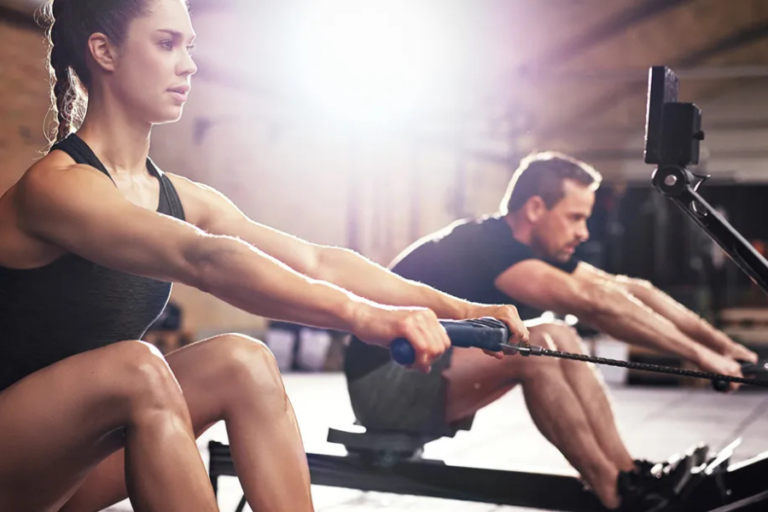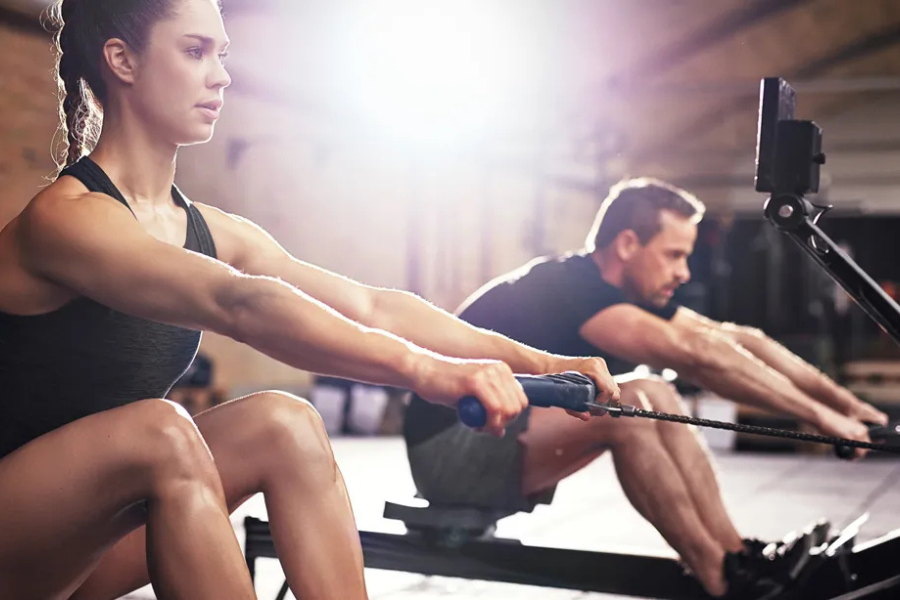
A rowing machine can look a little intimidating at first, but it is one of the most beginner friendly tools in the gym. Rowing workouts for beginners give you a low impact, full body cardio session that is easy on your joints and efficient for building stamina and supporting weight loss. You work your legs, core, back, and arms in every stroke, which means more muscles helping you burn calories in less time (Asphalt Green, UCanRow2).
Below you will find simple, confidence boosting rowing workouts, along with technique tips so you feel strong and safe from your very first session.
Understand why rowing is great for beginners
If you are used to walking or jogging on a treadmill, rowing has a small learning curve. Once you get the hang of the motion, it quickly becomes one of the most efficient cardio options in the gym.
Rowing is low impact, which makes it gentle on your knees, hips, and ankles. You still elevate your heart rate and build cardiovascular fitness, but without the pounding that comes from running (Garage Gym Reviews). It also engages around 80 percent of your major muscle groups, including legs, core, back, and arms, so you get strength and cardio in the same workout (Asphalt Green).
For weight loss, this combination is powerful. You burn calories during the workout, plus you build lean muscle that helps you use more energy even at rest. Because you stay seated and supported, rowing is suitable for many ages and fitness levels, and beginners can adjust intensity simply by pushing and pulling harder or softer (UCanRow2).
Set up your rowing machine correctly
A smart setup helps you feel in control from your very first stroke and protects you from common beginner mistakes. You do not need every metric on the screen right away, just a few key settings and numbers.
Start by adjusting the foot straps so the strap crosses over the widest part of your foot and your heels feel secure. You should be able to bend your knees comfortably and reach the handle without rounding your back.
Most beginners are tempted to crank the damper all the way up to 10, especially if you have seen this done in CrossFit style workouts. That setting makes the machine feel heavy and can overload your back and shoulders. Instead, set the damper between 3 and 5. This setting roughly mimics the feel of rowing on water and is what many advanced and even Olympic level rowers use (Asphalt Green, UCanRow2). Remember that the real resistance comes from how hard you push and pull, not just the damper level.
On the screen, focus on three simple metrics: elapsed time, stroke rate, and your own perceived effort. Stroke rate is the number of strokes you take each minute, sometimes shown as “s/m” or “spm.” For beginners, a stroke rate around 20 to 26 strokes per minute is a comfortable, sustainable range (Garage Gym Reviews, Asphalt Green).
Learn the basic rowing stroke
Good rowing technique is the key to staying comfortable, preventing injuries, and getting more from every minute you spend on the machine. It is worth slowing down at the beginning until the motion feels smooth.
Rowing has four main phases: catch, drive, finish, and recovery. Olympic and experienced rowers practice these phases regularly, because efficiency matters more than speed alone (Garage Gym Reviews, EXR).
The four phases, step by step
-
Catch
Slide forward on the seat until your knees are bent and your shins are almost vertical. Keep your arms straight, chest lifted, and your torso leaning slightly forward at the hips. Your back should remain neutral, not rounded. This is your starting position. -
Drive
Push with your legs first. Think of driving your feet hard into the footplates. Once your legs are almost straight, lean your torso back slightly, then finally pull the handle toward your lower ribs. This leg-body-arms sequence is crucial. Beginners often pull mostly with their arms, but the power should start in your legs (Asphalt Green). -
Finish
At the end of the drive, your legs are straight but not locked, your torso leans back just a bit from vertical, and the handle sits near the base of your ribcage. Your elbows are drawn back, and your shoulders stay relaxed away from your ears. -
Recovery
Reverse that sequence in slow motion. Extend your arms first, then hinge your torso forward from the hips, and finally bend your knees to slide back to the catch. The recovery should be slower than the drive, so you get a natural rhythm and breathing pattern (Asphalt Green).
Try counting “1” for the drive and “2, 3” for the recovery. This gives you a drive to recovery ratio of about 1 to 2 or 1 to 3, which is often recommended for beginners (UCanRow2).
Avoid the most common beginner mistakes
Most rowing frustrations come from a few fixable habits. If you address these early, you will feel smoother, less tired, and more confident.
New rowers often focus on speed, trying to rack up as many strokes per minute as possible. This usually leads to shallow, rushed strokes that work your arms more than your legs and can strain your back. Elite rowers instead prioritize clean technique and a strong leg drive at a moderate stroke rate, then build speed over time (EXR).
Another frequent mistake is setting the damper too high, which makes each stroke feel like a heavy deadlift. This may feel “hard core” in the moment, but it often breaks down your form and increases injury risk. Adjust the setting to that 3 to 5 range and focus on powerful, crisp leg pushes instead (EXR, UCanRow2).
Hand discomfort and blisters are also common in the first few sessions. A Reddit beginner, for example, developed blisters on the palm even while wearing gloves during a single workout that left them exhausted and unsure how to keep going (Reddit r/Fitness). To protect your hands, keep your grip relaxed instead of squeezing hard, and let the handle rest in your fingers rather than deep in your palms.
Start with a gentle 10 minute workout
Your first few rowing workouts for beginners do not need to be long. Focus on form and building a base. A 10 minute session is enough to raise your heart rate and help your body learn the movement.
Aim for a damper setting of 3 to 5 and a stroke rate between 20 and 26 strokes per minute. Row at an easy pace where you can still speak in short sentences. This can be a complete cardio workout on its own or a warm up for a strength training session (Asphalt Green).
One simple starter session looks like this (UCanRow2):
- Row 5 to 10 minutes at a comfortable pace, 20 to 22 strokes per minute
- Keep that 1 to 2 or 1 to 3 drive to recovery rhythm
- Step off the machine and rest for a couple of minutes
- If you feel good, repeat another 5 to 10 minute bout
This type of easy, controlled effort helps you build consistency so that you are not wiped out after a single workout.
If you finish a session and feel like you could have done just a little more, that is usually the right intensity for a beginner.
Try an interval workout for energy
As you grow more comfortable, you can add simple intervals to boost your fitness and make the time pass quickly. High intensity intervals are very effective for cardiovascular health and calorie burning, but you should layer them on only after you have learned solid technique.
A beginner friendly HIIT rowing workout might involve short bursts of harder rowing followed by easier periods where you focus mainly on leg drive. One recommended structure uses multiple rounds of 30 second intense efforts mixed with short rest segments, building up gradually from 2 or 3 rounds toward a total of about 15 minutes (Garage Gym Reviews).
Here is one way to structure it:
- Warm up for 5 minutes at an easy pace
- Row hard for 30 seconds, focusing on strong leg pushes and clean form
- For the next 60 to 90 seconds, row very lightly, or practice just the leg drive and recovery at low effort
- Repeat this pattern 2 to 3 times in your first week
- Over a few weeks, work up to 5 rounds for a total of about 15 minutes, not counting warm up and cool down
Keep an eye on your stroke rate during the hard efforts, but remember that power comes from driving with your legs, not flailing with your arms. If your form starts to slip, shorten the work interval or increase rest.
Build endurance with steady rowing sessions
Once you can handle 10 to 15 minutes without feeling completely drained, you can begin adding longer, steady sessions that train your heart, lungs, and mental stamina. Endurance rowing focuses on a pace you can maintain comfortably rather than all out efforts.
Begin by choosing a duration such as 15 minutes. Row at a stroke rate around 20 to 24 strokes per minute and an effort level that feels like a 6 out of 10, where your breathing is quicker but you are not gasping. Over time, you can gradually increase those sessions to 20, then 25, and eventually 30 minutes or more, which many guides suggest as a good target for regular cardio workouts (Garage Gym Reviews).
For weight loss, these steady state sessions are valuable because they allow you to burn more total calories without overwhelming your body. You can also mix them with your interval sessions, for example by doing one shorter interval workout and one longer steady row each week.
Create a simple weekly rowing plan
A little structure goes a long way. Having a basic plan helps you avoid the “all in one day, burnt out the next” pattern that discourages many beginners. Indoor rowing programs and apps even provide pre made plans tailored to fitness level, such as EXR, which includes a 14 day free trial with guided workouts and progress checks (EXR).
You can also sketch out your own straightforward plan. Here is an example of how you might build four weeks of rowing workouts for beginners:
| Week | Session 1 | Session 2 | Optional Session 3 |
|---|---|---|---|
| 1 | 10 min easy row | 10 min easy row | Light strength or walk |
| 2 | 10–12 min easy row | 10 min, add 2 x 30 sec light intervals | 10 min easy |
| 3 | 15 min steady row | 10 min plus 3 x 30 sec intervals | 10–12 min easy |
| 4 | 18–20 min steady row | 12–15 min with 4 x 30 sec intervals | 15 min easy or cross training |
Aim for 2 to 3 rowing days per week, especially at the beginning. You should see progress in a couple of weeks if you stay consistent, and you can continue to extend either your total duration or the number of intervals as you feel stronger (UCanRow2).
Listen to your body and adjust
While templates and sample workouts are helpful, your body is the final guide. If your lower back feels tight, revisit your technique and make sure your legs lead the drive followed by your body and arms. If your grip is sore or you are developing blisters, lighten your hold on the handle and allow some recovery days for your skin.
If you find a suggested duration like 30 to 40 minutes feels impossible at first, you are not alone. The Reddit beginner who struggled to keep a steady pace and felt exhausted after a structured session shows how common that experience is (Reddit r/Fitness). It is perfectly acceptable to break your time into smaller chunks, for example 2 rounds of 8 minutes, and work up gradually.
As your confidence grows, you can experiment with different programs, music, or row along videos to keep things interesting. You might even set a longer term goal such as rowing a 5k or a half marathon by the end of the year, then follow a progressive plan or app that guides you there step by step (EXR).
Start with one short session this week. Focus on setting up your machine, keeping your form smooth, and finishing feeling energized instead of exhausted. Each time you return to the rower, you will build a little more strength, stamina, and confidence.
About the Author