

Understand what an advanced shoulder workout is
If you are looking for an advanced shoulder workout, you are probably past the basics and ready to push for more size, strength, and definition. At this level, your training should do more than just hit the front of your shoulders with a few presses. You want to challenge all three deltoid heads, your traps, rotator cuff, and the muscles that keep your shoulder blades stable.
An effective advanced plan does three things:
- Trains your shoulders from multiple angles
- Uses a mix of heavy compound lifts and precise isolation work
- Respects shoulder health with smart warm ups and rotator cuff training
Guides from brands like Gymshark highlight this same approach, emphasizing that advanced shoulder workouts should target the deltoids, rotator cuff, rhomboids, and trapezius all together for strength and stability.
Warm up and protect your shoulders
As your training becomes more intense, warm ups and technique matter even more. Strong shoulders are only useful if you can keep them healthy.
Do a simple dynamic warm up
Before you press or pull anything heavy, spend 5 to 10 minutes preparing your joints and muscles. According to the Advanced Orthopedics Institute, rotating your arms, shoulders, head, and neck before cardiovascular or strength training helps prevent cramps and strains in the area.
You can use this quick warm up:
- 20 to 30 seconds of arm circles forward and backward
- 10 to 15 slow shoulder rolls
- 10 neck circles each way
- Light band pull aparts or cable face pulls, 2 sets of 15
Follow that with a couple of very light sets of your first exercise to groove the movement.
Build in rotator cuff work
Your rotator cuff keeps the humeral head centered in the socket when you press or raise your arms. As you move into an advanced shoulder workout, these stabilizers are doing a lot of behind the scenes work.
Useful options include:
- Cable external rotation with elbow at 90 degrees
- Band external rotations by your side or at 90 degrees of abduction
- Side lying or prone external rotation with light weights
Research on scapular stabilizers has shown that external rotation exercises with the elbow flexed to 90 degrees in prone and side lying positions provide strong activation for the middle trapezius and lower trapezius, which support shoulder mechanics and posture.
You do not need a huge amount of volume here. Two or three sets of 12 to 15 repetitions, two to three times per week, are usually enough to maintain stability.
Use posture and daily habits to your advantage
The same organization stresses that you lower injury risk by:
- Avoiding overreaching for items without moving your body closer
- Lifting with your legs, not your low back and shoulders
- Keeping a balanced diet and regular exercise routine for joint health
- Listening to your body if you cannot lift your arm overhead or have lasting pain, and seeking medical advice when needed.
Think of these habits as silent partners to your heavy workouts.
Train all major shoulder muscle groups
A complete advanced shoulder workout does not lock you into one plane of motion or one type of equipment. Instead, it layers movements so you can overload safely and evenly.
Focus on the three deltoid heads
Your delts have three main parts:
- Anterior (front): helps with pressing and raising your arm forward
- Lateral (side): gives you width and roundness
- Posterior (rear): keeps your shoulders balanced and supports posture
To build a 3D look, you need at least one compound exercise and one isolation move for each area over the course of the week. Charles Glass, often called the Godfather of Bodybuilding, structures his advanced programs to target each deltoid head individually, then ties them together with larger compound work.
Do not neglect your traps and serratus
Your upper traps, middle traps, lower traps, rhomboids, and serratus anterior help rotate and stabilize your shoulder blades, especially overhead.
A systematic review of shoulder exercises found that:
- Eccentric work in the frontal and sagittal planes, such as controlled lowering from flexion, can give strong activation of the middle trapezius
- Prone flexion, high scapular retraction, and prone external rotation at 90 degrees of abduction activate the lower trapezius effectively
- Diagonal patterns and protraction based movements, plus bench and supine presses, are very good for the serratus anterior
You do not have to memorize this, but it explains why adding face pulls, cable shrugs, and controlled raises into your advanced shoulder workout pays off over time.
Use advanced presses for power and size
Pressing is still a core part of any advanced shoulder workout. The difference at your level is how you press and in what order you use these movements.
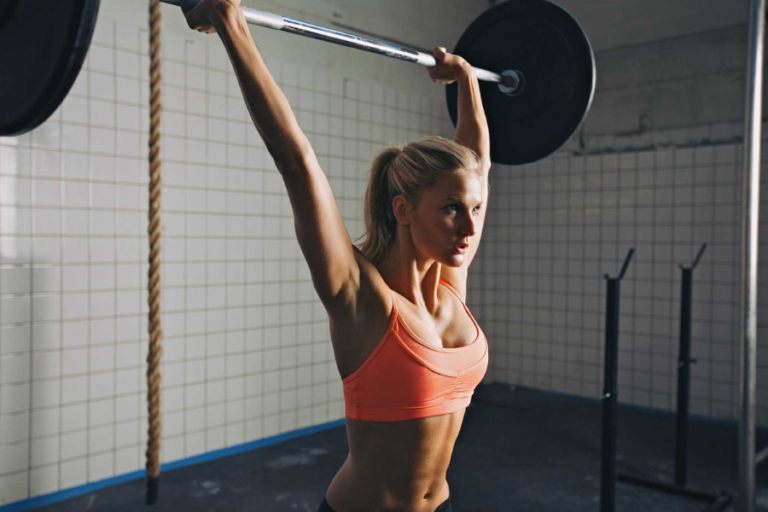
Standing barbell press with bands
If you usually do seated presses, swapping to a standing barbell press with plates on bands can be a big jump. The bands make the weights bounce slightly, which forces you to stabilize with your legs, core, and shoulders as you press and lower the bar.
Benefits for you:
- More total body involvement, especially the core
- Greater need for control in both directions
- A new stimulus if you have been stuck with straight barbell or dumbbell presses
Start light and build up slowly. Jeff Cavaliere, creator of the ATHLEAN X programs and former Head Physical Therapist for the New York Mets, is a strong advocate of progressive loading like this, especially when using more advanced techniques. His shoulder protocols are built for lifters who already have a foundation and want to break plateaus, not for beginners.
Single arm Smith machine press
Charles Glass often uses single arm Smith presses in his advanced shoulder routines. With the machine rails guiding the bar path, you can focus on:
- Driving the elbow slightly in front of your body
- Controlling the lowering phase
- Keeping tension on the front delt through the middle portion of the range
Pressing one arm at a time also exposes left and right side imbalances. Keep rest periods short, around 45 seconds or less, to maintain a continuous pump.
Overhead press machines for safe overload
If you train in a gym with a full machine area, certain pieces are especially helpful as you move into more advanced work:
- Seated shoulder press machine, ideal for smooth, natural pressing patterns that suit most users
- Plate loaded shoulder press machine, which feels similar to barbell work but provides built in safety and easy incremental loading
- Standing overhead press machine, which removes back support entirely and encourages more core activation and full body stability
These machines let you push closer to muscular failure without always needing a spotter. They are particularly useful at the end of a session when your stabilizers may be tired.
Add isolation work for shape and balance
Advanced shoulder training is not just about how much weight you can press. To build width and detail, you need precise isolation too.
Lateral raises for width
Your side delts respond well to controlled tension. Two high impact variations are:
- Single arm lateral raise with iso hold
- Raise the dumbbell out to your side
- Hold at the top for a brief pause
- Lower under control
Training each arm separately, with a hold at the top and controlled negatives, increases tension and can help create wider, rounder shoulders.
- Lateral raise machine
- The machine sets your path of motion and focuses stress on the lateral delts
- Selectorized systems let you adjust weight quickly
- Clean, controlled reps make it easier to feel the right muscles working
Because the load is more predictable than with dumbbells, you can safely increase weight over time while staying strict.
Rear delt and upper back isolation
Strong rear delts complete the shoulder cap and protect your joints from imbalances. You can target them with:
-
Single arm face pulls using a cable or band
-
Pull with the elbow high and back
-
Focus on squeezing the rear delt at the end of the movement
This style often improves mind muscle connection compared with standard rear delt flyes. -
Rear delt / pec fly machine
-
Set the arms behind you and choose a moderate weight
-
Keep a slight bend in the elbows and open your arms out and back
The same machine usually allows pec flys as well, saving space and giving you front and rear options for your shoulders.
These moves help keep your shoulders balanced when you are doing plenty of pressing.
Cable shrugs for trap development
Cable shrugs can feel very different from standard dumbbell shrugs. By standing between two low pulleys and pulling up and in, then holding at the top for around three seconds, you get:
- A tighter contraction in the upper traps
- Constant tension through the whole motion, since the cables are always pulling outward
- Less tendency to swing the weight
This makes them a solid advanced option if your traps lag behind your delts.
Explore advanced cable and landmine variations
Cable and landmine tools open the door to more controlled tension and joint friendly angles. They are especially useful if you have some shoulder history or just want variety.
Cable based shoulder training
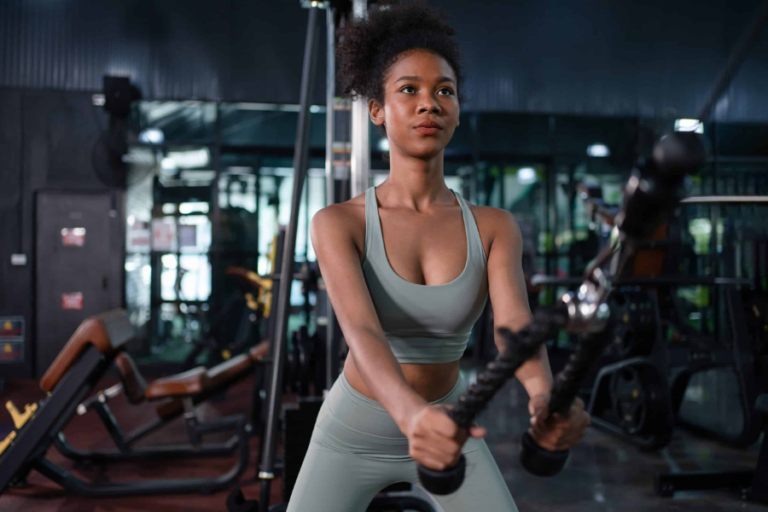
A cable functional trainer with shoulder attachments might be the most adaptable single piece of equipment for advanced shoulder workouts. Cables keep tension on the muscles throughout the entire range of motion, which can increase the time under tension for each set.
Useful cable options include:
- Seated anterior delt cable press, which keeps tension at the bottom and top of the press
- Standing one arm cable lateral raise, where the line of pull stays consistent through the motion
- Reverse cable crossover, ideal for rear delt and upper back detailing
Charles Glass often suggests alternating free weight focused shoulder sessions with cable centered weeks, roughly every six weeks, to keep progress moving and avoid plateaus.
Landmine press for joint friendly strength
If straight overhead pressing bothers your shoulders, the landmine press is a smart replacement. You press the bar at a diagonal instead of straight up, which can:
- Reduce stress on the shoulder joint
- Still challenge the anterior and lateral delts, traps, pecs, and triceps
- Allow you to progress weight while staying comfortable
This makes the landmine press a useful advanced shoulder workout move for lifters who are strong but need a slightly less demanding angle on the joint.
Make the most of shoulder machines
Machines are not just for beginners. Used well, they can help you get more out of your advanced shoulder sessions by controlling form, saving joints, and allowing heavier loads.
Key shoulder machines to know
Here is a simple overview of useful machines and their roles in an advanced routine:
| Machine | Main focus | Why you might use it |
|---|---|---|
| Seated shoulder press machine | Overall shoulder mass and strength | Smooth movement, suitable for most people, easy to adjust loads |
| Plate loaded shoulder press machine | Heavy pressing without a spotter | Barbell like feel with safer setup and incremental loading |
| Lateral raise machine | Side delt isolation | Clean, strict reps and quick weight changes |
| Rear delt / pec fly machine | Rear delts and pecs | Space saving dual function, adjustable arms and joint friendly path |
| Standing overhead press machine | Core active overhead pressing | No back support, encourages full body tension and balance |
| Cable functional trainer | Versatile pressing, raises, pulls | Constant tension, full range of motion, easy to customize workouts |
| Viking press machine | Explosive overhead pressing and power | Unique angle and feel, great for variety and real world strength |
Rotating through these machines every few weeks can freshen your advanced shoulder workout while keeping the basic structure the same.
Program your advanced shoulder workout
You do not need a complicated split to benefit from advanced shoulder training. Instead, combine smart programming with consistency and patience.
Use effective sets, reps, and rest
For hypertrophy, it often works well to aim for:
- 3 to 5 working sets per main exercise
- 8 to 12 repetitions per set using around 70 to 80 percent of your estimated one rep max
- Shorter rest periods of 30 to 45 seconds for isolation work, and up to 90 seconds for heavier compounds
This combination provides enough load to stimulate growth while keeping the pump and burn going, which Charles Glass frequently emphasizes through his concept of training within the middle tension range of each lift.
Sample advanced shoulder session
You can use this structure once every 5 to 7 days if you are training shoulders hard, or twice per week with slightly reduced volume per session:
- Warm up
- 5 to 10 minutes of dynamic arm and shoulder work
- 2 light sets of face pulls or band pull aparts
- Lateral raise focus
- Single arm lateral raise with iso hold, 3 sets of 10 to 12 per arm
- Rear delt work
- Single arm face pulls or reverse cable crossover, 3 sets of 12 to 15
- Pressing strength
- Standing barbell press with bands or plate loaded shoulder press, 4 sets of 6 to 10
- Additional press or machine work
- Single arm Smith press or seated shoulder press machine, 3 sets of 8 to 12
- Trap and upper back
- Cable shrugs with 3 second holds, 3 sets of 10 to 12
- Rotator cuff finisher
- Cable or band external rotations, 2 to 3 sets of 12 to 15
Adjust total sets based on your recovery and how often you train shoulders during the week.
Progress over 8 to 12 weeks
Several advanced shoulder protocols recommend sticking with a core set of exercises for at least eight weeks. For example, programming that includes standing barbell press with bands, single arm lateral raise with iso hold, single arm face pull, and cable shrug, done every 5 to 7 days, has been shown to produce noticeable improvements in shoulder size, strength, and muscular balance over an eight week block.
You can progress by:
- Adding small amounts of weight when you hit the top of your rep range
- Adding a set to one or two key movements once your recovery allows
- Slowing down the eccentric phase to increase tension without always increasing load
After one or two cycles like this, you can swap in more cable or machine based sessions for a few weeks while keeping the same basic pattern.
Put it all together
An advanced shoulder workout is not just a heavier version of what you did as a beginner. It is a planned way of training that:
- Covers every major shoulder muscle, not just the front delts
- Combines heavy, technical presses with strict isolation work
- Uses cables and machines to keep tension high and joints safe
- Builds in warm ups, rotator cuff training, and good posture habits
You do not have to change everything at once. Start by adding one or two of these ideas, such as single arm lateral raises with iso holds or cable shrugs. As they become comfortable, layer in more advanced variations like banded barbell presses or landmine presses.
Over time, these focused upgrades will help your shoulders look fuller, feel stronger, and stay healthier as your training level continues to climb.
About the Author






2 thoughts on “Discover The Best Moves For Advanced Shoulder Workout Success”
Comments are closed.